Moving Water

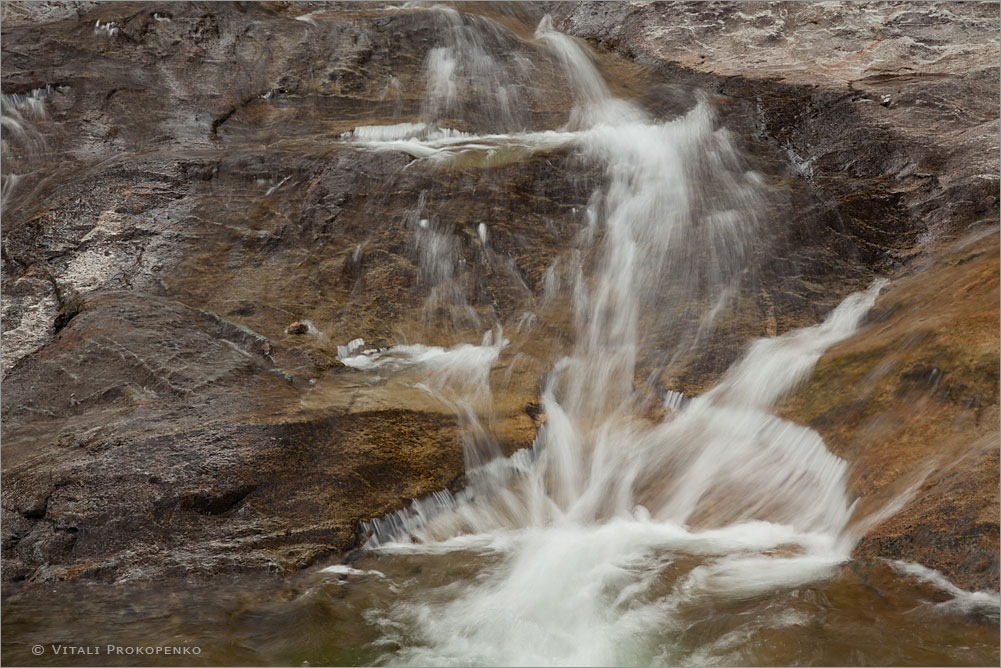
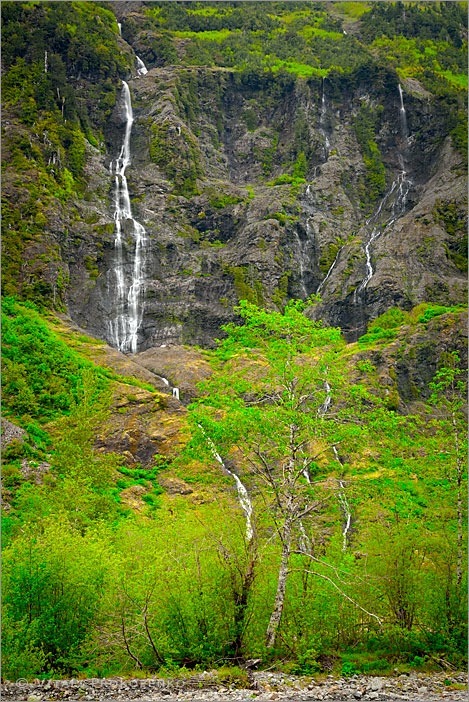
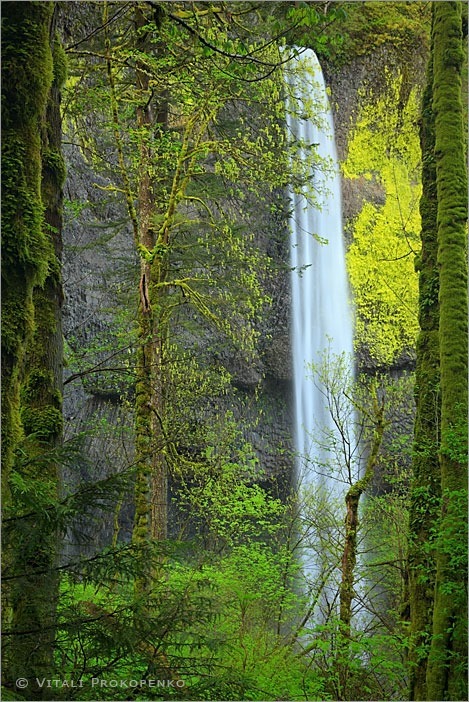
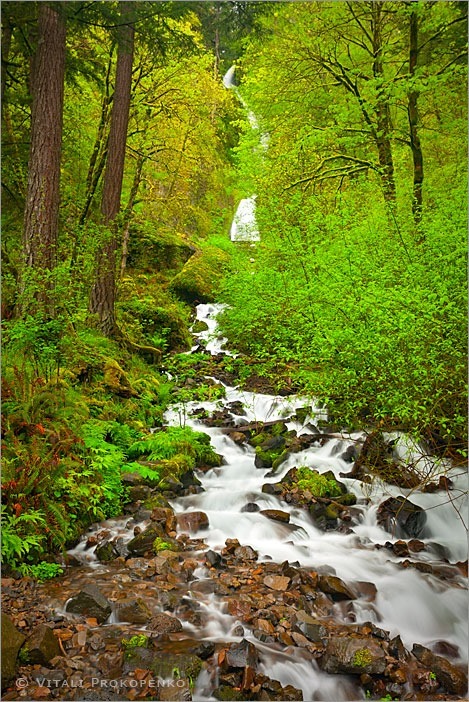
There is an old joke that a human being can look indefinitely at three things: fire burning, water running and another human being working. I whole heartedly agree with each of those. Today’s post is about the second one. That’s why every spring I run around looking at waterfalls.

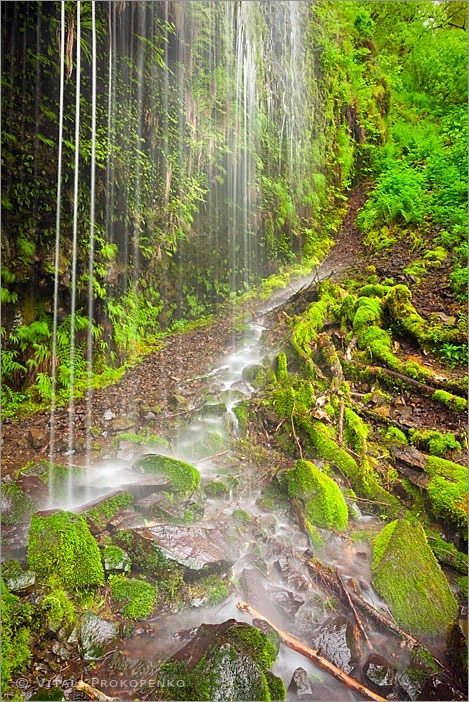
Especially in spring when the snow is melting in the mounting filling waterfalls with water making them more powerful. Most of all I love water running thru a forest making a new path for itself. There is something raw and uncontrollable about this.

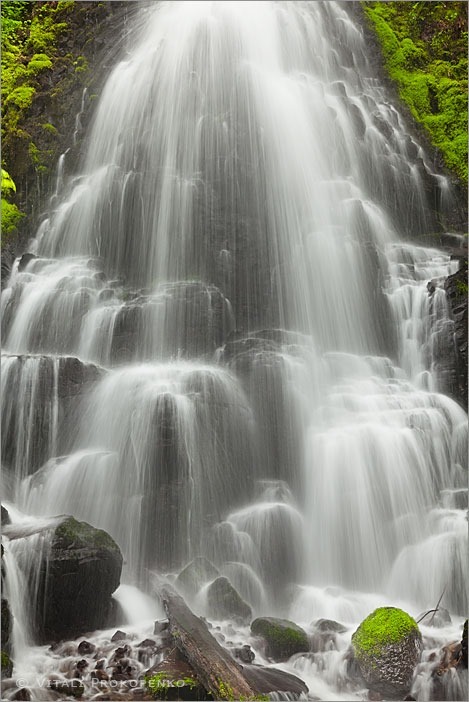
I like photographing water because it changes its face constantly. No two image of the same place can be the same. I can take image after image and each of them is different. It keeps changing direction as a long body of an animal.

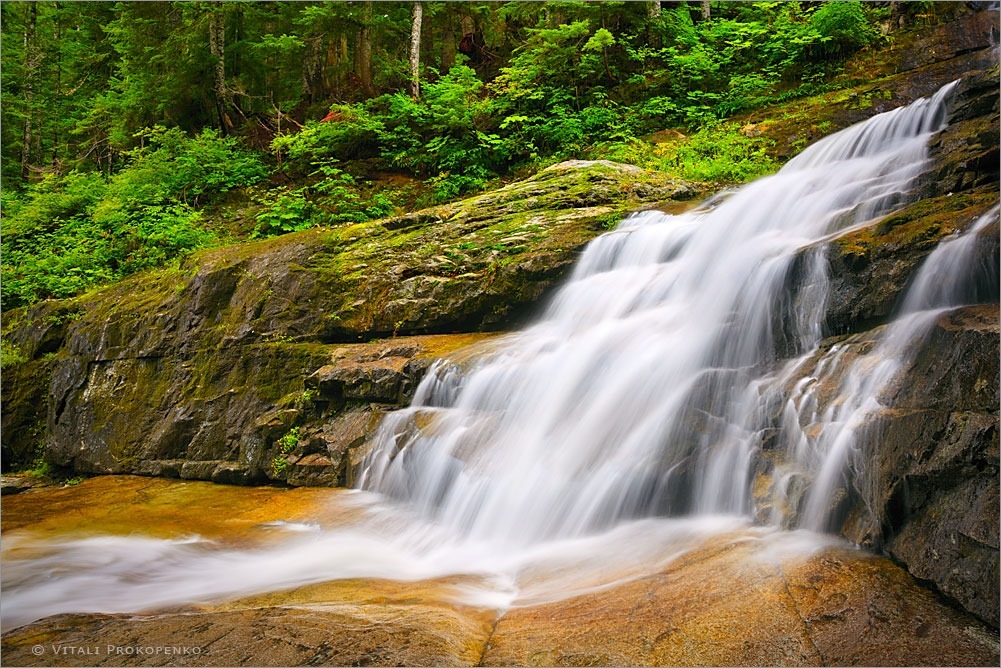
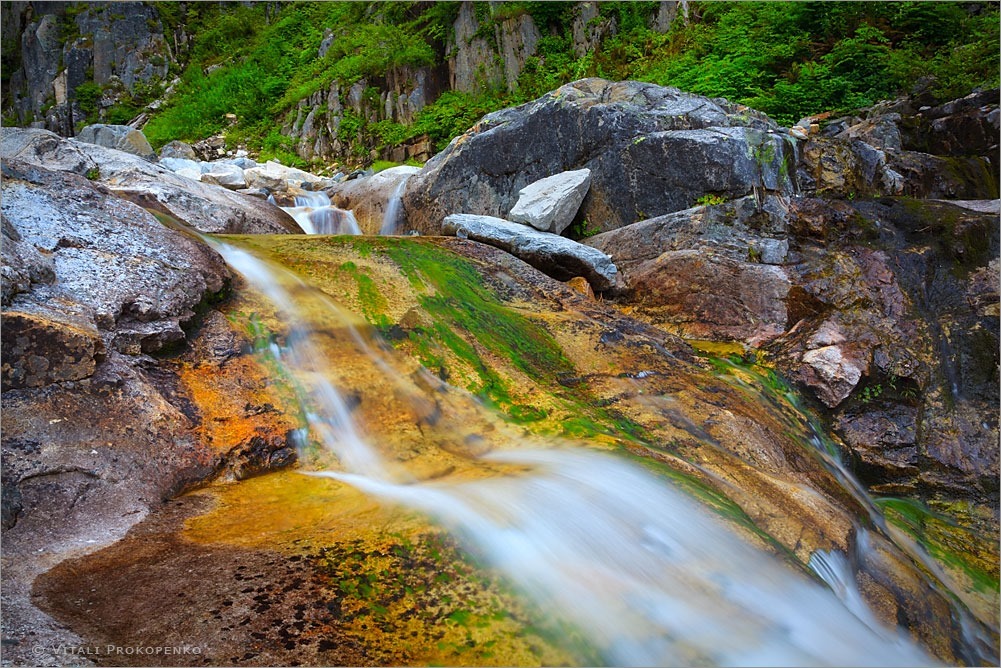
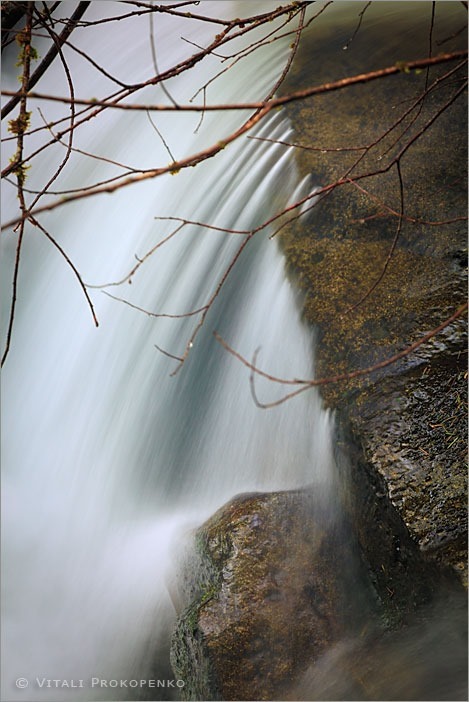
Playing with shutter speed from powerful streaks during short shutter to silky smooth during long shutter creates even more different images.

Here is a selection of images from last spring.


Last Ray

I had quite an interesting dialog with my seven year old son about this photo.

Adrian: Dad how did you get to capture the last ray of the Sun on the flowers.

Me: It is not a sun ray. I used flashlight to highlight the flowers as if the Sun was lighting them up.

Adrian: Cheater. It is not a real landscape. Nobody is going to buy it. People like real landscapes.

Close by

Do I really need to travel far to make photos? Just last weekend I’ve discovered a hike which is only half an hour of driving from my house and yet it has some beautiful waterfalls, creeks and alpine lakes. Well, I have not got to the lakes yet. The two times I went to that hike I got caught up too much with the waterfalls. There are four(!) waterfalls in just the first two miles of the hike.

I still see several image to be made even with closer waterfalls and with the furthest I’ve got to so far I’ve just scratched the surface so to speak. Now I plan to make it all the way just to see everything that it has to offer.

I’m still in awe if the beauty of the place I live in.

Beauty is in Details

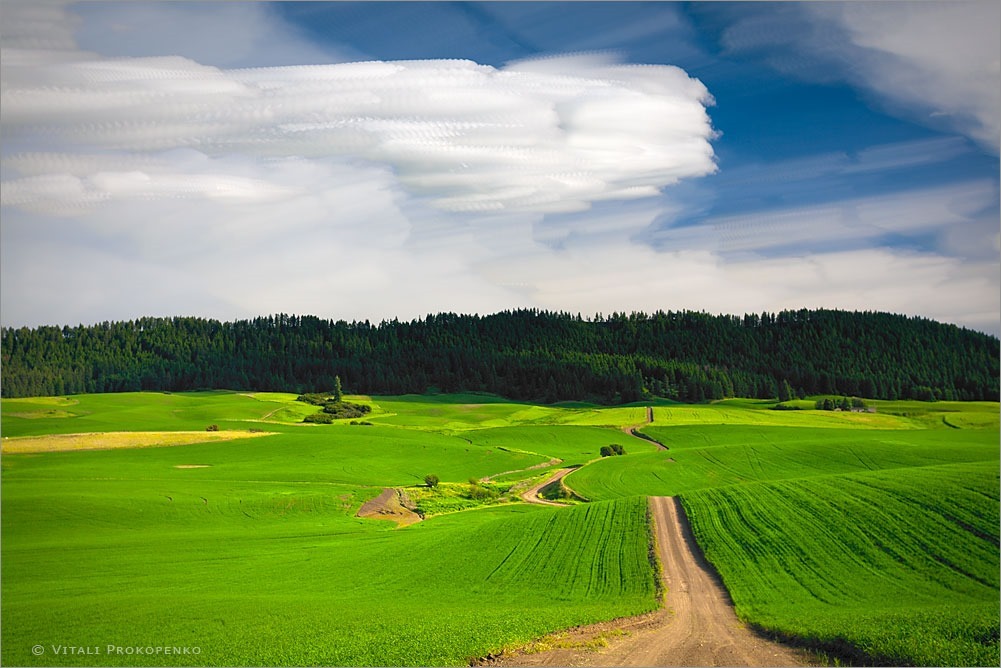
I’m still experimenting with this technique of multiple exposures over long period of time combined in one image and I like  results better and better. I think I’m onto something. Look at this image. Pretty trivial and  obvious composition. The first thing to note is that clouds look like they are painted.

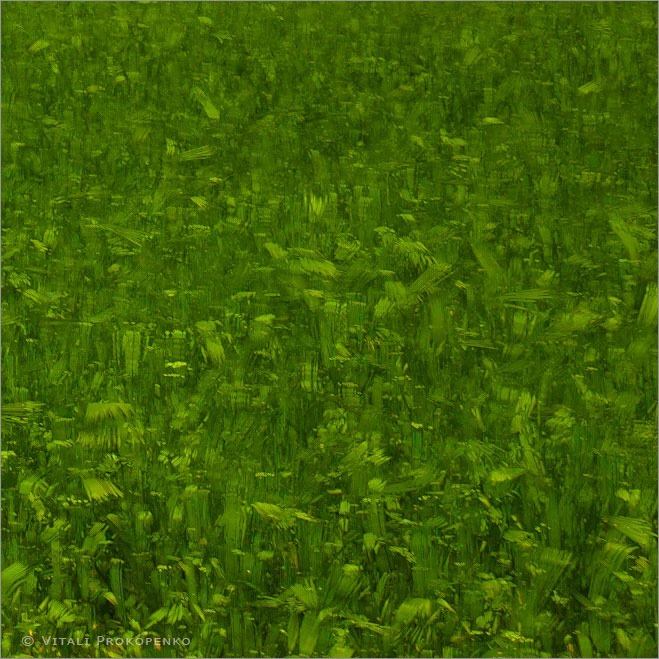
Then I looked closely at different elements in the image and liked this technique even more. Here is a fragment of a field on the right:

And here is the tree enlarged:

Both elements look like painted. The road is the only element that remains looking as a photograph. This combination of photographic look and painting look creates quite an interesting effect. I’m eager to start printing this to see how it looks in full detail print.

Studying Time

I’ve been studying time in photography, experimenting with different things for over a year. How to capture time in one image? What if images from multiple times are combined into one? What’s behavior of different moving subjects over time? This requires a lot of patience (which to be honest I’m lacking) keeping camera in exactly one position recording world around it at it changes.

The best part of it is a suspense waiting for images to be processed and see the end result. The worst part is not knowing if any of it will be any good.

So far I have had lots of ideas with little success. Finally, it starts yielding some interesting results. Look at those clouds: don’t you like the painting like look of them? That’s no painting though. It is a lot of images taken over time with camera stationary in the same place on a tripod. Good thing there were no cars on this rural road that gave me enough time to make it.

Power of B&W

I cannot believe I have not published a post to my blog in so long. It is enough to slip one week without posting and then another week and then not writing becomes a norm rather than exception. Time to break out of that habit. Expect lots of image in rather random chronological order over the next couple months.

***

It is one of a rare hot summer weeks in Seattle. The temperature is constantly over 30 during day and nights are warm and humid. On the days like today I want to throw all food out of the fridge and close myself in it. It is a nice thought that I doubt I’ll ever make come true. I’m not that desperate. But that certainly makes a memory of the last winter refreshing. And that’s the memory I want to share with you today.

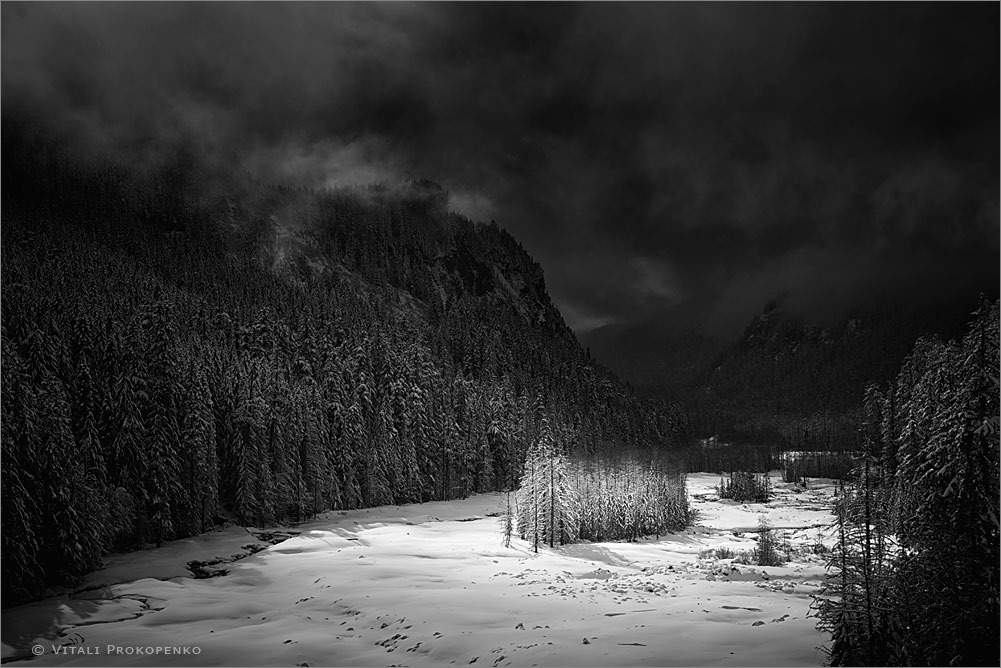
I love color to the point when I just photograph some color without even any subject. But sometimes the color is a distraction, a nuance that does not add anything or maybe even takes away something. In those case black-and-white image might still be more powerful. I find black-and-white especially working well in winter. One of the main reason is likely that there is not much color in winter in the pacific northwest mountains. The only color is the tone of the sun light breaking thru the clouds and that one is typically weird.

Like in this case the Sun broke thru the clouds just for a moment putting a spotlight on a bunch of trees in a valley. The color was strange but black-and-white tonality of the scene was beautiful.

Snow in the Palouse: Steptoe Butte

The whole area has frozen. My car was the only one on the roads making a new track in fresh snow. After driving around at the bottom of a fog ocean I drove to the top of Steptoe butte. As I were reaching the top I emerged from fog. The whole landscape opened up to my view: it was an  endless sea of clouds with peaks of mountains like islands seen on horizon.

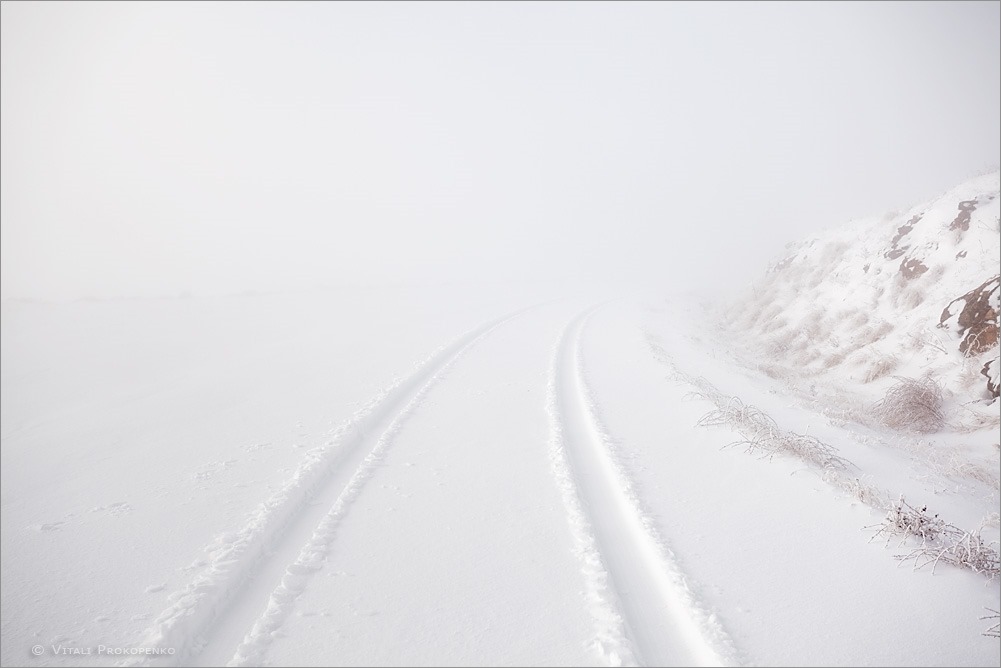
I was overwhelmed by the beauty of it all. Snow sparkling in the sun. Roads disappearing in the fog. Pristine white fields in small openings of white fog.

It was just too much beauty around my senses were exhausted. I was taking photos seemingly random, on instinct. I need it a rest.

Back from the top I dove my submarine back into the ocean of fog. Bitter cold but happy.

Snow in the Palouse: White Out

The next morning I woke up early to photograph sunrise. I had a place and scene in mind. Except as always the Nature has its own plans. Everything was still covered in thick fog. it make everything feel more enclosed putting white wall around. Everything was white, fresh and clean: snow on the ground and fog in the air.

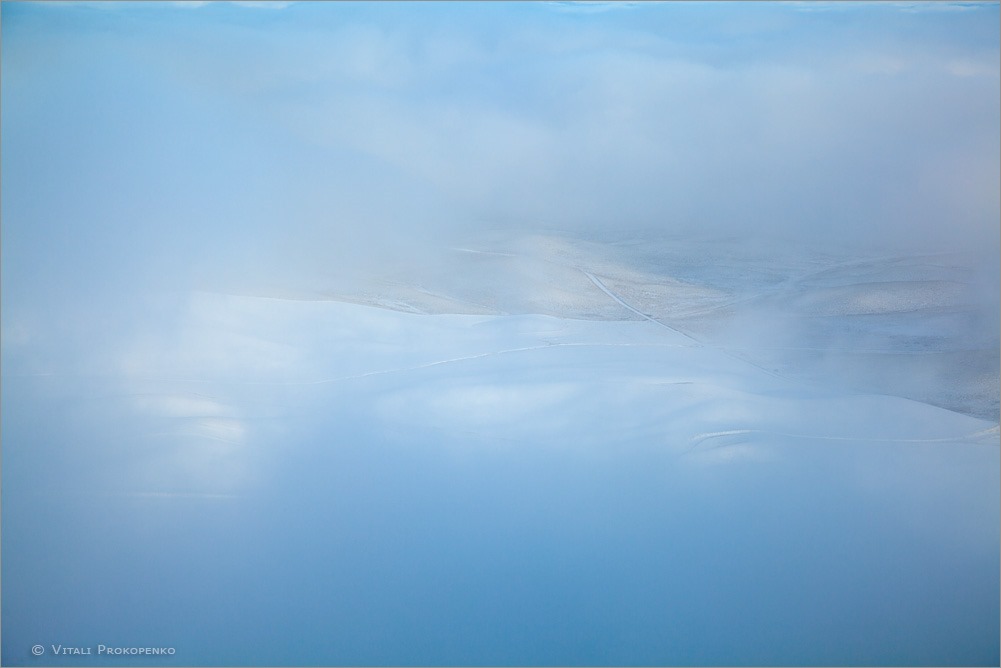
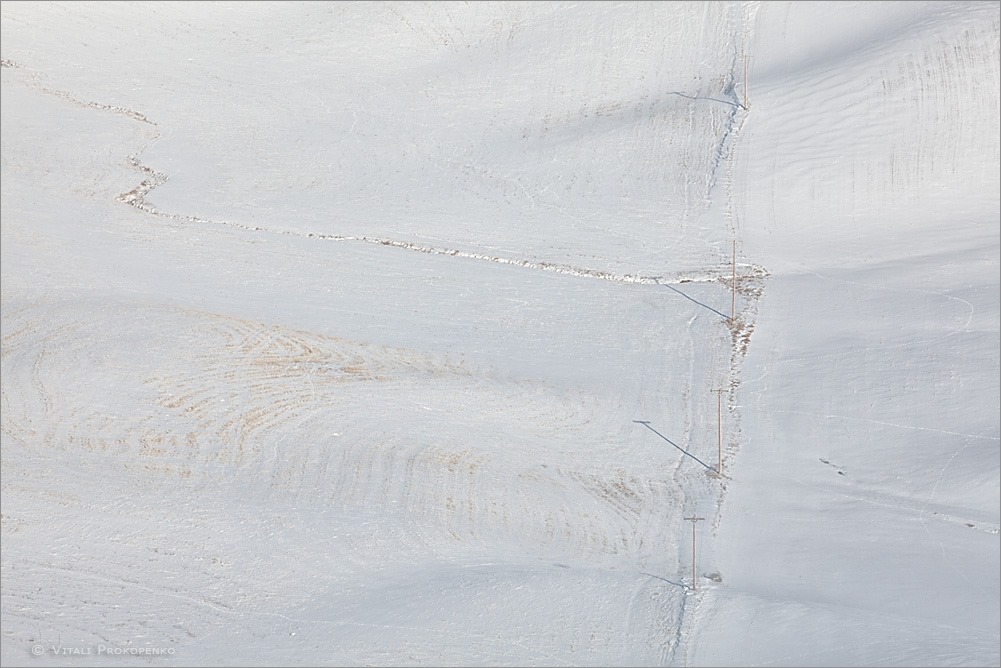
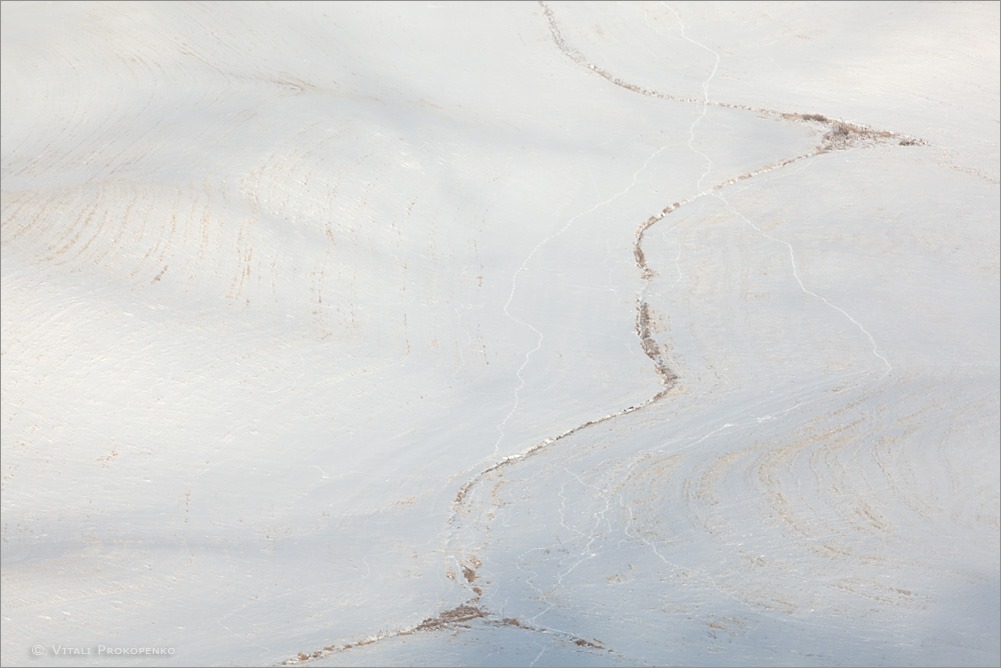
There was no hint of sunrise. The fog was too deep for that. So I started to photograph snow in the Palouse in fog. As I was going thru the day my image became more and more abstract and the theme has become clearer: white out.

The whole area looked frozen and deserted. My car was the only one on the roads making a new track in fresh snow.

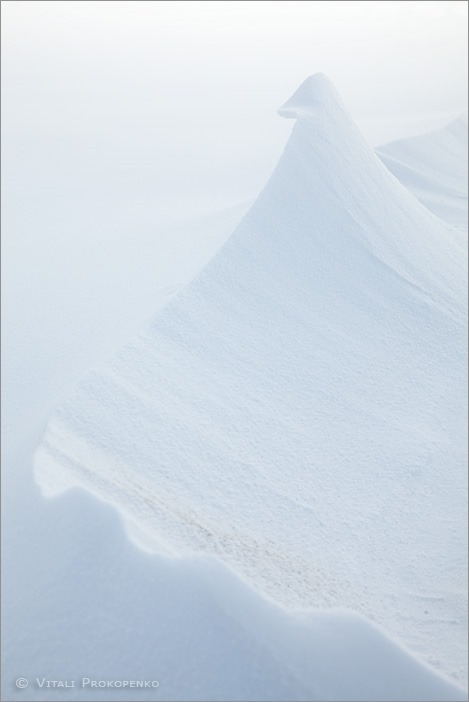
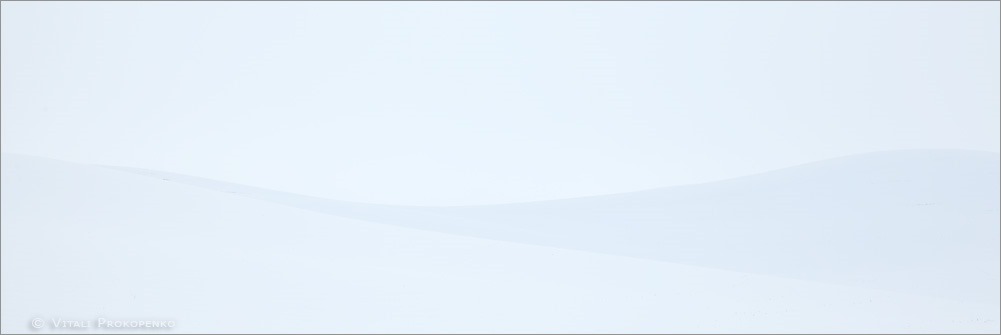
White out – the land is white and the sky is white. There is only thin line where land meets the sky. And nothing disturbs the quiet stillness of it all.

Where land meets the sky

Where land meets the sky

Where land meets the sky

Snow in the Palouse: The Night I Came

Snow in the Palouse, cold, windy… I went there again to see it, to photograph it, to experience it. And I was blown away by the beauty of it again.

***

I arrived there at night on the longest night in the northern hemisphere. Most of the drive was in the dark and most of it was snowless. But the temperature drop was noticeably. As I was driving I was watching outside temperature on my car dashboard. I wanted to know when it drops below freezing to drive slower in case there are ice patches on the road. As I got to the crossing over Columbia river I was watching in awe how temperature was dropping down another degree every 10-20 seconds. It was unbelievable: how temperature could go from +4 to –7C in a span of just a few kilometers.

As I was getting closer to Colfax the snow started showing up. It was getting thicker and thicker. It felt like the Palouse was the only place that had snow, isolated island of snow surrounded by bare land. And it was all in deep fog. It was beautiful. I just had to stop and photograph.

I stopped at the entrance to one of the side roads that was covered with too much snow, not drivable. I went to photograph a small farm by the road. I stayed close to the main road as snow was too deep to wonder off. I was taking picture after picture with long exposure. A snow plow truck passed by cleaning snow from the road. Smashing me with the powerful spray of wet snow and dirt. I was not angry, I was strangely calm, nothing could disturb me soaking up the beauty around me. And after all I saw his tracks – he tried to drive the truck farther away from me but splashing me was unavoidable.

I spent several more hours just driving around looking at all of it, enjoying all of it. Finally, past midnight I stopped, climbed into the back of my car and fell asleep, tired and happy.

_MG_4774

_MG_4782

_MG_4783

A Dream About Water

I’ve wrote about light painting before and I’ll likely write more again as this really fascinates me in photography. For me it is a lot of fun playing with lights, a lot of creativity as I create something that was not there in the first place, and a lot of surprise as most of the time what I get is unexpected.

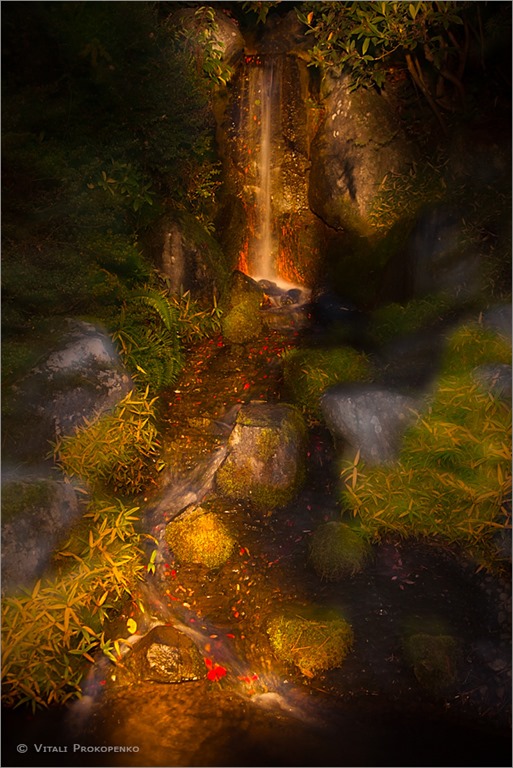
Here is an image that got me very excited about light painting again. I spent a day photographing fall foliage in Kubota Gardens in Seattle (I’m still working on post-processing those photos). At dusk as it got dark enough for exposures to go up to 30 seconds I started playing with light painting with two waterfalls I found in the gardens.

I found the upper waterfall to be more interesting of the two because it had red leaves caught in the stream and I could get a more dynamic image with foreground and background.

There were two new things I played with this time. First, I brought two different flashlights: one had cool light and the other one had warm light. So, I could do not only light painting but also color painting. The other thing that I played with was focus, shifting focus in the middle of light painting. This created dreamy effect.

For those interested in more technical details here is how I took this image. The camera was on a tripod, aperture wide open (f/4 for the lens that I used), shutter was 30 seconds. It was pretty dark already, my camera was not able to focus just using ambient light. First I would use very powerful warm flashlight. I would point to a rock in the middle of the frame and focused the camera using auto focus. I would turn off auto focus then. Turn off the flashlight, so it does not light up something accidentally, and release shutter. Then quickly with the same powerful warm light I would trace the waterfall and the creek back and forth a few times to ensure that individual spots or streaks of light a now visible. That was taking me about 5 seconds. Then I would turn off flashlight and defocus the lens. The rest of 25 seconds I was using weak cool flashlight to light up sides of the frame while the camera was out of focus. I did this ten times or more, every time getting a different image – I love the element of surprise. This I think is the best out of the series.

A Dream About Water
A Dream About Water