I’ll Take It!

Couple weeks ago I went to Rainier again. You know I’m falling in love with it. (See my post New Eyes.) While there I met a couple of photographers. We got talking a little bit, all three excited about nice sunset.

On the way back we were passing a view of Paradise Lodge with a nice backdrop of after sunset sky with nice hues of orange, red and blue. Their reaction was “It is not worth taking.” Mine was “I’ll take anything that excites me.” I think it turned out pretty nice.

Paradise Lodge
Paradise Lodge

No Photos Is Ok

[Good] photographer is the one that does not show bad pictures.
Jay Maisel

There are days when I take photos that excite me, photos I love. And then there are other days when I get none. That’s ok. It is continuous learning experience, continuous self-development. The important thing is not to lie to myself and pretend that mediocre photos are good ones. Just because I put up a lot of effort in taking them does not make them good.

On my last trip to Rainier two weeks ago I had those two days. On the first day I was treated to a nice sunset with great color in the clouds and a pink tint on everything on the ground from the light reflected from the clouds. (That’s when I took the photo below.)

On the second day nothing worked out. The photos turned boring and did play any tune in my heart. And you know what? I’m not going to show any photos from the second day. I’m still going to look at them; see if there is anything that can be photographed differently; what and why did not work. I’m learning from bad photos and you’re enjoying good ones.

Sunset at Mt Rainier

New eyes

The real voyage of discovery consists not in seeking new landscapes but in having new eyes.
Marcel Proust

Have I been to Mount Rainier National Park many times? Sure, I have. It is the closest national park to my home. Have I got a lot of photos from Mount Rainier National Park that I’m proud of? Nope. After all the trips I still did not have emotional connection with that place. The photos, while technically ok, were lacking emotions, strong graphics, or something interesting happening to me. As a result I thought Mount Rainier landscape was just not for me and have not visited it for a long time. Until recently.

Recently a group of three local photographers – Andrey Cherepakhin, John Song and Protik Hossain – lured me to go to Rainier again. They had specific places in mind which I have not visited before. I went along. And I’m glad I did.

Was the trick in having new eyes or was it in visiting places off a beaten path? I don’t know. One of those or both did the trick. Finally, I got photos that are beyond high quality snapshots and capture some emotional scenes of Mount Rainier.

PS At first I stopped typing here and just added photos below. Then I thought it would be worthwhile sharing what I liked about each of them.

———-

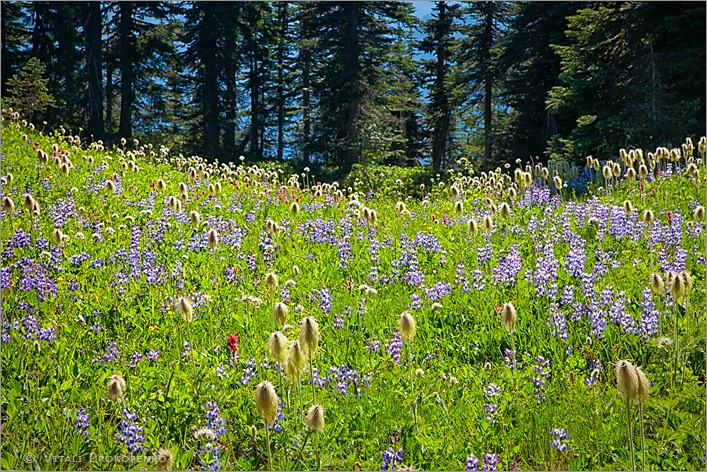
Summer Light and Pattern in a Chaos. I like summer feel of this photo. It was taken “into the sun”, bringing out a lot of green in the grass and lighting up the flowers. I like the contrast between light in the meadow and darkness in the trees. I like V-shape of two slopes. I like how seemingly random while flowers see to be in inverted V shape that draws you into the picture, gives it depth and perspective.
———-

Light and Shapes. Obviously the reflection is nice in absolutely still water. But what I really like in this photo is the light of the sun right before sunset caught in a sheet of ice floating in the water. The other thing that I like is that the shape of the highlighted piece of ice repeats the shape of Rainier in background.

———-

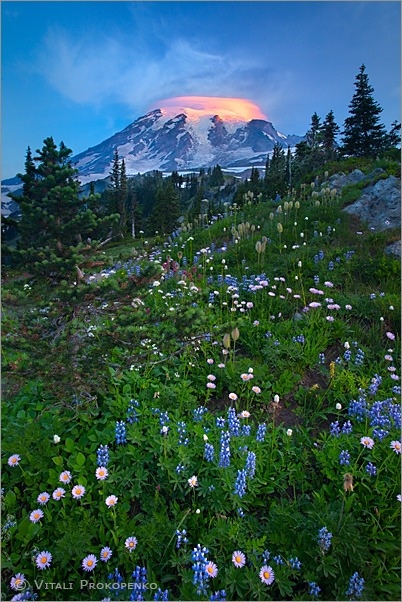
Light, Cloud and Frame. The cloud sitting on the top of Rainier, lit up by sunrise is an obvious thing that I like about this photo. The other two are how the mountain is framed by the tree on the left and the tree on the right and how flowers lead to the mountain.
———-

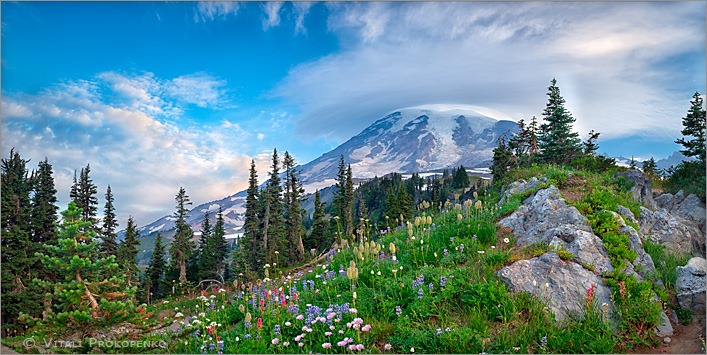
Shape and Curve. Rock formation on the right and the mountain make up one large curve.
———-

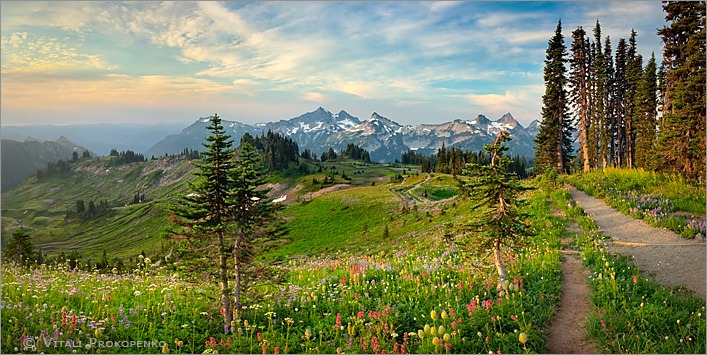
Leading line. The trail is strongly visible in the right bottom corner of the image continues later closer the center of the image, leading to Tatoosh Range in the distance.
———-

Layers. There are many layers in this photo on different levels. First, foreground – rock and flowers, middle ground – rocks, stream and snow, mountain and sky in background. Second, half in shadow, half in light. Third, interleaving layers of light snow and dark rocks.

And of cause the cloud lit up from inside is great!

———-

Mood. Reflection and Clouds. I like reflection of the mountain among the rocks. The cloud around the mountain grew in size to fill up the sky while still keeping the circles around the mountain.

And I like the tough mood of the high elevation landscape. The unrest in the sky. The anticipation of cold fall ahead. A reminder that the summer was almost over.

———-

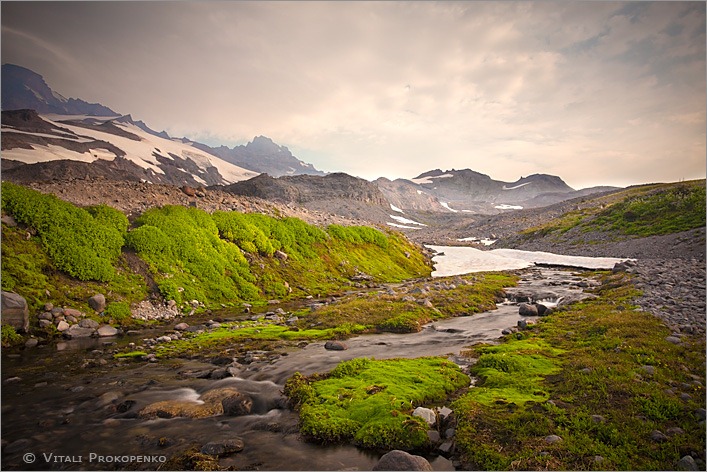
Mood. This photo reminds me the kind of photos I see from Iceland. Dramatic heavy skies and flat light. Tough climate creates tough landscape be it Iceland or this small oasis at Mt Rainier.
———-

Emotions and Light. I like this photo for the same dramatic skies combined with a tenderness of flowers and a island of light breaking thru the clouds.

Path of Light

Photography has been and hopefully remain as much about playing and experimenting. One of such fun things is to introduce an artificial light sources in a landscape. The official term for it is “light painting” but for me it is just playing with flashlights, imagining what a landscape can be, and then getting a surprising result.

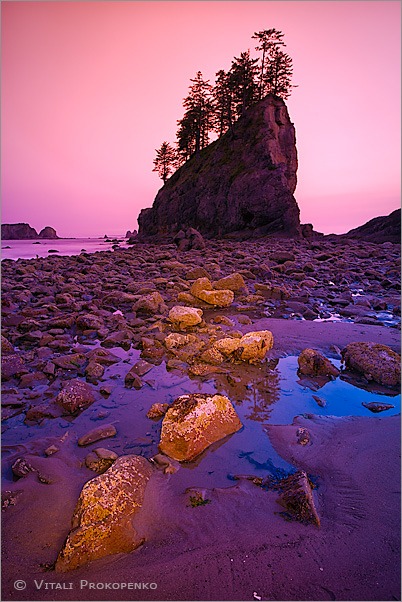
Like in this photo that I took at the Second Beach in Olympic National Park just after sunset, when it was dark enough for a long exposure and dark enough for a flash light (actually 3 flashlights) to make a difference.

Path of Light
Path of Light

Keep on Moving

Last weekend I made a short two day trip to the Palouse – an area in Eastern Washington famous for its rolling hills covered with patches of fields. It is very beautiful and photogenic place. Some call it American Toscana.

My first day of the trip in the Palouse was dreadful. Grey solid sky, no light, little color. Just as if it could not get any more discouraging, suddenly the rain started. It was pouring down heavily. Most people would stay home in that weather. Not me. I went on scouting around.

The rain stopped just as suddenly as it started. Heavy clouds and soft light were majestic.

I even caught a glimpse of warm pink glow in the sky from a light of the Sun settling for the night.

Just one small piece of advice: don’t drive dirt roads there when it is wet. The dirt is a fine grain clay that becomes extremely slippery when wet. You’ll lose any control over your car. I am talking about it from experience.

Just a Little Bit of Water

Day 5, Sunset

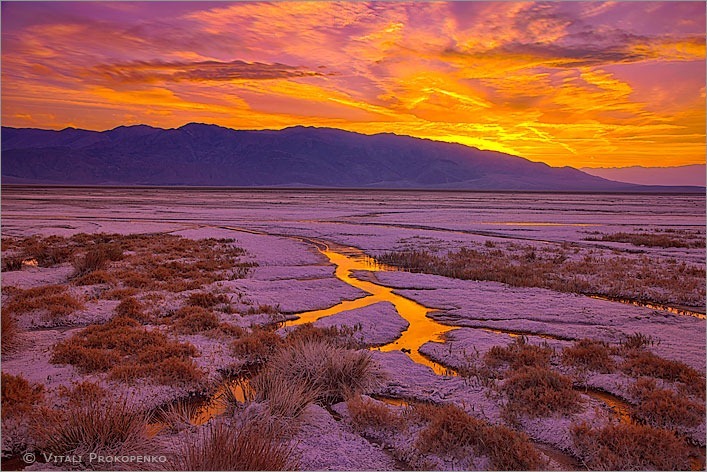
Finding water is a bit of a challenge in Death Valley. On a rainy year (which was a few years ago) there was water on Badwater flats and lots of photographers and spectators were taking photos of reflections. This year there was no water at all on Badwater.

As I was driving thru the valley I noticed a brisk reflection of the Sun. It must have been water.

Indeed there were a few small creeks with salty banks. And where water is there is life. There was some grass. Most of it dried out but there was some still green. The dry ones mineralized with salt turned into sharp spikes.

That’s where I settled waiting for a sunset.

Here are a couple of images I took at that place. The first one is right before the Sun disappeared, the last rays just touching the tops of the greenery:

Last Rays
Last Rays

And here the afterglow:

Afterglow
Afterglow

Sand Storm

Day 4, Dusk

At night dunes are calm and quiet. But as sun rises strong winds start moving sands. Dunes become violent and unpredictable.

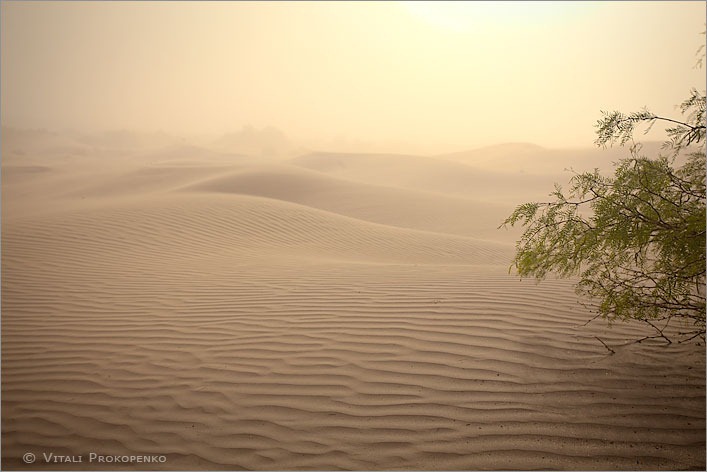
Today I went into dunes for sunset. There was little to no wind at first then within a few minutes wind became very strong. It was not only moving dust, it was moving sand.

Would you want your skin be polished with sand paper? That’s how it felt standing in that sand storm. I had to hide behind a bush hoping that it will be over soon but it was picking up more and more. As I was standing behind the bush I saw sand settling on camera. I needed to get out.

I was walking backwards toward a road to keep my back against the wind. The fun part in walking backwards was seeing my footsteps disappear right in front of my eyes. The wind and moving send would repair the dune texture within seconds.

Sand Storm
Sand Storm. No Visibility

Dust Storm

Day 3, Sunset

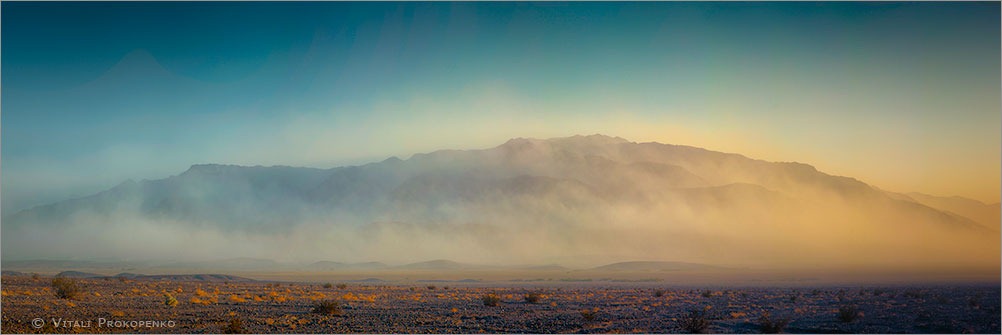
Back in Death Valley I went to Mesquite Dunes – my favorite place in Death Valley. The wind was strong I saw dust storms on the way to Death Valley and there was a dust storm in the valley too.

Dust Storm

As sunrise was getting closer the wind was picking up more and more. Visibility dropped. The wind was continuously moving sand. Bare legs were getting a treatment with sand paper. Sand was getting everywhere.

The sand was getting into my eyes, my eyes were teary and I could not see anything. I had to retreat back to the car, wait for my eyes to clear out and then drive away to observe this from safe distance.

Dust Storm

Eureka Dunes

Day 2, Sunset

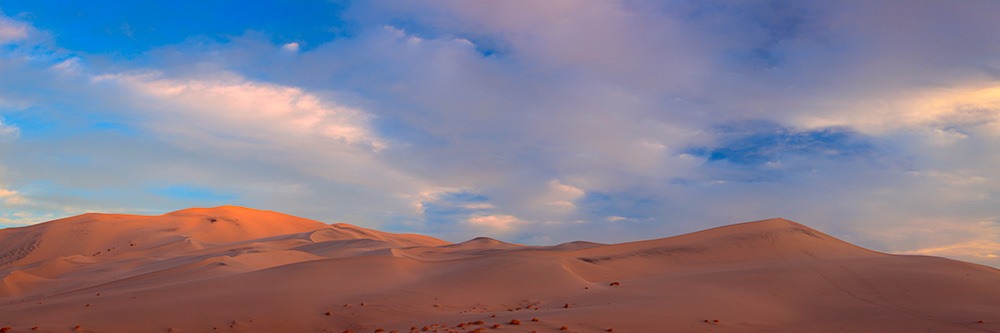
Here they are – Eureka Dunes. This is the first time I went there. Their size is magnificent and awe inspiring.

Eureka Dunes

Just as I approached Eureka Dunes a low pressure indicator came up on console. I stopped and stepped outside. I could here a fizzing sound coming from a punched tire. Photography aside I had to replace the tire first.

Changing tire in heat and dust is not fun. At first I thought it was kind of lame that I had made all this way without a problem and got a flat at the destination. But in retrospective I think it was good it happened there and not in the middle of the road. It was easier to change tire on a leveled camping site than a rough road. And there were other campers there who were more than happy to help.

Once the tire was replaced I was ready to photograph a sunset. And what a sunset it was!

Here is the last light on the highest dune. The clouds are still white and soft.

Eureka Dunes

And here are the clouds lit up.

Eureka Dunes

Till Pitch Black

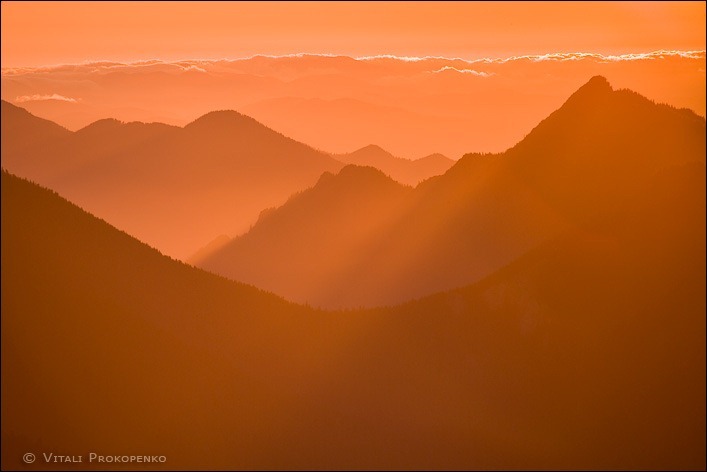
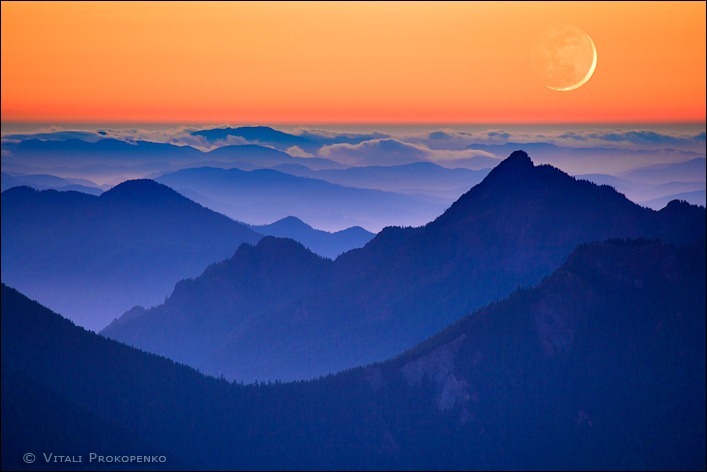
I was looking thru some old photographs and found this three that I saw as a great illustration of what I like to say about photographing sunset: it is not over until it is pitch black. All three photos were made a top of Hurricane Hill at different times.

The sky was clear. The evening started with sun slowly setting behind mountain peaks. The streaks of sunshine were breaking thru mountain tops, highlighting mist rising from the bottom of valleys.

Sunset on Hurricane Hill

Once the last light of sun vanished the valleys were filled with blue cool tones of shade, while the sky was still deep orange. A few minutes after the moon rose just where the sun disappeared.

Quiet Evening

Later when it got so dark, you could barely see anything deer started gathering at the top against last warm tones of sunset on the horizon.

Deer at Hurricane Hill