Busiest Time of a Year

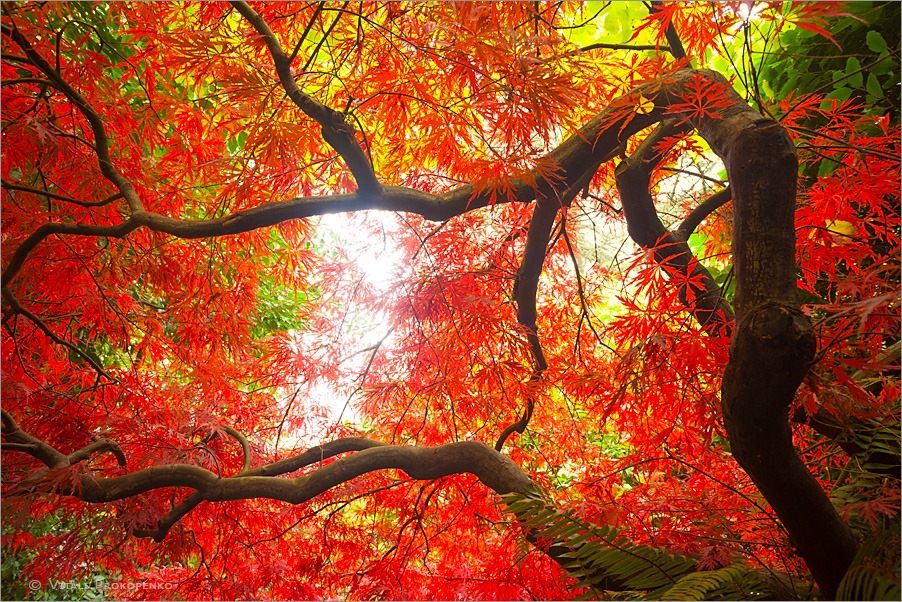
Fall. So many colors. Changing quickly. Fleeting moments…

I love fall most of all. When I was a teenager my favorite time of a year was spring when everyone springs into action, when air is filled with scents of blossom and fresh greenery. Now fall is my favorite. Is it because of age? Or simply the fact that I live in an evergreen state now?

Fall is the busiest time of a year for me. I like spending hours meditating with my camera in a solitude of the Nature. I love diving into its colors. This year I’ve already spent time photographing fall in Colorado, and in Rainier National Park. This week I’m going to yet another location. Naturally, I cannot keep up with processing all the photos. Well, I’ll have the whole winter for that. But I feel like I have to keep up with writing blog. I promised that to myself. So, here is one image from Colorado.

Colors of Fall
Colors of Fall

Last Ray

I had quite an interesting dialog with my seven year old son about this photo.

Adrian: Dad how did you get to capture the last ray of the Sun on the flowers.

Me: It is not a sun ray. I used flashlight to highlight the flowers as if the Sun was lighting them up.

Adrian: Cheater. It is not a real landscape. Nobody is going to buy it. People like real landscapes.

Melakwa Lake to Pratt Lake

This is a kind of interesting blog post: a trip report. Something that I have not done before. Another thing that is unique to this blog post is how fast I did post-processing of photos. Typically, it takes me days if not months after an actual trip. This time I’ve done it in a day.

Yesterday with a good company I went on a one way hike starting at Melakwa Lake trailhead and finishing at Pratt  Lake trailhead. It was an interesting and challenging hike, slightly over 14 miles long (not counting the side trips we took). Just walking it would take us 7 hours. 5 more hours we spent photographing and taking side trips. Overall the trip took us 12 hours. We started hiking at around 6am and finished around 6pm.

Not far from trailhead the trail passes under I-90 viaduct with its nice curve:

In 40 minutes we got to the first waterfall without a name. We just passed by since we tried to get to Keekwulee Falls by sunrise. It was another 30 minutes before we got to Keekwulee Falls and we missed sunrise which turned out to be not a big problem since there was no beautiful sunrise and the light was not aligning with the waterfall either.

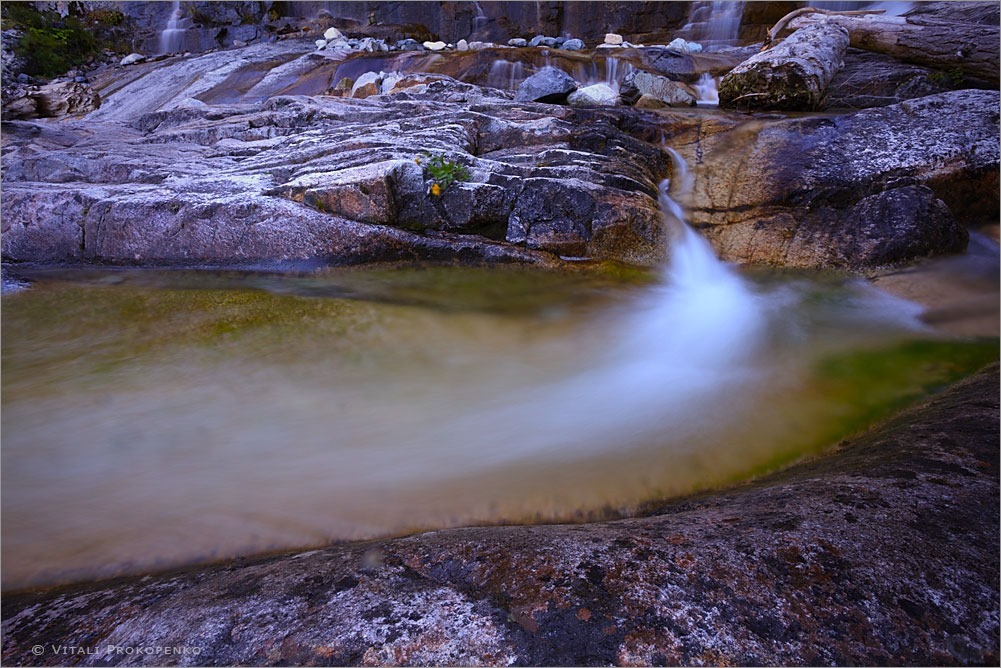
It was still great that we got there so early. The early morning sun was lighting up granite wall across the waterfall reflecting back soft warm light while waterfall itself stayed in shadow with water reflecting deep blue of the sky. Keekwulee Falls was a great destination for photography: it has so many intricate streams, cascading water, emerald pools, that provide endless opportunities for images.

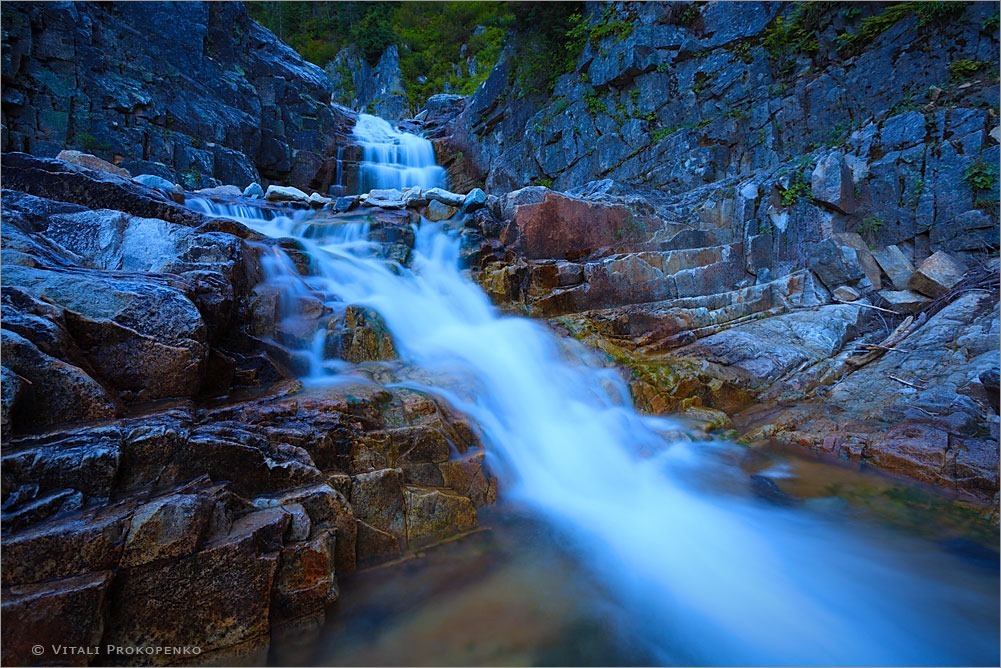
We spent one and a half hours by Keekwulee Falls. I could easily spend there even more making more images. Once we left this waterfall we went on climbing even steeper higher to a pass. Doing this early morning with air still cool after night definitely made it easier. At some point we passed one more waterfall but it had no close approach. We could barely see it thru trees. Once over the pass we quickly got to the first alpine lake on our hike: Melakwa Lake with Upper Melakwa Lake just a short distance away. At this point the sun was high. The light was flat – the kind of landscape photographers don’t like. I was not discouraged by that since the main goal was exploration. Still I made it a goal to take at least one interesting photo on each lake. So here the go in the order of appearance.

Melakwa Lake:

Lower Tuscohatchie Lake:

Near Pratt Lake:
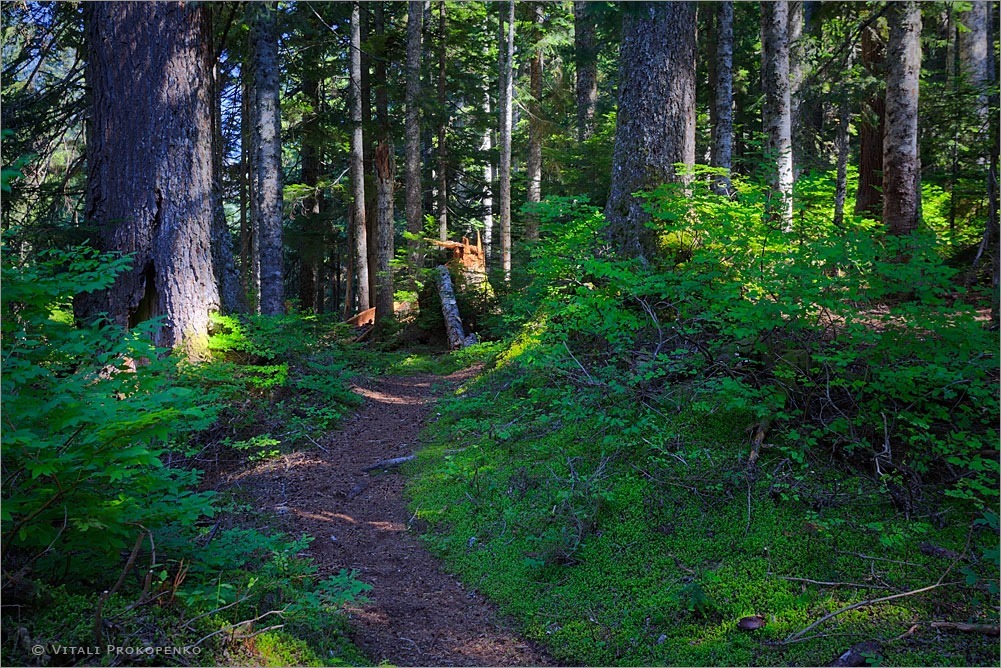
Pratt Lake:
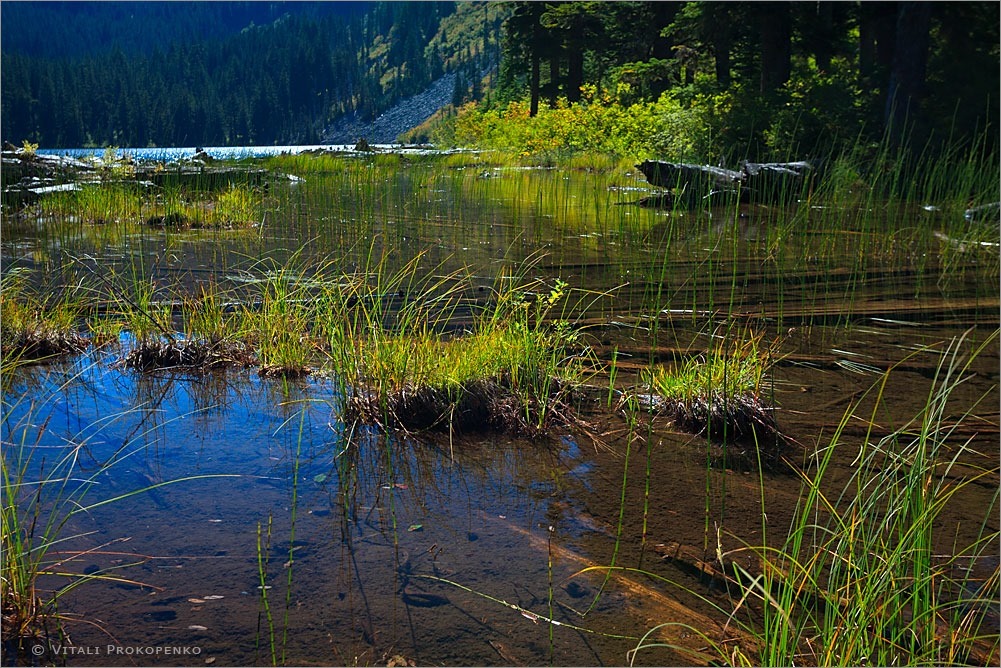
Pratt Lake was the last alpine lake on our trail. Once we passed it the trail went up steeply to a pass that would get us over the ridge closer back to civilization. Unfortunately I must say I did not find lakes very picturesque. The all elongated north to south with approaches from south or  north end surrounded by tall granite walls on both west and east side. This means that there is no photo opportunity at sunrise or sunset.

Once we got to the top of the ridge I saw this tree covered with bright orange mushrooms. Just had to take a picture of it:

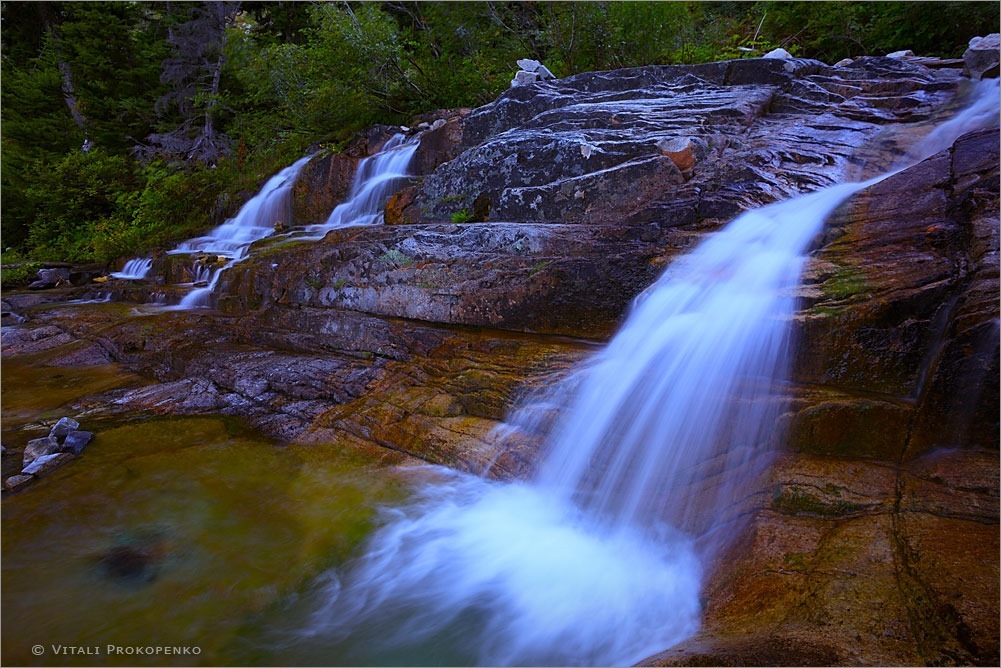
Over the ridge and on the way down to Pratt Lake trailhead the trail was uneventful: monotonically old growth forest. It was an easy walk down but I was not surprise to see tired faces of people walking up. For them it was long, steep and boring hike. There were occasional small streams but they were lacking enough water to become interesting. It has been a very dry week here and it was a sunny side of the ridge. Still there was one interesting waterfall which I’d like to return back to after rain:

Beauty is in Details

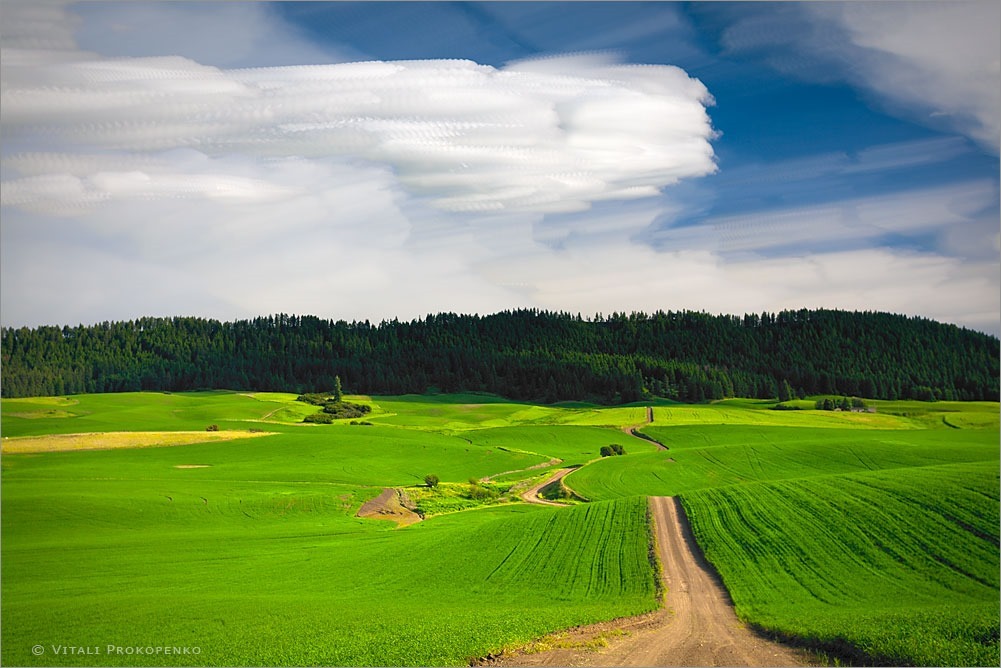
I’m still experimenting with this technique of multiple exposures over long period of time combined in one image and I like  results better and better. I think I’m onto something. Look at this image. Pretty trivial and  obvious composition. The first thing to note is that clouds look like they are painted.

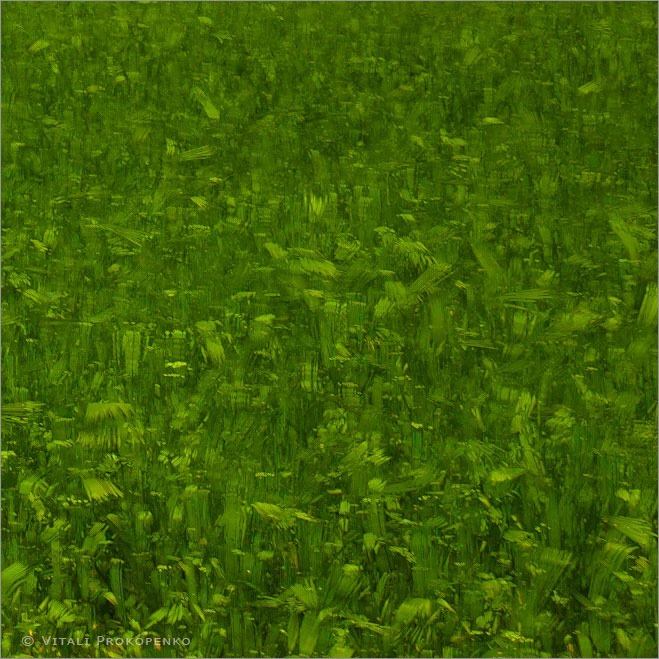
Then I looked closely at different elements in the image and liked this technique even more. Here is a fragment of a field on the right:

And here is the tree enlarged:

Both elements look like painted. The road is the only element that remains looking as a photograph. This combination of photographic look and painting look creates quite an interesting effect. I’m eager to start printing this to see how it looks in full detail print.

Studying Time

I’ve been studying time in photography, experimenting with different things for over a year. How to capture time in one image? What if images from multiple times are combined into one? What’s behavior of different moving subjects over time? This requires a lot of patience (which to be honest I’m lacking) keeping camera in exactly one position recording world around it at it changes.

The best part of it is a suspense waiting for images to be processed and see the end result. The worst part is not knowing if any of it will be any good.

So far I have had lots of ideas with little success. Finally, it starts yielding some interesting results. Look at those clouds: don’t you like the painting like look of them? That’s no painting though. It is a lot of images taken over time with camera stationary in the same place on a tripod. Good thing there were no cars on this rural road that gave me enough time to make it.

Snow in the Palouse: Steptoe Butte

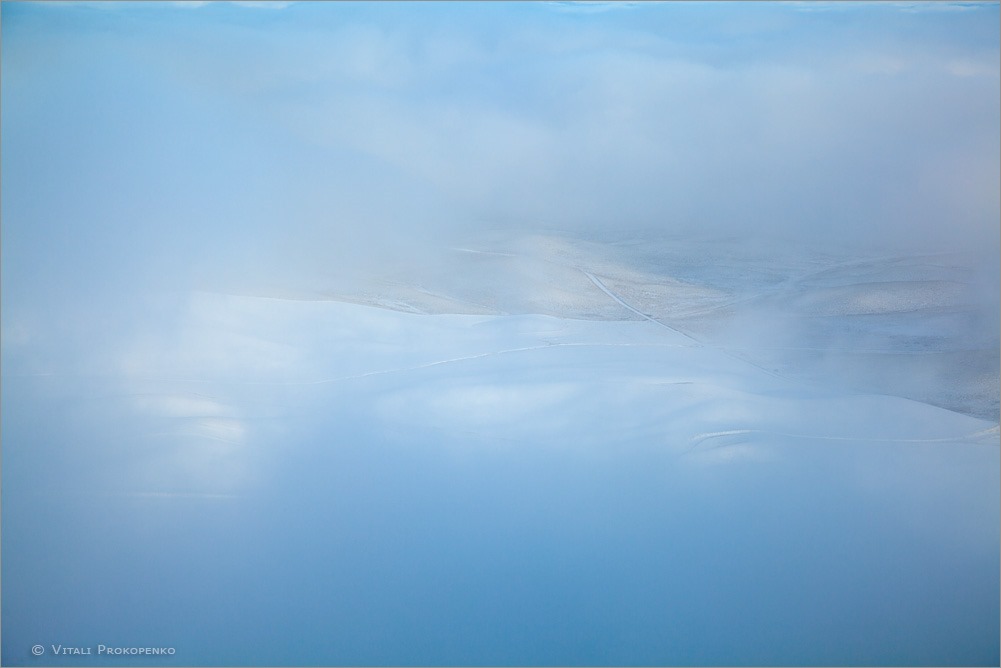
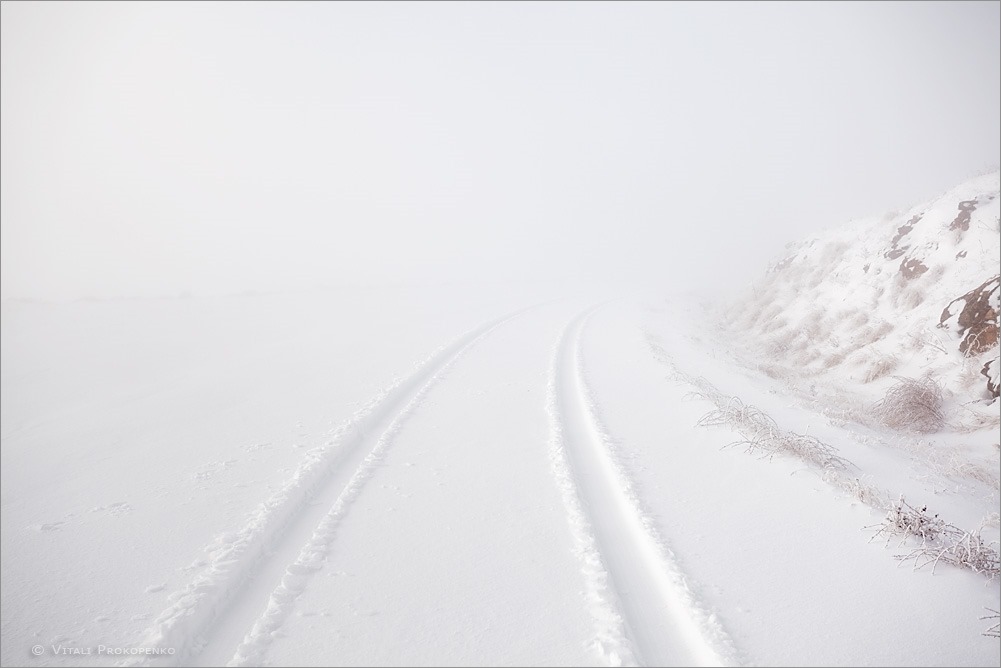
The whole area has frozen. My car was the only one on the roads making a new track in fresh snow. After driving around at the bottom of a fog ocean I drove to the top of Steptoe butte. As I were reaching the top I emerged from fog. The whole landscape opened up to my view: it was an  endless sea of clouds with peaks of mountains like islands seen on horizon.

I was overwhelmed by the beauty of it all. Snow sparkling in the sun. Roads disappearing in the fog. Pristine white fields in small openings of white fog.

It was just too much beauty around my senses were exhausted. I was taking photos seemingly random, on instinct. I need it a rest.

Back from the top I dove my submarine back into the ocean of fog. Bitter cold but happy.

Snow in the Palouse: White Out

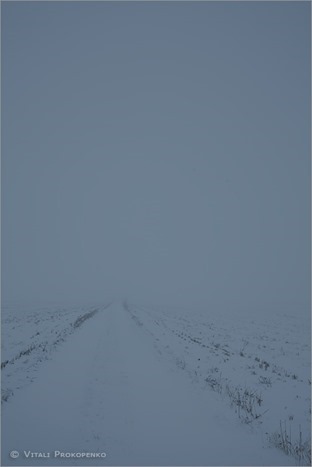
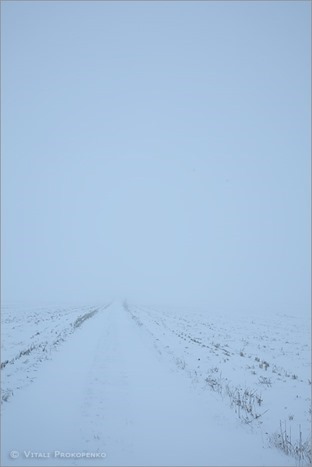
The next morning I woke up early to photograph sunrise. I had a place and scene in mind. Except as always the Nature has its own plans. Everything was still covered in thick fog. it make everything feel more enclosed putting white wall around. Everything was white, fresh and clean: snow on the ground and fog in the air.

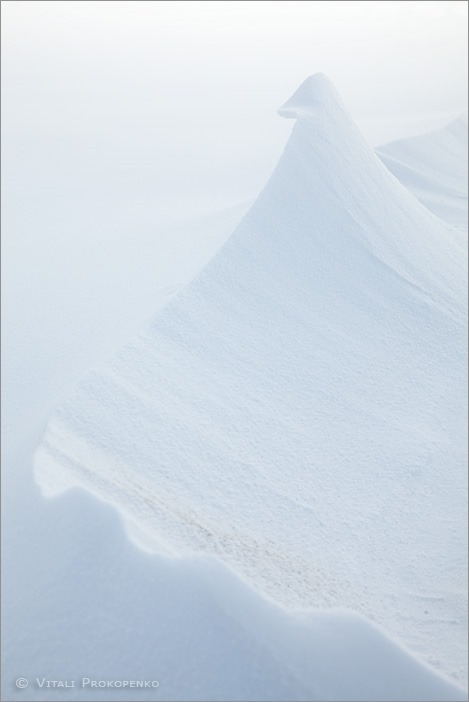
There was no hint of sunrise. The fog was too deep for that. So I started to photograph snow in the Palouse in fog. As I was going thru the day my image became more and more abstract and the theme has become clearer: white out.

The whole area looked frozen and deserted. My car was the only one on the roads making a new track in fresh snow.

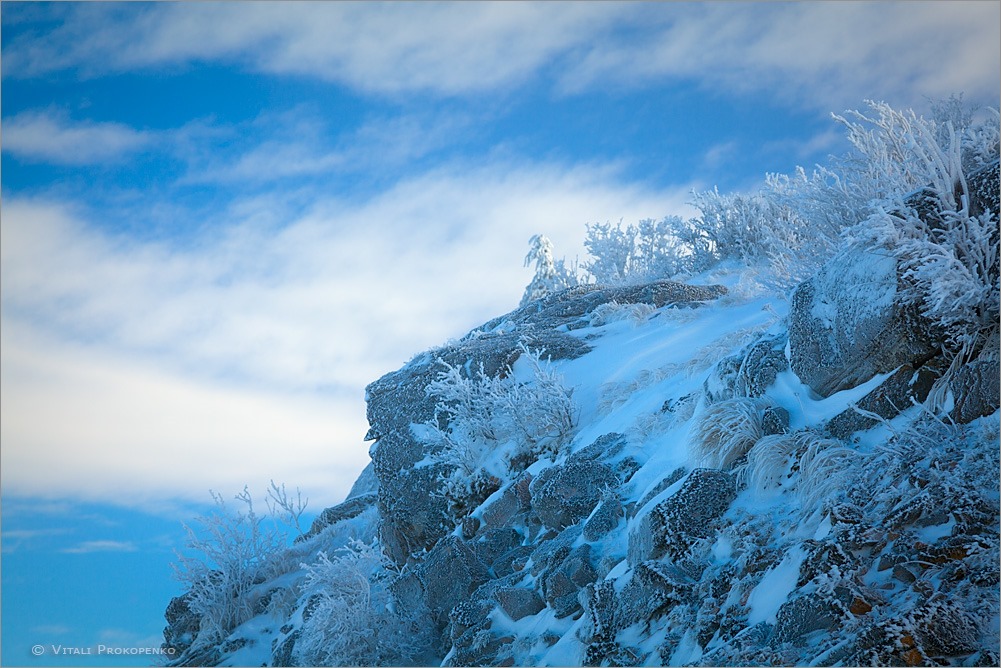
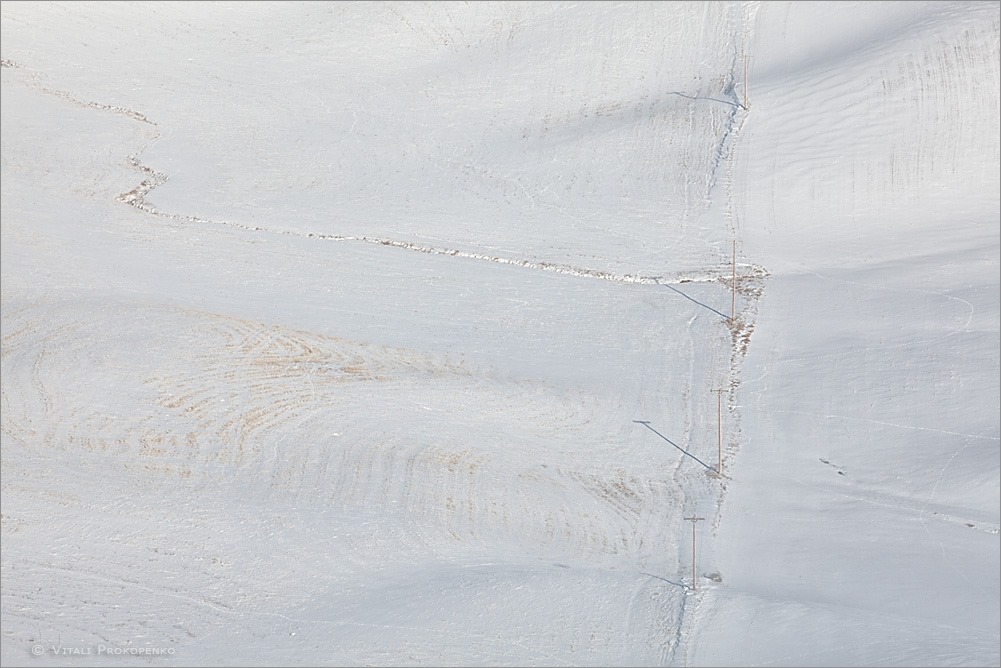
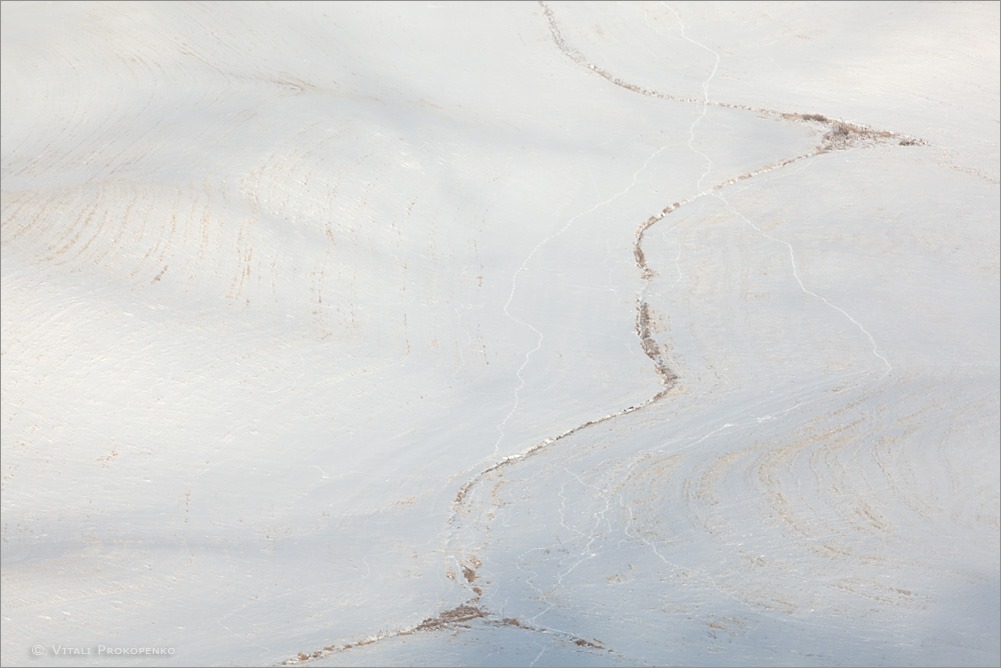
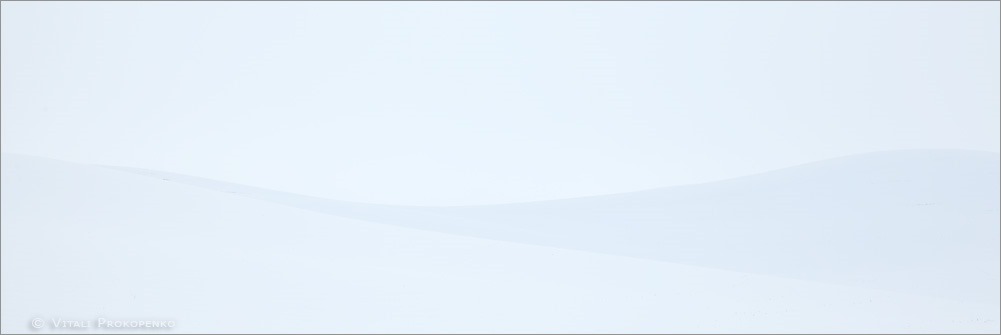
White out – the land is white and the sky is white. There is only thin line where land meets the sky. And nothing disturbs the quiet stillness of it all.

Where land meets the sky

Where land meets the sky

Where land meets the sky

ETTR or Try it before you buy it

There has been a lot of discussion of ETTR (Expose To The Right) on photographic blogs, websites and all kind of other publications. With this method you expose as high as possible with histogram touching the right edge. Here is one article that goes in depth on this method: http://www.luminous-landscape.com/tutorials/expose-right.shtml.

The idea is that this produces maximum quality digital negative. Often this produces image that looks overexposed and later in post-production supposedly you can lower exposure to get naturally looking image but with higher quality.

While it looks reasonable that this may reduce signal-to-noise ratio, I noticed that this results in images looking too flat and with washed out colors. On my last trip I took two images one normally exposed and one exposed to the right. The scene is extremely simple which helps illustrate the difference in result. In post-production I reduced exposure of the ETTR image to match exposure of the first image. No other adjustments were done to either image. Here are results side-by-side:

_MG_4863 _MG_4864

Guess which one is which? The one on the left is taken with normal exposure, the one on the right is taken with ETTR and then reduced back exposure to match exposure of the first image. As you can see ETTR image results in less color and less contrast, i.e. lower dynamic range. To confirm this here are the corresponding histograms:

_mg_4863 _mg_4864

Just by looking at histograms you can see that the range of tonality is greater in normally exposed image as well as greater separation of colors. This seems to disprove the statement that the article I linked at the beginning does that ETTR image has greater dynamic range.

I don’t know about you by I’d rather expose right than expose to the right. This is just another case to demonstrate my main principle in photography: do what you like, what feels right to you. And no matter how convincing a new idea you read somewhere sounds, try it before using it, get your own feeling for it. If you really like it, use it, just make sure it is because you got your own understanding of it not because someone else told you to do it.

UPDATE: I’ve got requests to include original ETTR image with histogram. Here it goes.

_MG_4864

Capture

Strolling thru Kubota Garden

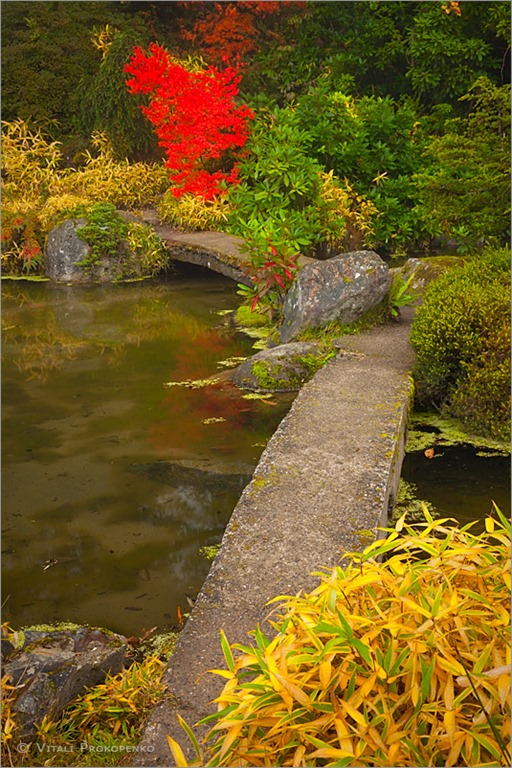
Sometimes plans don’t work out and I’m glad they don’t. One weekend another photographer and I were planning to hike up a mountain trail to photograph a lake in snow. When time came my buddy bailed out and I did not want to risk hiking in snow after dark alone. Instead I went to Kubota Gardens in Seattle and spent a day there.

Typically, when for places like parks or gardens close to home I try to find time during week or go with family during weekend for one or two hours to do photography. This was the first time I spend whole day in one relatively small garden. And it felt really good – photograph without rushing, lying under a tree, taking time, observing.

I’ve fell in love with this garden.


Early Morning Mist


Let Me Offer My Hand


Passage


Bush on Fire


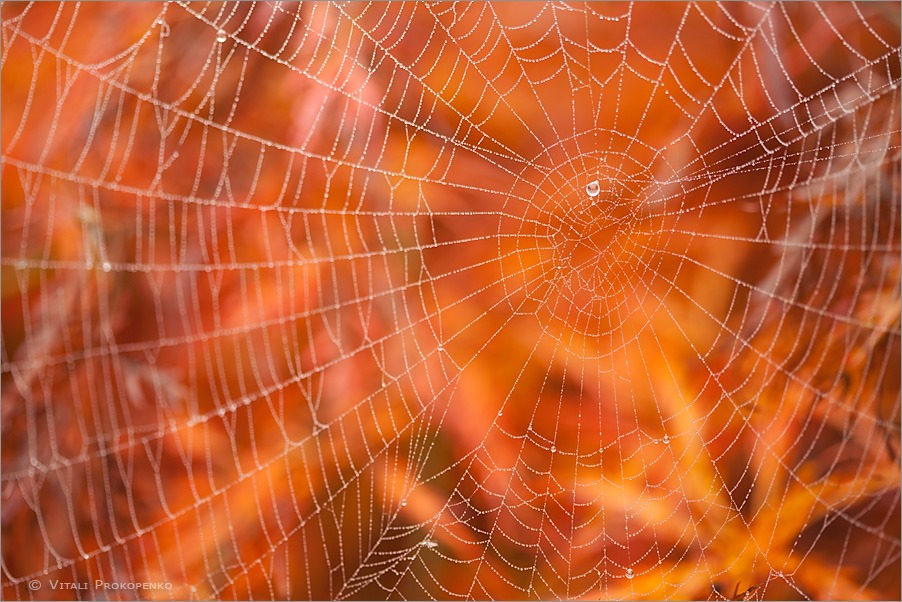
Due Drops Caught in a Web


Simple Yellow on Red


Lying on the Ground Looking Into Sunny Sky


Explosion


Butterfly


Light

Happy Halloween

I took this photo in the Palouse back in August this year but was holding it back to use it to wish everyone a happy Halloween. Enjoy this image of an abandoned house on one very stormy summer night. It looks very much like a haunted house.

_MG_5089