One Step Back

I’m back from Norway. Well, I’ve been back to Seattle for two months, enjoying my old friends: Olympic National Park, Rainier National Park, Enchantment Lakes and trails around Seattle.

***

One of the icon places in Rainier National Park is Reflection Lakes. In fact by far this is the place to photograph at sunrise. And pray the water is still as a mirror. I had not visited it for a while as it is over-photographed in my opinion. I had preferred exploring new places in this vast park.

On a whim of nostalgia since I have not been in the park for four months I went there to enjoy the classic view. It was the first  freezing night of the season. Frost was covering grass, logs, and few remaining leaves. Fog was rising over the lakes and slowly moving over the still water.

There were a few more photographers besides me there. All of them trying to get as close as possible to the water going for pure perfect reflection photograph. I on the other hand step back a bit and have edge of the lake nicely framing the mountain reflection. Here is my almost classic image of the mountain:

But then I thought that what was really interesting and unique about that morning was the first frost. So, I walked away from the lake to the point where I had seen two logs pointing in the direction of the mountain. To me these images are more interesting. The first one was taken before sunrise during twilight and the second one was taken right after sunrise.

When Less Is More

With better and better sensor technology and better software for HDR processing we can capture an incredible dynamic range in our images where we have an incredible details in highlights and in shadows.

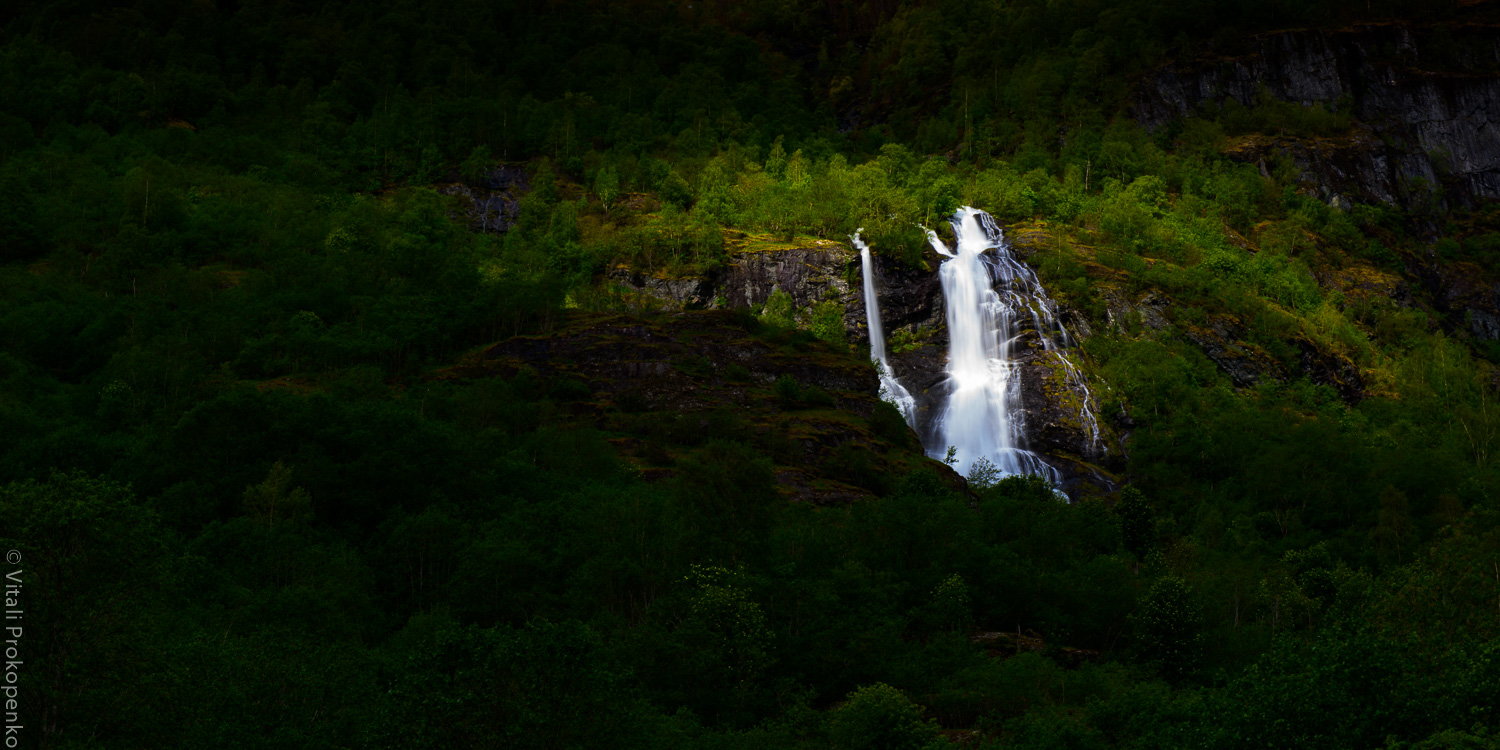
Would photographers of the past be amazed with amount of details we can capture? Maybe. But I really miss silhouetted photos that have become such a rarity. They reveal very little leaving a lot of room for imagination.

The photo can be not about what is said but about what is not said, or to be more accurate about what is not shown and not about what is shown. It can be about mystery left in the shadows.

Like a Pianist

Recently (four months ago) I bought myself a new camera. Just then I understood just how much my previous camera had become an extension of me. I did not even think about controls, I just thought about picture I want and fingers did all the work.

There was a lot to learn with the new camera. I’ve read thru the manual repeating all the steps that I thought were important to me. I started making photos. I stumbled over and over, had to think about what buttons to press, what dials to turn. Many pictures went straight to trash – they were technically very bad: out of focus, under-exposed, over-exposed.

I kept practicing. I had to re-read parts of the manual because I forgot how to make certain adjustments. At last during the trip to Alberta I noticed that my fingers do all the work automatically again. It was such a pleasant feeling to be in control of the camera again. I somehow think it is similar to how pianist is playing on a piano.

Here is the final set of images from the trip.

Never Can Take the Same Photo Twice

“No man ever steps in the same river twice” – Heraclitus

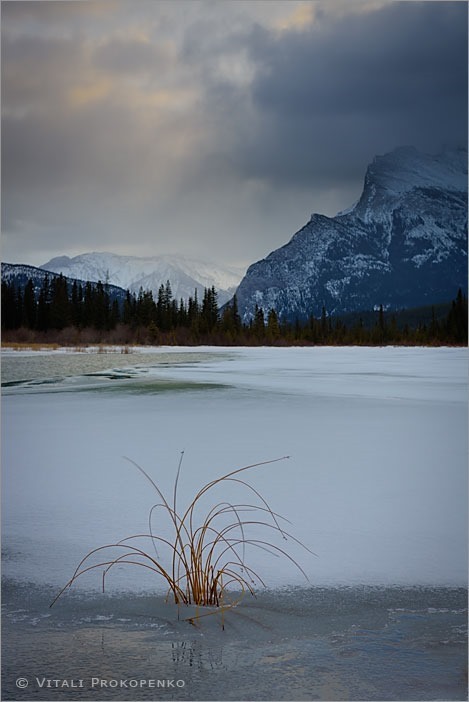
There is a set of small lakes near Banff called Vermillion Lakes. They are easier to access and a nice spot for sunrise photography. I visited them several times: on my way to Abraham Lake and on the way back. They are mostly frozen during winter that is if the winter is actually cold but there are a few of hot springs coming into them that never seem to freeze up.

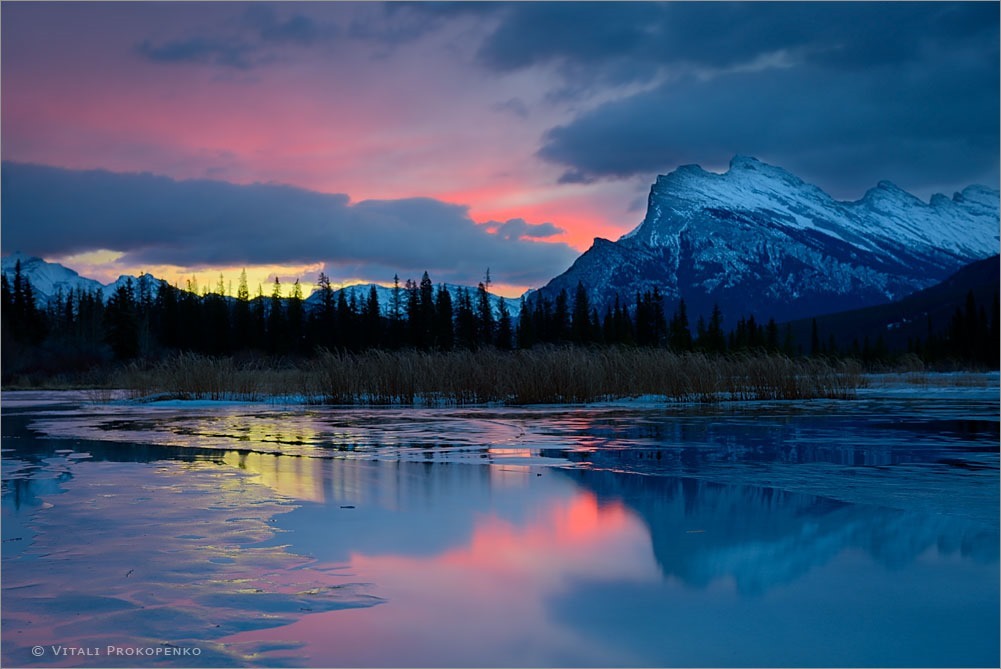
I found myself a nice cozy place there which I kept coming back to photograph over and over. Initially, I wanted to repeat the photo I took the first time, just with a slightly different composition. When I came the second time though I discovered that the weather changed the look completely. After that the change itself was more interesting to me. So, I kept coming to the same place to see how it looks like at sunrise or sunset, how it looks in warmer weather and in colder weather.

Here are a few photos that I like the most out of my study of the same place.

Sunrise after snowfall:

_DSC2211

Twilight before sunrise with warm weather:

Sunset with clear sky when the temperature dropped below 0C again. I’ve waited for this one until gradient of color reaches its peak. (BTW, I love watching Earth’s shadow moving across the sky.)

Being Spontaneous

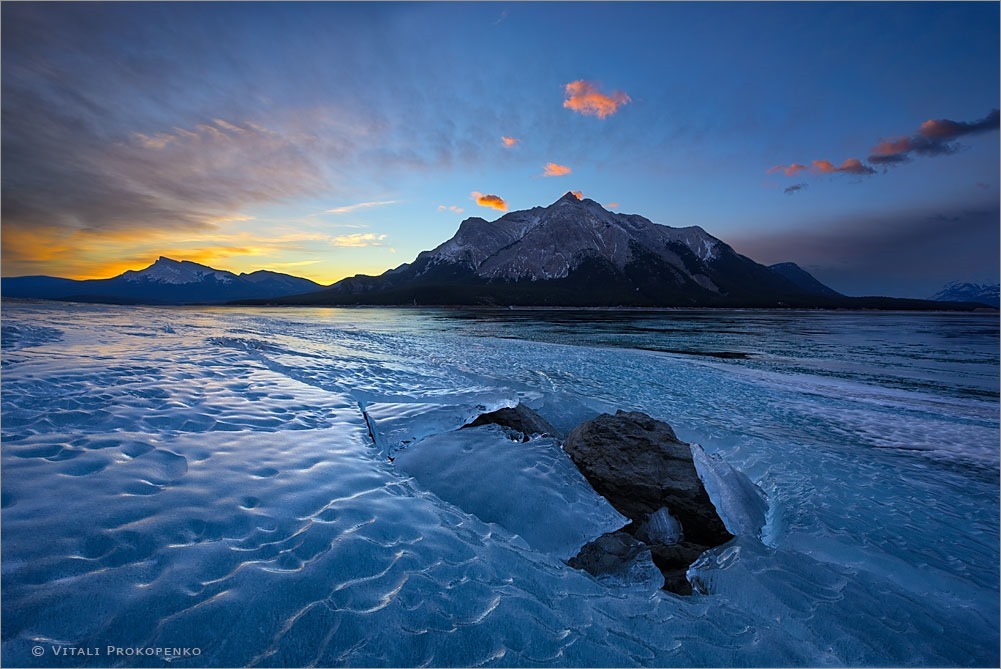
The main destination of my recent trip to Alberta, Canada was Abraham Lake. The reason Abraham Lake is so attractive to photographer in winter is because of unique phenomenon of frozen bubbles. While the lake freezes up in winter plants at the bottom of the lake produce methane gasses that come up to the ice and stay there frozen in ice while ice keeps growing downward. This creates fantastic surreal tri-dimensional structures in the ice sheet that covers the lake. There is also a persistent strong wind running thru the valley where the lake is located keeping ice clean of any snow. And the last but not least feature of this lake is winter is that it is artificial lake as the water is slowly drained from the lake in winter the ice cracks under its own weight.

It was quite scary standing on the ice when it cracks. The sounds of it ranged from a pitch high as if a guitar string was torn to a loud boom. The ice was very clean making me feel sometimes as if I was standing on water. And while consciously I understood there is thick ice under me, the sound of cracking ice made my subconscious scream RUN. So far subconscious was on a losing side.

The end of January when I went there turned out unusually warm there with temperatures rising up to 15C making ice melt at the top and thin ice walls separating layers of bubbles were melting away the fastest. On the second day of being at Abraham Lake I witnessed one of the photographers falling thru the ice while standing one one of the spots with high concentration of frozen bubbles. Fortunately, he did not fall of the way thru and was able to get out before anyone of the people rushing to help him (including me) were able to get to him. The whole incident seemed to be forgotten rather quickly. Even the photographer who fell actually staying on the ice and continuing to take pictures even in partially wet clothes.

But it scared me enough that I decided not to go on ice anymore. So, I set off to explore areas around Abraham Lake and find some other interesting spots to photograph. It proven a hard task. The warm temperatures melted most of the snow leaving the ground bare and unappealing to me. Yet I was stopping my car at any parking spot or trailhead, walking out and looking for opportunities. One of such spots was near river bed. It had been probably quite wild river in spring and summer. In winter it was lots of crumbled ice sheets lying on the ground. I thought I might be able to find a line in the ice cracks that would lead to the mountains in the distance.

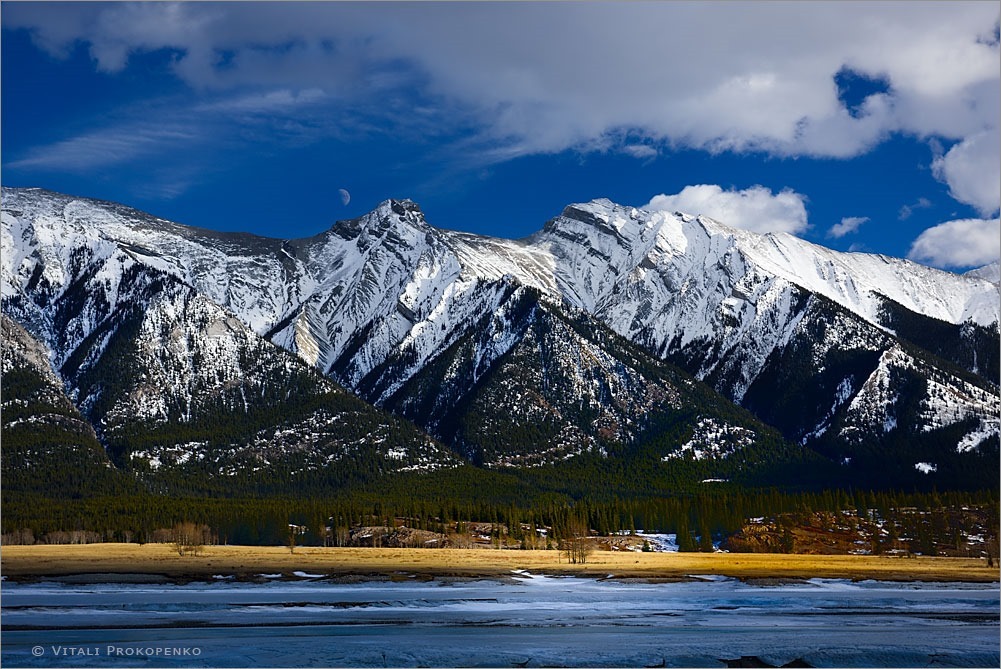
While searching for that composition I saw a moon rising above the mountains. On a whim took a picture of it. I took only one picture. It was unusual for me. Typically, I work thru composition taking lots of images until I feel like I cannot get it any better. This time I just felt the image was ok not no more than that. Only when I was editing images from the trip at home I saw that image and thought it was beautiful. There are so many elements that work together and yet there is simplicity in it which attracts me.

Moonrise over Canadian Rockies

Moonrise over Canadian Rockies

Ghosts in the Clouds

There is some mystery in images in clouds to me when I can barely make out something in soft whiteness rolling over the mountains. Images like these leave a lot of room for imagination. That’s what I love them for.

Reflections of Colorado Autumn

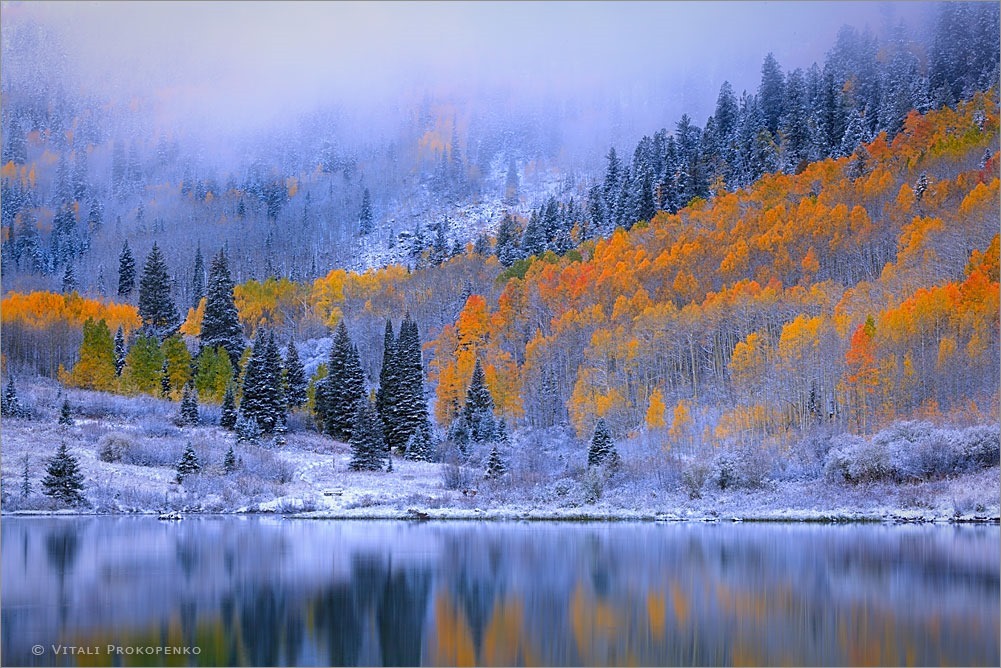
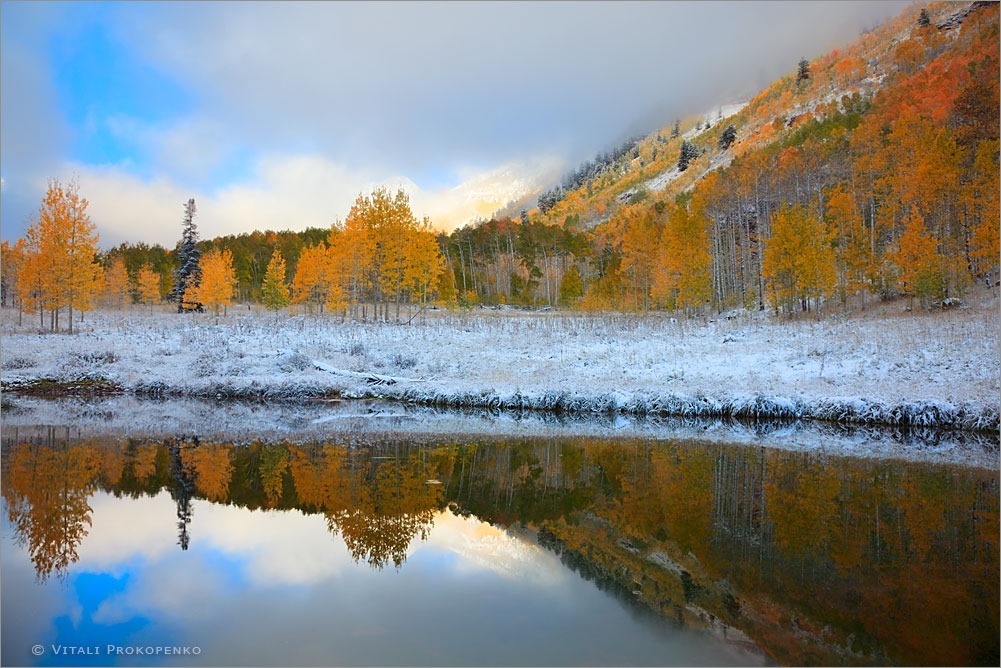
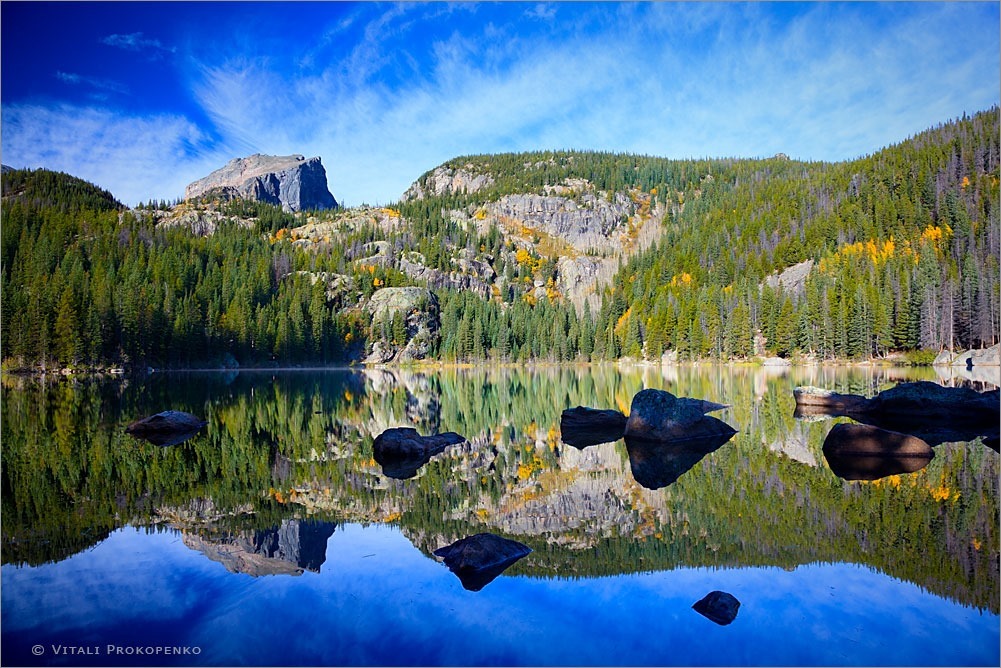
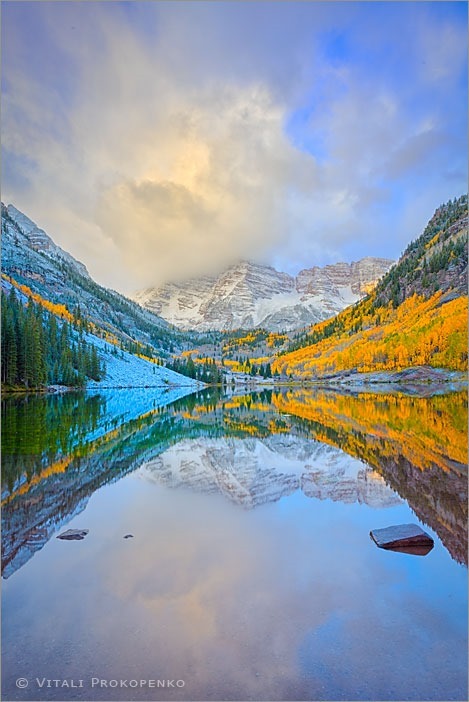
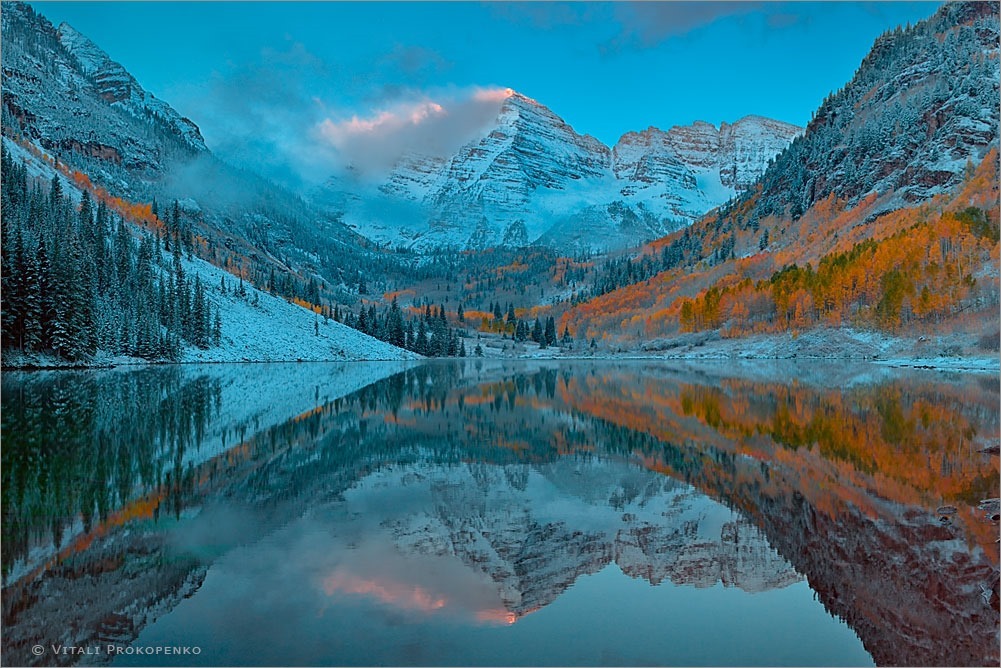
I’ve finally completed editing photos from my trip to Colorado. Despite my misadventures that I’ve already described I’ve brought quite a few photos of intimate places I really liked. There are a few themes I can see thru the photos. One of the themes are reflections. Here a few photos with reflections. Enjoy!

Overskinned. Story 1

Sunrise at Maroon Bells Lake

(A series of three stories – frustrating, scary and happy – with a common thread.)

At the dawn of photography back in 19th century there was this guy by the name Oliver Wendell Holmes, Sr who was a big advocate for photography in general and travel photography in particular. He talked about taking a photograph as taking a “skin” of reality that was based on his interpretation of an old Greek myth. I don’t want to go too far into that direction as it is not the point of my blog post. The interesting part is that he also warned of possibility of overskinning some scenes. He was concerned that some scenes might be photographed to the point when the scenes themselves will be not interesting. I came face to face with that on my trip to Colorado this fall.

***

Pacific Northwest has very limited opportunities for fall colors. You’d need to scramble for interesting fall color compositions outside cities in evergreen forests. Going to Colorado and diving into fall colors was a long waiting dream of mine. This year I finally went there. It turned to be a lot of what I expected, a lot more than I expected and some that I’d rather not have. This three stories with a common theme of what photography is for me and what it is not.

Since it was my first time in Colorado I did not have any places of my own in mind; I mostly traveled to well-known places. One of such places is Maroon Bells Lake. It is considered an iconic place of Colorado. Another photographer who went there last year warned me to come an hour before sunrise as there are quite a few photographers coming there to photograph sunrise there.

I scouted the place I want to photograph a day before and showed up there about an hour before sunrise. There were about 20 more photographers along the lake. The place I had scouted the day before was not occupied. I set up my camera on tripod and started waiting. It was freezing cold but everyone was jolly with anticipation. Over the hour that followed number of photographers slowly grew to 70 but everyone was polite and asked if they’re in the way when they setup camera.

Everything was well right up to sunrise, crowded but well. Right before sunrise a guy showed up and put his tripod right in front of my camera. When I politely noted that I was photographing there and he was blocking part of my frame, he said that everyone else was photographing too and would not move. I was pissed but not sure what to do about it except to frame a different image. There was still no way to completely avoid him, so I removed him from a corner of my image in Photoshop.

Next morning I went there without much enthusiasm but with a hope to still take the image I wanted. When I arrived there were already about 50 photographers. The spot where I wanted to make a photo was taken. I got what I got. By the sunrise there were more than a hundred photographers. It was crowded and did not feel very friendly. A guy on the right was frustrated with his gear which he had too much of; switching it constantly in indecision what to use; getting tangled up in it. I was locked into taking one and only one composition. Anything else would mean getting a bunch of tripods in my frame or getting myself into someone else’s frame. Can I be creative in such environment? No.

Melakwa Lake to Pratt Lake

This is a kind of interesting blog post: a trip report. Something that I have not done before. Another thing that is unique to this blog post is how fast I did post-processing of photos. Typically, it takes me days if not months after an actual trip. This time I’ve done it in a day.

Yesterday with a good company I went on a one way hike starting at Melakwa Lake trailhead and finishing at Pratt  Lake trailhead. It was an interesting and challenging hike, slightly over 14 miles long (not counting the side trips we took). Just walking it would take us 7 hours. 5 more hours we spent photographing and taking side trips. Overall the trip took us 12 hours. We started hiking at around 6am and finished around 6pm.

Not far from trailhead the trail passes under I-90 viaduct with its nice curve:

In 40 minutes we got to the first waterfall without a name. We just passed by since we tried to get to Keekwulee Falls by sunrise. It was another 30 minutes before we got to Keekwulee Falls and we missed sunrise which turned out to be not a big problem since there was no beautiful sunrise and the light was not aligning with the waterfall either.

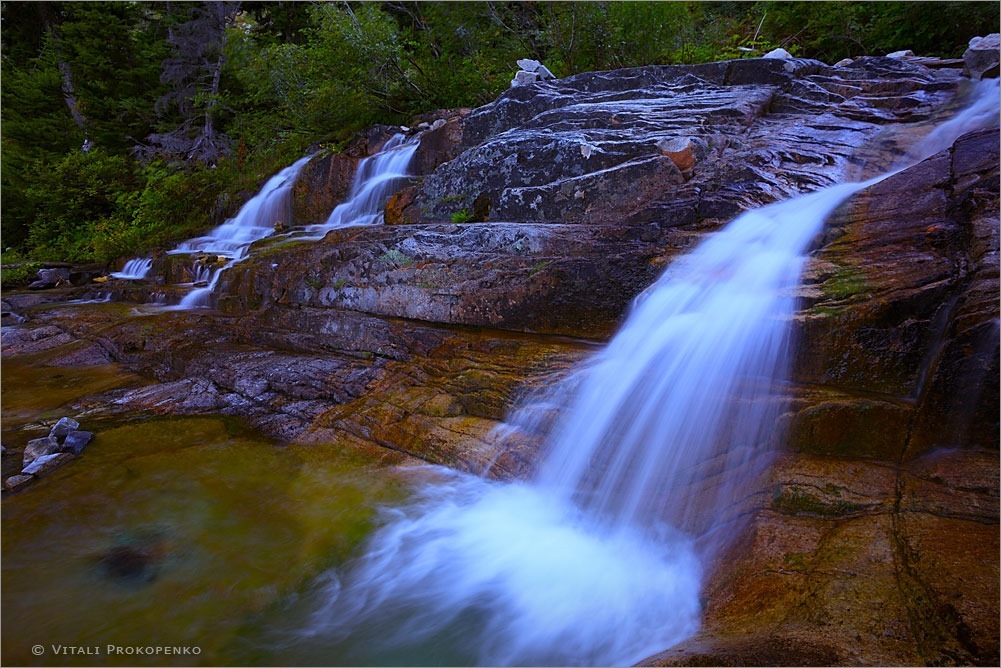
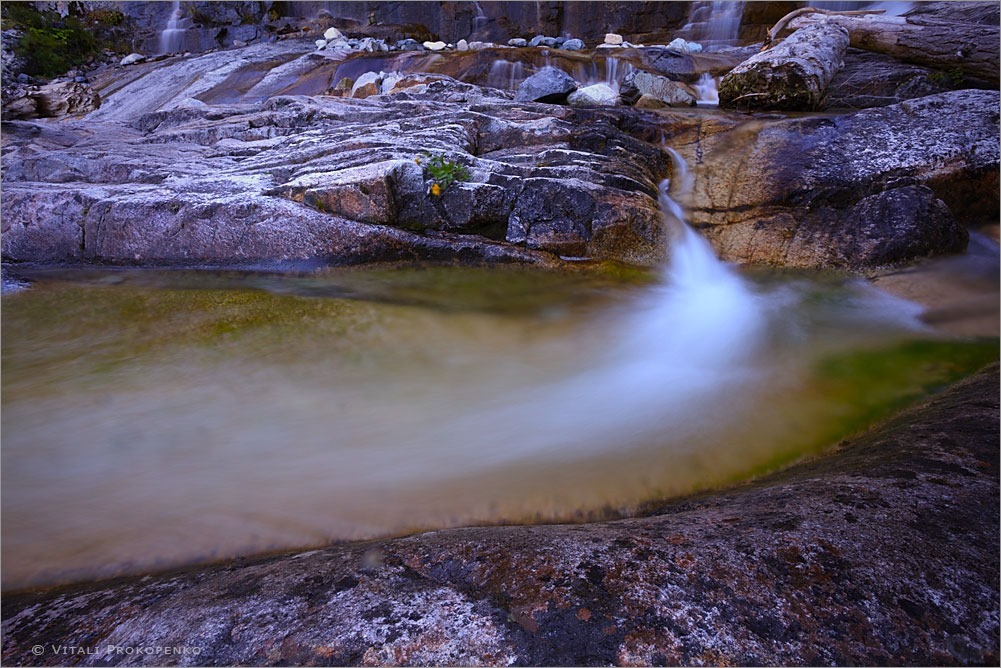
It was still great that we got there so early. The early morning sun was lighting up granite wall across the waterfall reflecting back soft warm light while waterfall itself stayed in shadow with water reflecting deep blue of the sky. Keekwulee Falls was a great destination for photography: it has so many intricate streams, cascading water, emerald pools, that provide endless opportunities for images.

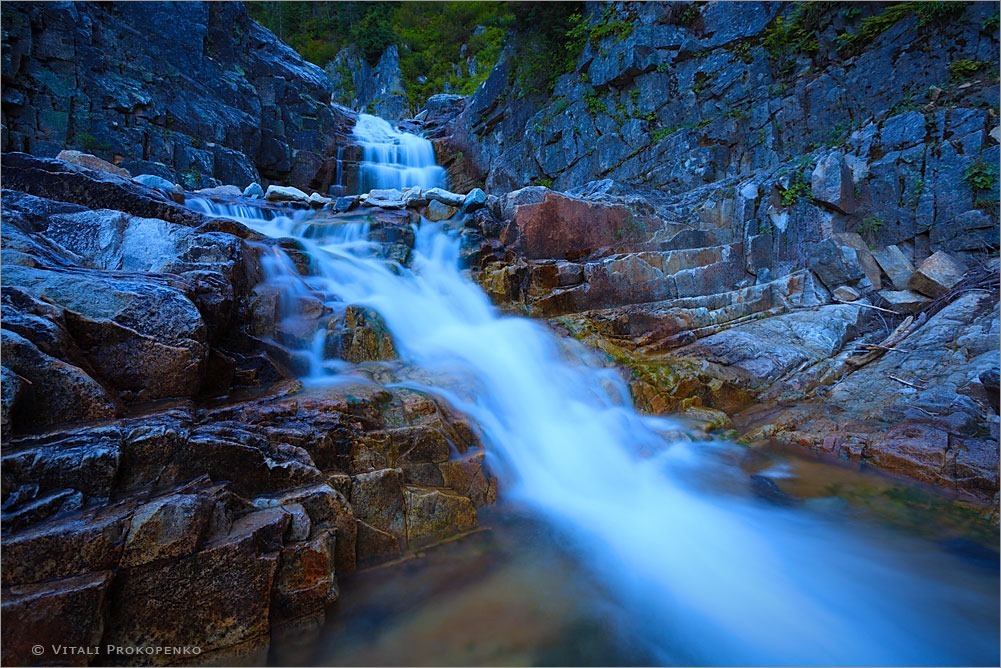
We spent one and a half hours by Keekwulee Falls. I could easily spend there even more making more images. Once we left this waterfall we went on climbing even steeper higher to a pass. Doing this early morning with air still cool after night definitely made it easier. At some point we passed one more waterfall but it had no close approach. We could barely see it thru trees. Once over the pass we quickly got to the first alpine lake on our hike: Melakwa Lake with Upper Melakwa Lake just a short distance away. At this point the sun was high. The light was flat – the kind of landscape photographers don’t like. I was not discouraged by that since the main goal was exploration. Still I made it a goal to take at least one interesting photo on each lake. So here the go in the order of appearance.

Melakwa Lake:

Lower Tuscohatchie Lake:

Near Pratt Lake:
Pratt Lake:
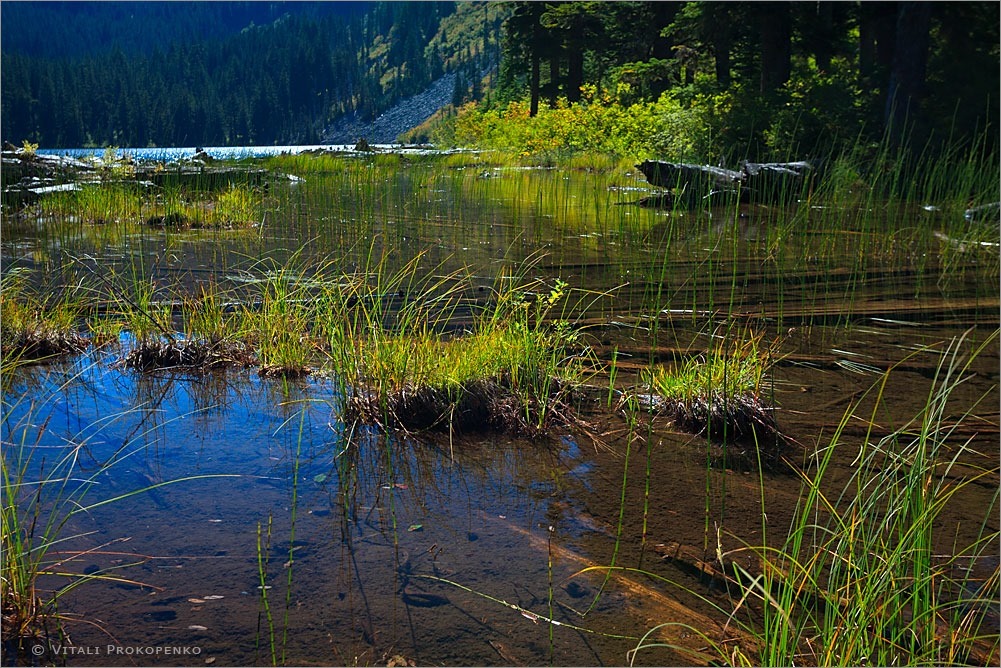
Pratt Lake was the last alpine lake on our trail. Once we passed it the trail went up steeply to a pass that would get us over the ridge closer back to civilization. Unfortunately I must say I did not find lakes very picturesque. The all elongated north to south with approaches from south or  north end surrounded by tall granite walls on both west and east side. This means that there is no photo opportunity at sunrise or sunset.

Once we got to the top of the ridge I saw this tree covered with bright orange mushrooms. Just had to take a picture of it:

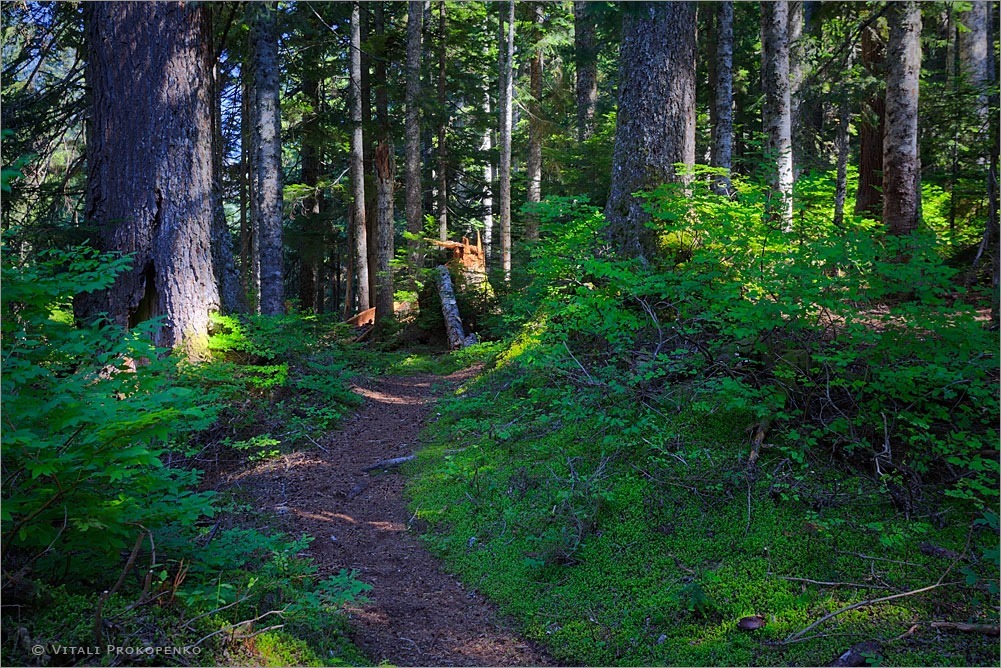
Over the ridge and on the way down to Pratt Lake trailhead the trail was uneventful: monotonically old growth forest. It was an easy walk down but I was not surprise to see tired faces of people walking up. For them it was long, steep and boring hike. There were occasional small streams but they were lacking enough water to become interesting. It has been a very dry week here and it was a sunny side of the ridge. Still there was one interesting waterfall which I’d like to return back to after rain:

Studying Time

I’ve been studying time in photography, experimenting with different things for over a year. How to capture time in one image? What if images from multiple times are combined into one? What’s behavior of different moving subjects over time? This requires a lot of patience (which to be honest I’m lacking) keeping camera in exactly one position recording world around it at it changes.

The best part of it is a suspense waiting for images to be processed and see the end result. The worst part is not knowing if any of it will be any good.

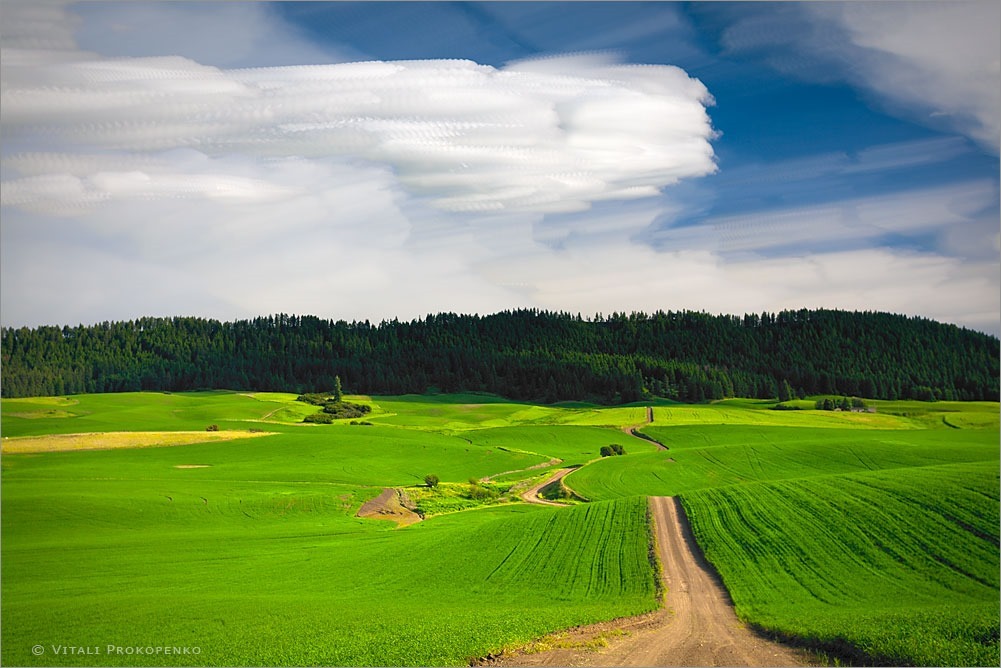
So far I have had lots of ideas with little success. Finally, it starts yielding some interesting results. Look at those clouds: don’t you like the painting like look of them? That’s no painting though. It is a lot of images taken over time with camera stationary in the same place on a tripod. Good thing there were no cars on this rural road that gave me enough time to make it.