Inspiration

I have many photography. I like to dive into someone’s imagery and photo books is the most affordable way to do it. But looking at photo books is not where I get my inspiration from. What gets me inspired is paintings. I can spend endless hours studying one painting, how the light is captured, how the color is captured, how the feel of the scene is captured, the emotions in the brushstrokes. When I photograph I’m trying to achieve the same perfect light as in landscape paintings and I want to get my photographs to the same level of essence and feeling of color as impressionists’ paintings had.

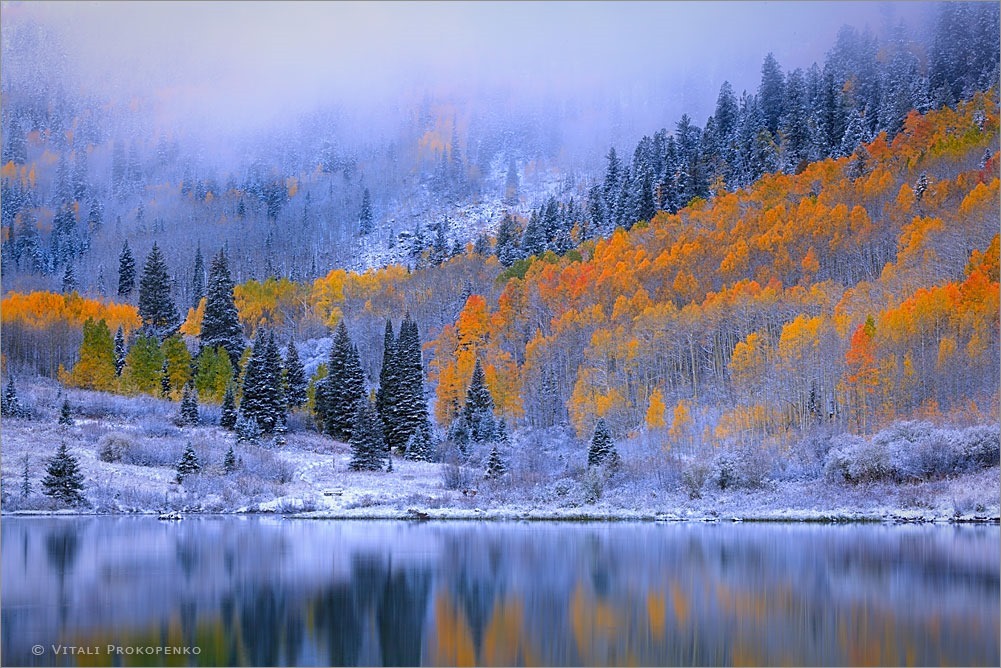
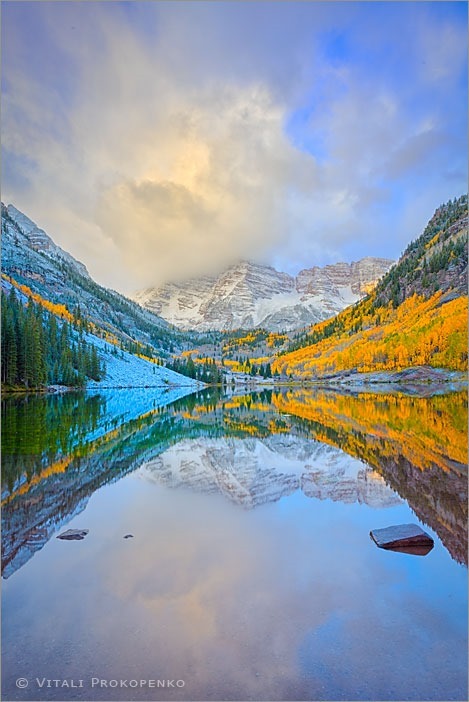
Aspens in Pastel

Aspens in Pastel

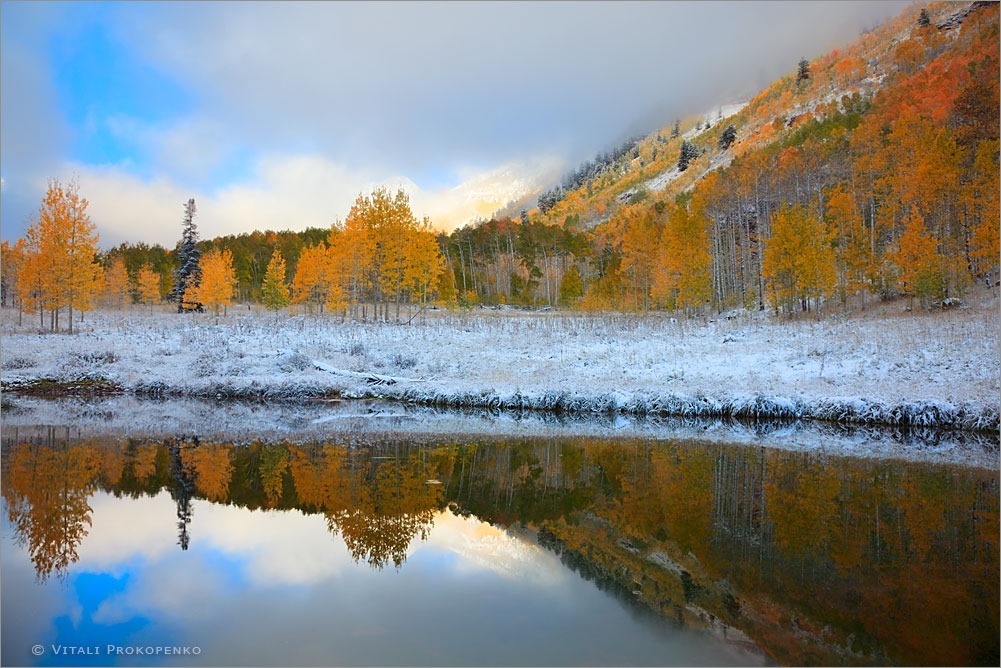
Reflections of Colorado Autumn

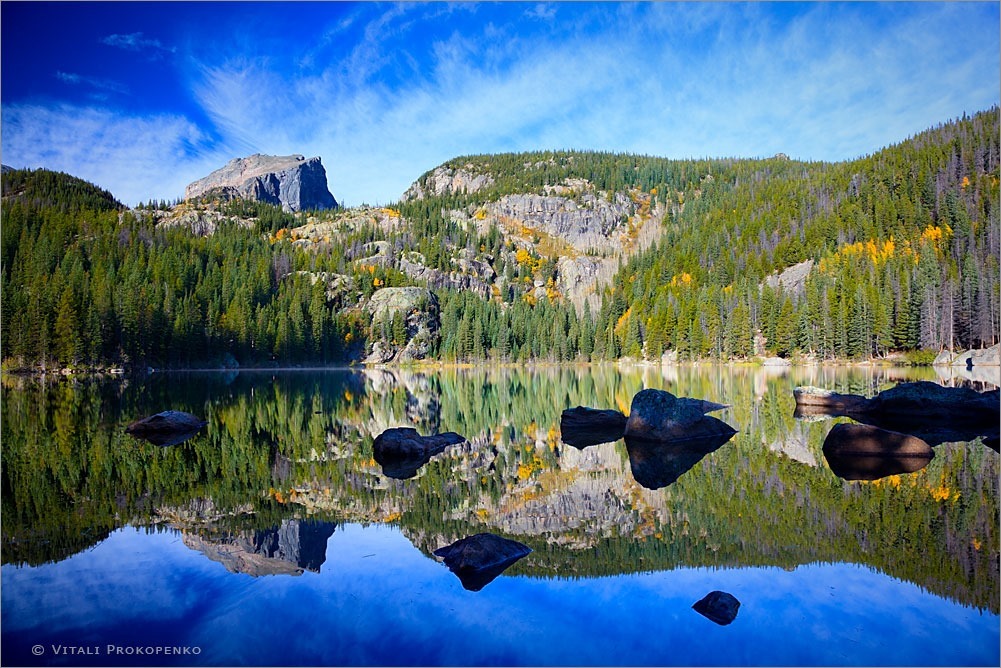
I’ve finally completed editing photos from my trip to Colorado. Despite my misadventures that I’ve already described I’ve brought quite a few photos of intimate places I really liked. There are a few themes I can see thru the photos. One of the themes are reflections. Here a few photos with reflections. Enjoy!

Overskinned. Story 3

Black Canyon

(This is the last story in 3 story series on photographing popular destinations. This one is the happy one.)

In my travels around Colorado this fall I visited many different places. It was my first trip to Colorado and my first fall trip to Colorado and thus I spend most of the time exploring. In a few days after my arrival a sudden and unexpected snowstorm ran thru the mountains, taking off most of foliage and dusting them with snow.

On the fourth day I drove south in a search for fall foliage. That’s how I ended up staying overnight in Montrose. I arrive late at night. It was already too dark to see anything around. At a hotel I saw a tourist guide mentioning Black Canyon National Park. I was not even aware of it. I thought that since I was so close to it I might as well visit it. The brochure did not have impressive photos of it. I searched online and did not see anything impressive either. One thing for sure was that there was no fall foliage there. Thus I abandoned that idea.

In the morning I could see my surroundings. Everything was green. No fall foliage in Montrose yet. I decided east and then north to Crested Butte. Just a few miles out of Montrose travelling east I saw a sign turn to Black Canyon National Park with only a few miles to the entrance. I thought it was a sign that I should go.

I did not regret I went there. I did not find fall foliage their or amazing well-recognized photo opportunities but I found something way more important. Solitude being one-on-one with the Nature. I was almost the only visitor there. I was sitting on rocks by an edge of the canyon listening to quite singing of birds, facing warm sun and cool breeze. I would look at the deep walls of the canyon dropping down with edges lit up by the Sun. Or I would close my eyes and let the other sense sharpen and form their own world. It was so relaxing and peaceful. That reminded me what photography was too me, filled my mind and soul with creativity again.

Overskinned. Story 1

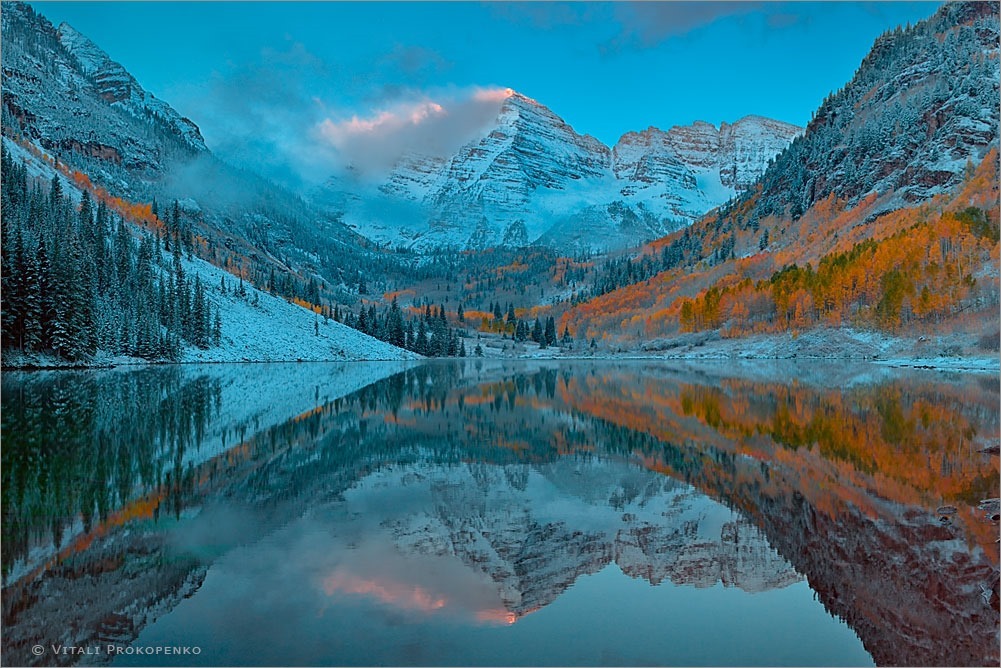
Sunrise at Maroon Bells Lake

(A series of three stories – frustrating, scary and happy – with a common thread.)

At the dawn of photography back in 19th century there was this guy by the name Oliver Wendell Holmes, Sr who was a big advocate for photography in general and travel photography in particular. He talked about taking a photograph as taking a “skin” of reality that was based on his interpretation of an old Greek myth. I don’t want to go too far into that direction as it is not the point of my blog post. The interesting part is that he also warned of possibility of overskinning some scenes. He was concerned that some scenes might be photographed to the point when the scenes themselves will be not interesting. I came face to face with that on my trip to Colorado this fall.

***

Pacific Northwest has very limited opportunities for fall colors. You’d need to scramble for interesting fall color compositions outside cities in evergreen forests. Going to Colorado and diving into fall colors was a long waiting dream of mine. This year I finally went there. It turned to be a lot of what I expected, a lot more than I expected and some that I’d rather not have. This three stories with a common theme of what photography is for me and what it is not.

Since it was my first time in Colorado I did not have any places of my own in mind; I mostly traveled to well-known places. One of such places is Maroon Bells Lake. It is considered an iconic place of Colorado. Another photographer who went there last year warned me to come an hour before sunrise as there are quite a few photographers coming there to photograph sunrise there.

I scouted the place I want to photograph a day before and showed up there about an hour before sunrise. There were about 20 more photographers along the lake. The place I had scouted the day before was not occupied. I set up my camera on tripod and started waiting. It was freezing cold but everyone was jolly with anticipation. Over the hour that followed number of photographers slowly grew to 70 but everyone was polite and asked if they’re in the way when they setup camera.

Everything was well right up to sunrise, crowded but well. Right before sunrise a guy showed up and put his tripod right in front of my camera. When I politely noted that I was photographing there and he was blocking part of my frame, he said that everyone else was photographing too and would not move. I was pissed but not sure what to do about it except to frame a different image. There was still no way to completely avoid him, so I removed him from a corner of my image in Photoshop.

Next morning I went there without much enthusiasm but with a hope to still take the image I wanted. When I arrived there were already about 50 photographers. The spot where I wanted to make a photo was taken. I got what I got. By the sunrise there were more than a hundred photographers. It was crowded and did not feel very friendly. A guy on the right was frustrated with his gear which he had too much of; switching it constantly in indecision what to use; getting tangled up in it. I was locked into taking one and only one composition. Anything else would mean getting a bunch of tripods in my frame or getting myself into someone else’s frame. Can I be creative in such environment? No.

Busiest Time of a Year

Fall. So many colors. Changing quickly. Fleeting moments…

I love fall most of all. When I was a teenager my favorite time of a year was spring when everyone springs into action, when air is filled with scents of blossom and fresh greenery. Now fall is my favorite. Is it because of age? Or simply the fact that I live in an evergreen state now?

Fall is the busiest time of a year for me. I like spending hours meditating with my camera in a solitude of the Nature. I love diving into its colors. This year I’ve already spent time photographing fall in Colorado, and in Rainier National Park. This week I’m going to yet another location. Naturally, I cannot keep up with processing all the photos. Well, I’ll have the whole winter for that. But I feel like I have to keep up with writing blog. I promised that to myself. So, here is one image from Colorado.

Colors of Fall
Colors of Fall

Melakwa Lake to Pratt Lake

This is a kind of interesting blog post: a trip report. Something that I have not done before. Another thing that is unique to this blog post is how fast I did post-processing of photos. Typically, it takes me days if not months after an actual trip. This time I’ve done it in a day.

Yesterday with a good company I went on a one way hike starting at Melakwa Lake trailhead and finishing at Pratt  Lake trailhead. It was an interesting and challenging hike, slightly over 14 miles long (not counting the side trips we took). Just walking it would take us 7 hours. 5 more hours we spent photographing and taking side trips. Overall the trip took us 12 hours. We started hiking at around 6am and finished around 6pm.

Not far from trailhead the trail passes under I-90 viaduct with its nice curve:

In 40 minutes we got to the first waterfall without a name. We just passed by since we tried to get to Keekwulee Falls by sunrise. It was another 30 minutes before we got to Keekwulee Falls and we missed sunrise which turned out to be not a big problem since there was no beautiful sunrise and the light was not aligning with the waterfall either.

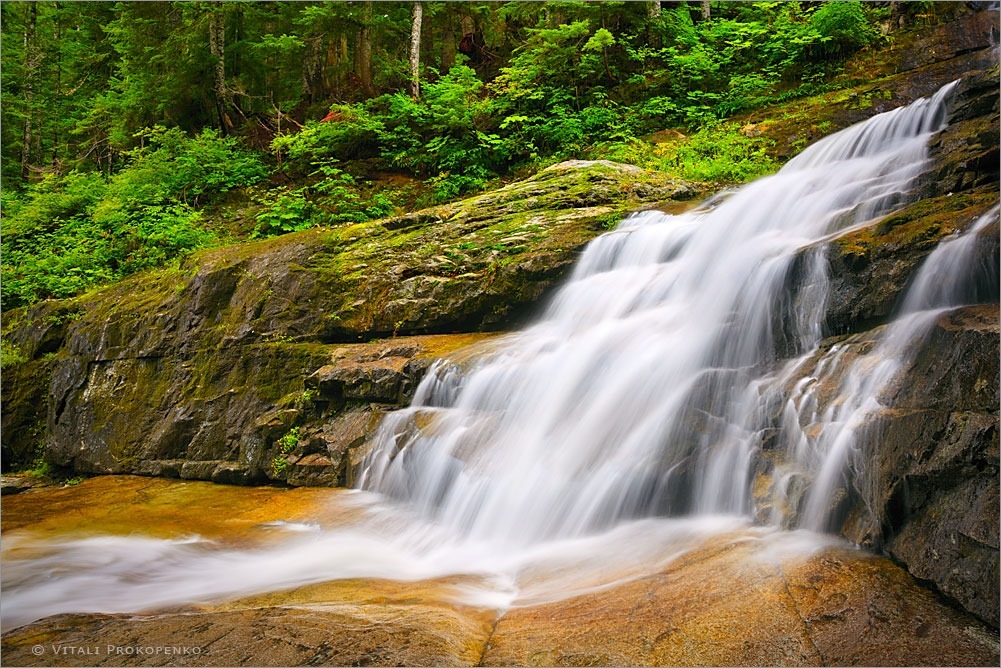
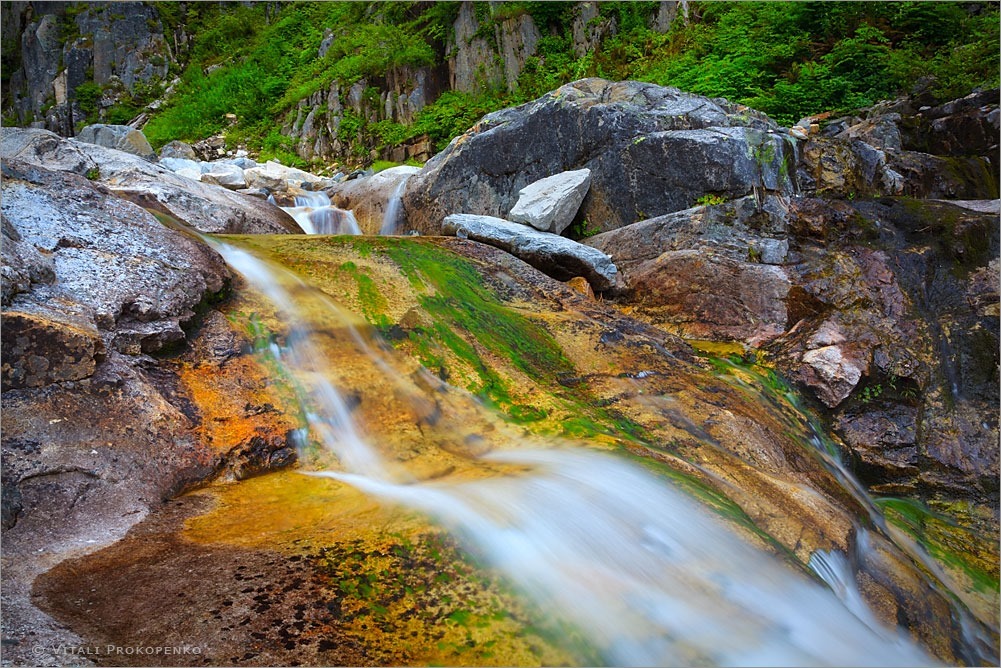
It was still great that we got there so early. The early morning sun was lighting up granite wall across the waterfall reflecting back soft warm light while waterfall itself stayed in shadow with water reflecting deep blue of the sky. Keekwulee Falls was a great destination for photography: it has so many intricate streams, cascading water, emerald pools, that provide endless opportunities for images.

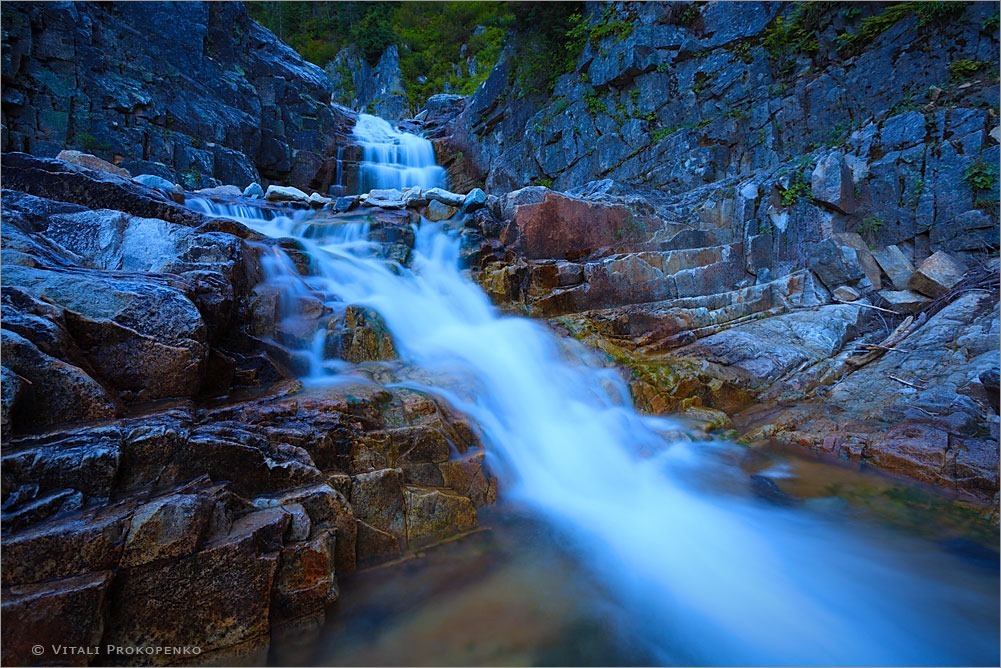
We spent one and a half hours by Keekwulee Falls. I could easily spend there even more making more images. Once we left this waterfall we went on climbing even steeper higher to a pass. Doing this early morning with air still cool after night definitely made it easier. At some point we passed one more waterfall but it had no close approach. We could barely see it thru trees. Once over the pass we quickly got to the first alpine lake on our hike: Melakwa Lake with Upper Melakwa Lake just a short distance away. At this point the sun was high. The light was flat – the kind of landscape photographers don’t like. I was not discouraged by that since the main goal was exploration. Still I made it a goal to take at least one interesting photo on each lake. So here the go in the order of appearance.

Melakwa Lake:

Lower Tuscohatchie Lake:

Near Pratt Lake:
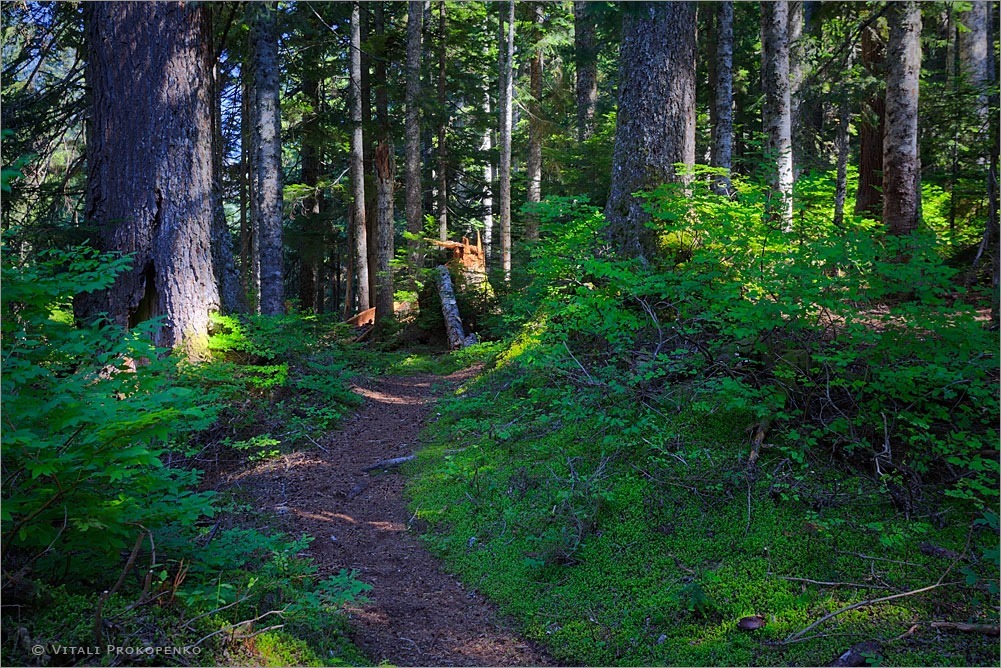
Pratt Lake:
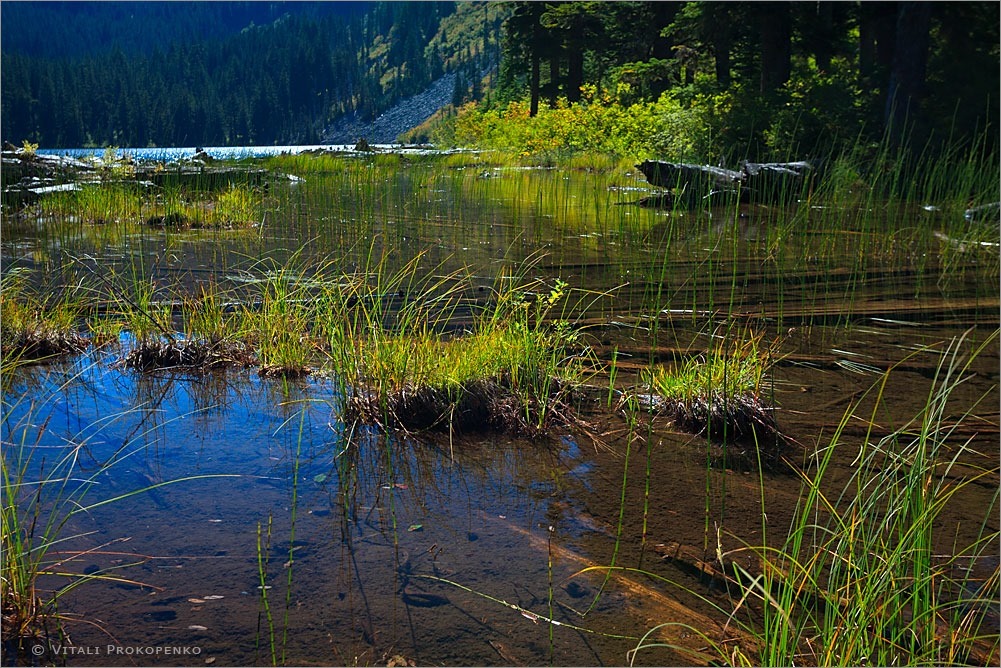
Pratt Lake was the last alpine lake on our trail. Once we passed it the trail went up steeply to a pass that would get us over the ridge closer back to civilization. Unfortunately I must say I did not find lakes very picturesque. The all elongated north to south with approaches from south or  north end surrounded by tall granite walls on both west and east side. This means that there is no photo opportunity at sunrise or sunset.

Once we got to the top of the ridge I saw this tree covered with bright orange mushrooms. Just had to take a picture of it:

Over the ridge and on the way down to Pratt Lake trailhead the trail was uneventful: monotonically old growth forest. It was an easy walk down but I was not surprise to see tired faces of people walking up. For them it was long, steep and boring hike. There were occasional small streams but they were lacking enough water to become interesting. It has been a very dry week here and it was a sunny side of the ridge. Still there was one interesting waterfall which I’d like to return back to after rain:

Close by

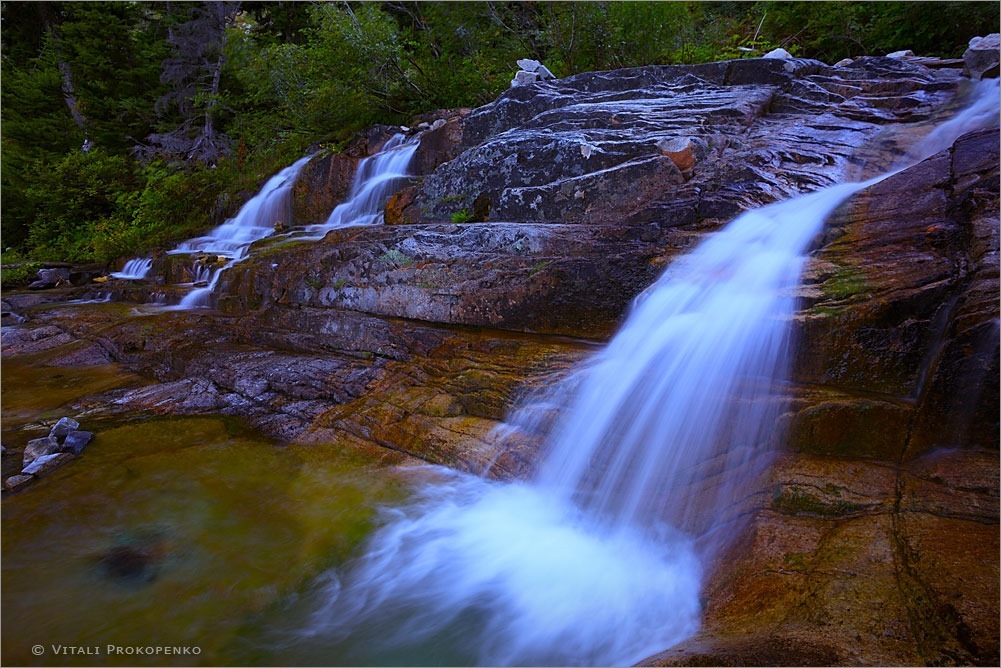
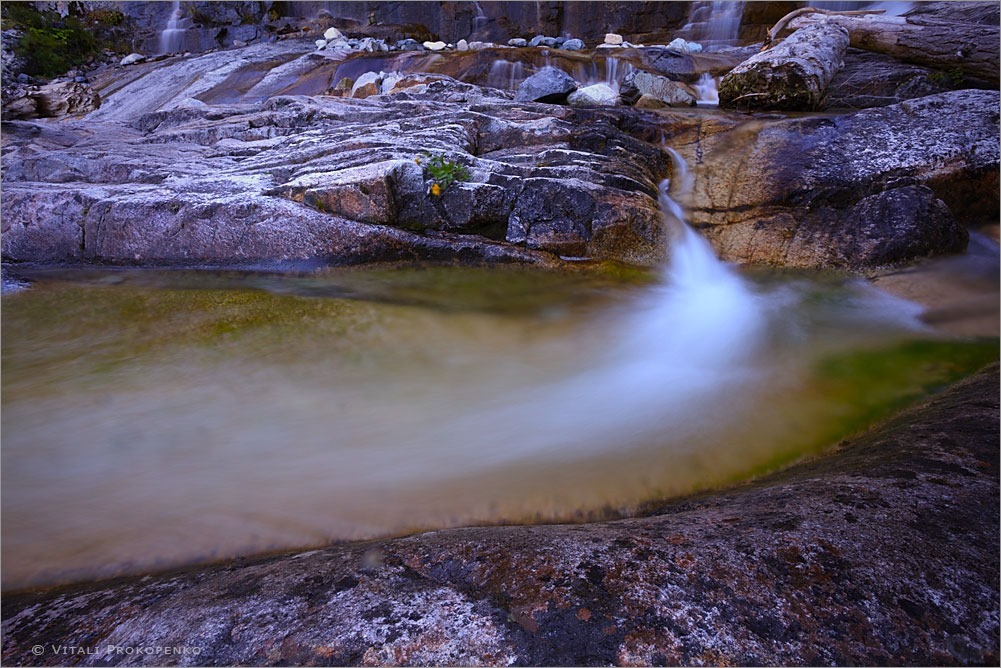
Do I really need to travel far to make photos? Just last weekend I’ve discovered a hike which is only half an hour of driving from my house and yet it has some beautiful waterfalls, creeks and alpine lakes. Well, I have not got to the lakes yet. The two times I went to that hike I got caught up too much with the waterfalls. There are four(!) waterfalls in just the first two miles of the hike.

I still see several image to be made even with closer waterfalls and with the furthest I’ve got to so far I’ve just scratched the surface so to speak. Now I plan to make it all the way just to see everything that it has to offer.

I’m still in awe if the beauty of the place I live in.

Beauty is in Details

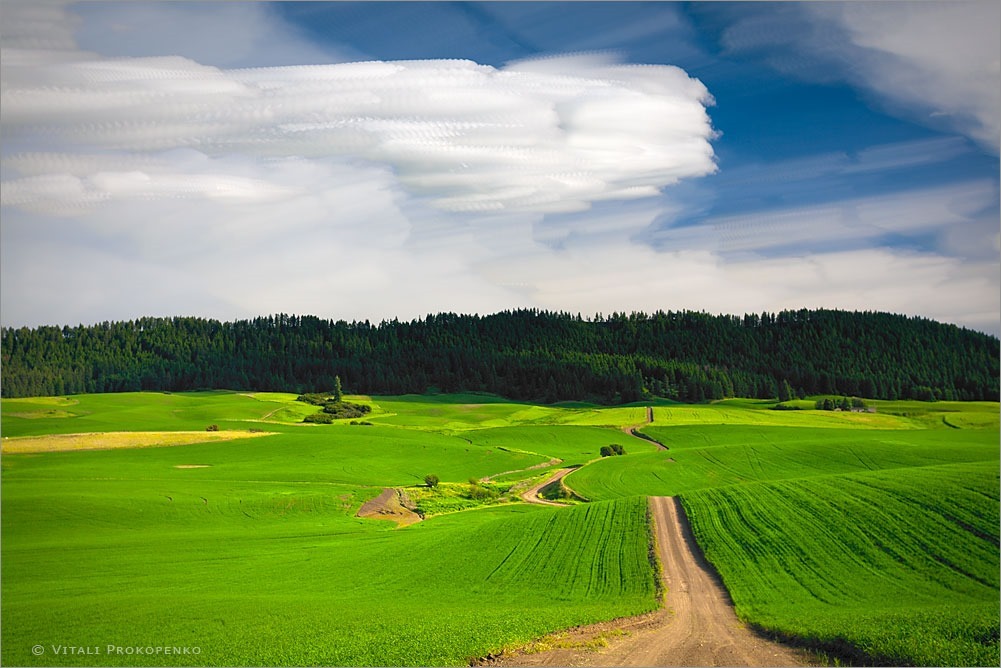
I’m still experimenting with this technique of multiple exposures over long period of time combined in one image and I like  results better and better. I think I’m onto something. Look at this image. Pretty trivial and  obvious composition. The first thing to note is that clouds look like they are painted.

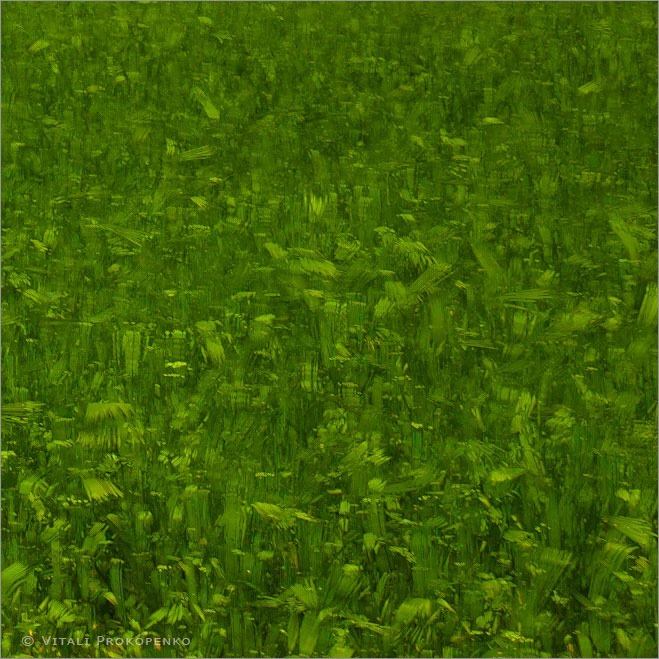
Then I looked closely at different elements in the image and liked this technique even more. Here is a fragment of a field on the right:

And here is the tree enlarged:

Both elements look like painted. The road is the only element that remains looking as a photograph. This combination of photographic look and painting look creates quite an interesting effect. I’m eager to start printing this to see how it looks in full detail print.

Studying Time

I’ve been studying time in photography, experimenting with different things for over a year. How to capture time in one image? What if images from multiple times are combined into one? What’s behavior of different moving subjects over time? This requires a lot of patience (which to be honest I’m lacking) keeping camera in exactly one position recording world around it at it changes.

The best part of it is a suspense waiting for images to be processed and see the end result. The worst part is not knowing if any of it will be any good.

So far I have had lots of ideas with little success. Finally, it starts yielding some interesting results. Look at those clouds: don’t you like the painting like look of them? That’s no painting though. It is a lot of images taken over time with camera stationary in the same place on a tripod. Good thing there were no cars on this rural road that gave me enough time to make it.

Power of B&W

I cannot believe I have not published a post to my blog in so long. It is enough to slip one week without posting and then another week and then not writing becomes a norm rather than exception. Time to break out of that habit. Expect lots of image in rather random chronological order over the next couple months.

***

It is one of a rare hot summer weeks in Seattle. The temperature is constantly over 30 during day and nights are warm and humid. On the days like today I want to throw all food out of the fridge and close myself in it. It is a nice thought that I doubt I’ll ever make come true. I’m not that desperate. But that certainly makes a memory of the last winter refreshing. And that’s the memory I want to share with you today.

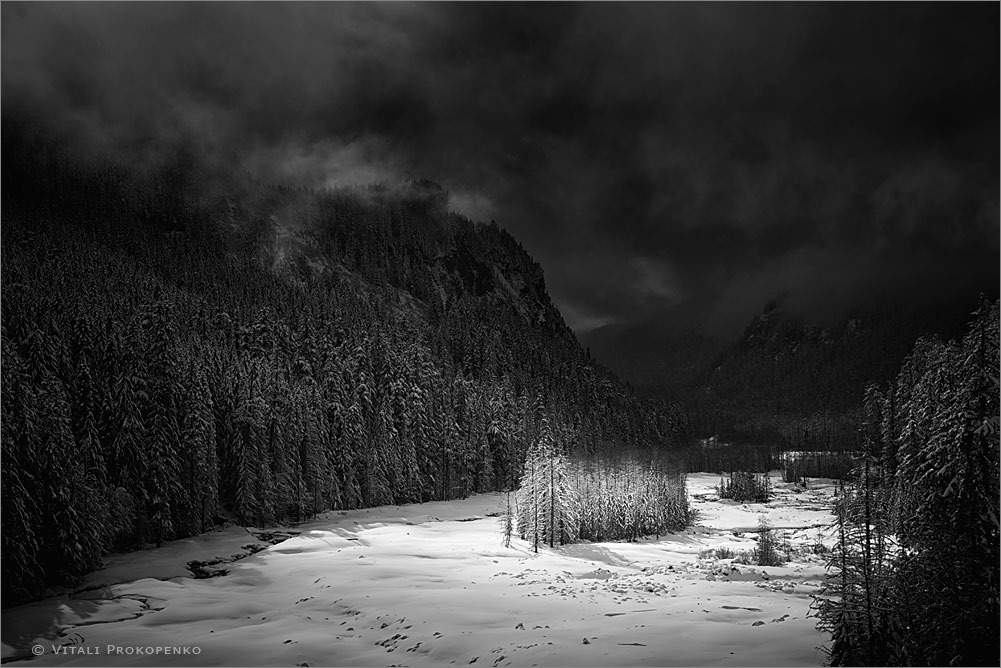
I love color to the point when I just photograph some color without even any subject. But sometimes the color is a distraction, a nuance that does not add anything or maybe even takes away something. In those case black-and-white image might still be more powerful. I find black-and-white especially working well in winter. One of the main reason is likely that there is not much color in winter in the pacific northwest mountains. The only color is the tone of the sun light breaking thru the clouds and that one is typically weird.

Like in this case the Sun broke thru the clouds just for a moment putting a spotlight on a bunch of trees in a valley. The color was strange but black-and-white tonality of the scene was beautiful.