Being Spontaneous

The main destination of my recent trip to Alberta, Canada was Abraham Lake. The reason Abraham Lake is so attractive to photographer in winter is because of unique phenomenon of frozen bubbles. While the lake freezes up in winter plants at the bottom of the lake produce methane gasses that come up to the ice and stay there frozen in ice while ice keeps growing downward. This creates fantastic surreal tri-dimensional structures in the ice sheet that covers the lake. There is also a persistent strong wind running thru the valley where the lake is located keeping ice clean of any snow. And the last but not least feature of this lake is winter is that it is artificial lake as the water is slowly drained from the lake in winter the ice cracks under its own weight.

It was quite scary standing on the ice when it cracks. The sounds of it ranged from a pitch high as if a guitar string was torn to a loud boom. The ice was very clean making me feel sometimes as if I was standing on water. And while consciously I understood there is thick ice under me, the sound of cracking ice made my subconscious scream RUN. So far subconscious was on a losing side.

The end of January when I went there turned out unusually warm there with temperatures rising up to 15C making ice melt at the top and thin ice walls separating layers of bubbles were melting away the fastest. On the second day of being at Abraham Lake I witnessed one of the photographers falling thru the ice while standing one one of the spots with high concentration of frozen bubbles. Fortunately, he did not fall of the way thru and was able to get out before anyone of the people rushing to help him (including me) were able to get to him. The whole incident seemed to be forgotten rather quickly. Even the photographer who fell actually staying on the ice and continuing to take pictures even in partially wet clothes.

But it scared me enough that I decided not to go on ice anymore. So, I set off to explore areas around Abraham Lake and find some other interesting spots to photograph. It proven a hard task. The warm temperatures melted most of the snow leaving the ground bare and unappealing to me. Yet I was stopping my car at any parking spot or trailhead, walking out and looking for opportunities. One of such spots was near river bed. It had been probably quite wild river in spring and summer. In winter it was lots of crumbled ice sheets lying on the ground. I thought I might be able to find a line in the ice cracks that would lead to the mountains in the distance.

While searching for that composition I saw a moon rising above the mountains. On a whim took a picture of it. I took only one picture. It was unusual for me. Typically, I work thru composition taking lots of images until I feel like I cannot get it any better. This time I just felt the image was ok not no more than that. Only when I was editing images from the trip at home I saw that image and thought it was beautiful. There are so many elements that work together and yet there is simplicity in it which attracts me.
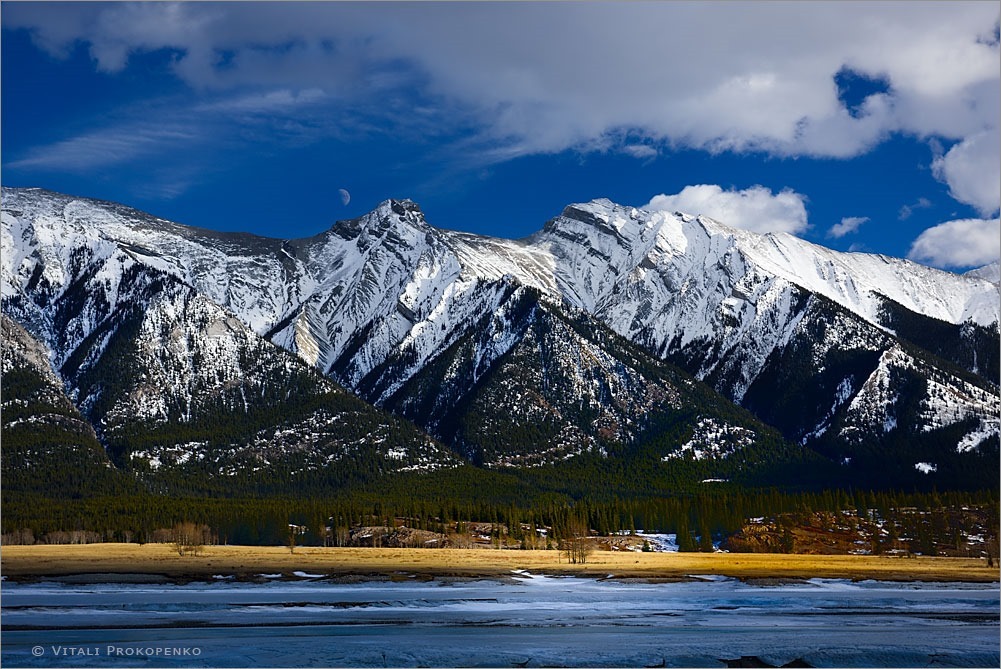
Moonrise over Canadian Rockies

Moonrise over Canadian Rockies
Never Give Up

I’ve just got back from a week long trip to Alberta, Canada. The trip was tiresome as it involved more driving that I wished for due to road closures.

My main destination was Abraham Lake. I was coming from Banff and was going to take Icefields Parkway to get to Abraham Lake. Unfortunately, when I got to Icefields Parkway I discovered that it was closed till at least noon of the next day due to unsafe driving conditions. The only way left to get to Abraham Lake was all the way around thru Calgary and thru the north route. That meant extra 5 hours of driving. It also meant I would unlikely make it there by sunset of that same day.

I had little choice but to drive that long way around. I got to a small ghost town called Nordegg where I had a hotel reservation just before sunset. I had a choice before me: to stay and relax for the night or to go to Abraham Lake (another half an hour driving). The sky was overcast with no breaks in the clouds.

I went to the lake anyway. I thought I at least check out ice conditions for the sunrise the next day.

I got to the Abraham Lake just after sunset. The sunset was purely theoretical as the sun was not visible thru the clouds. The wind was strong albeit warm. As I open a door a gust of wind almost knocked me over. The ice was covered with melted water. Everything seemed to tell me to get back to the hotel and be done for the day.

Nevertheless I put on spikes on my shoes, took my backpack with photo gear and tripod and went down to the ice. I always take photo gear with me, it has become part of me. Even if there was nothing happening I could take a few test shots to figure out what’s best lens, settings, filters to use and get sketches for ideas I might implement later.

I’m quite cautious person when it comes to water. I almost drowned when I was a teenager. The memory of that still makes me afraid of water. So, I carefully stepped on ice and was staying by the shore to gain some confidence. But then the last rays of the Sun broke thru somewhere beyond horizon and lit up the clouds from below. That was the kind of things I dream about as a photographer. The light was surreal violet. I forgot about my fears of water and ran in a search of bubbles frozen in ice to complete the image of surreal landscape.

Violet Sunset

Violet Sunset

Ghosts in the Clouds

There is some mystery in images in clouds to me when I can barely make out something in soft whiteness rolling over the mountains. Images like these leave a lot of room for imagination. That’s what I love them for.

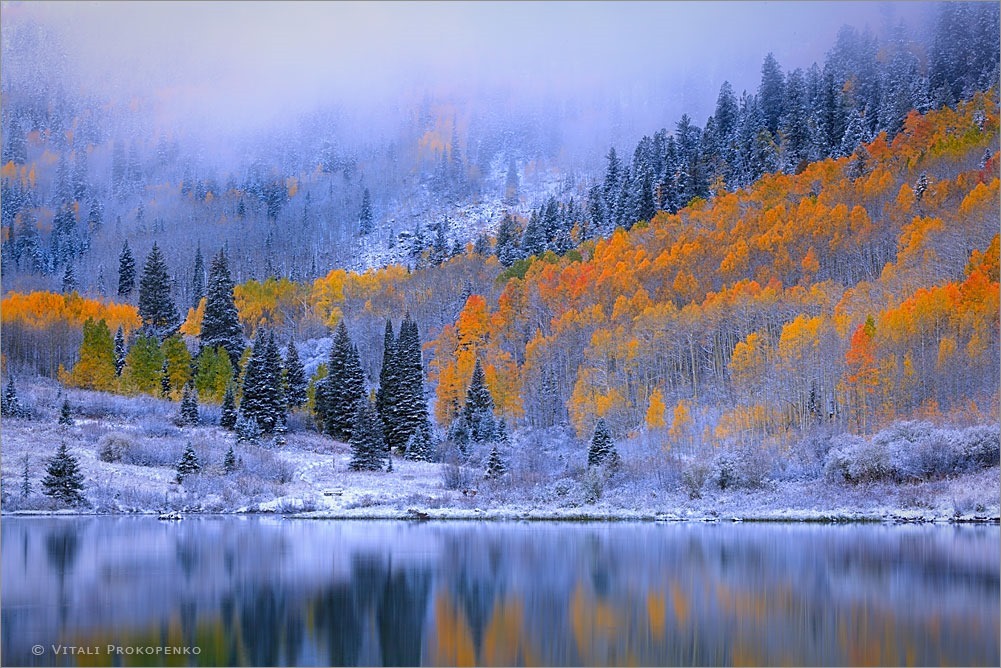
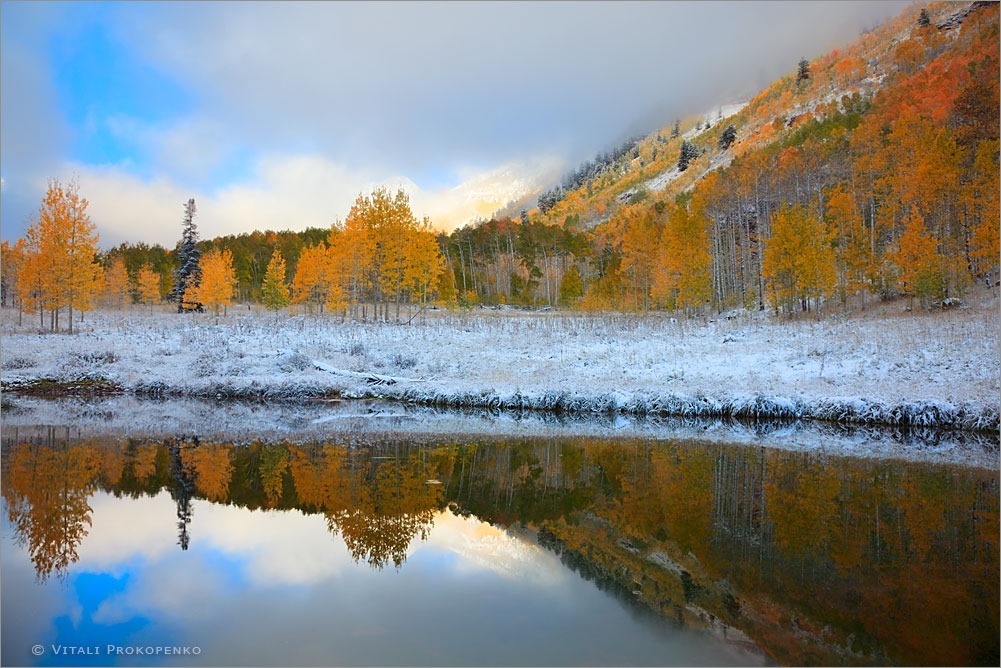
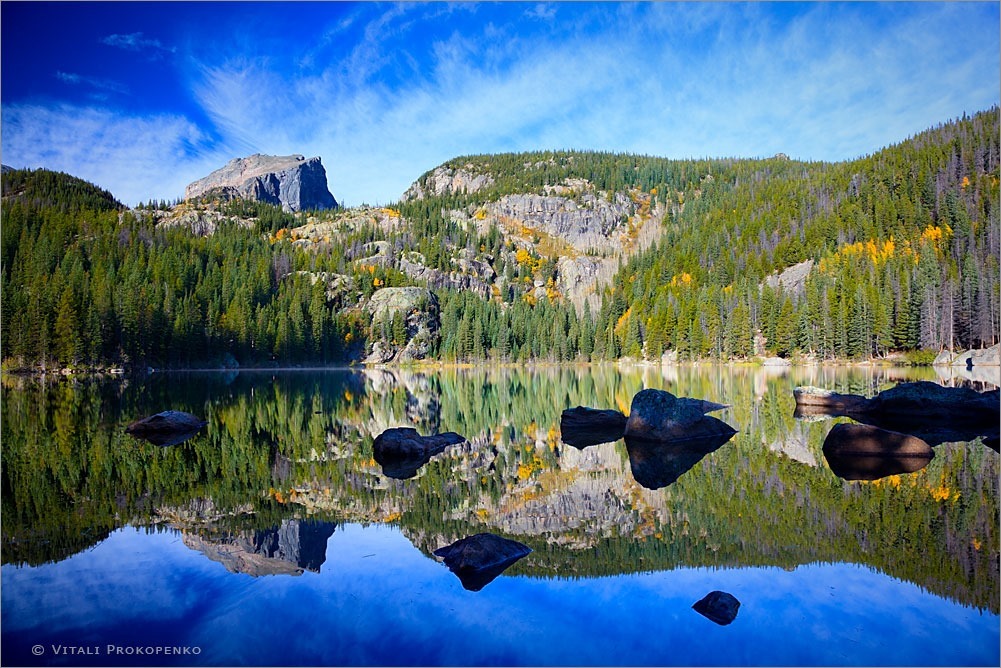
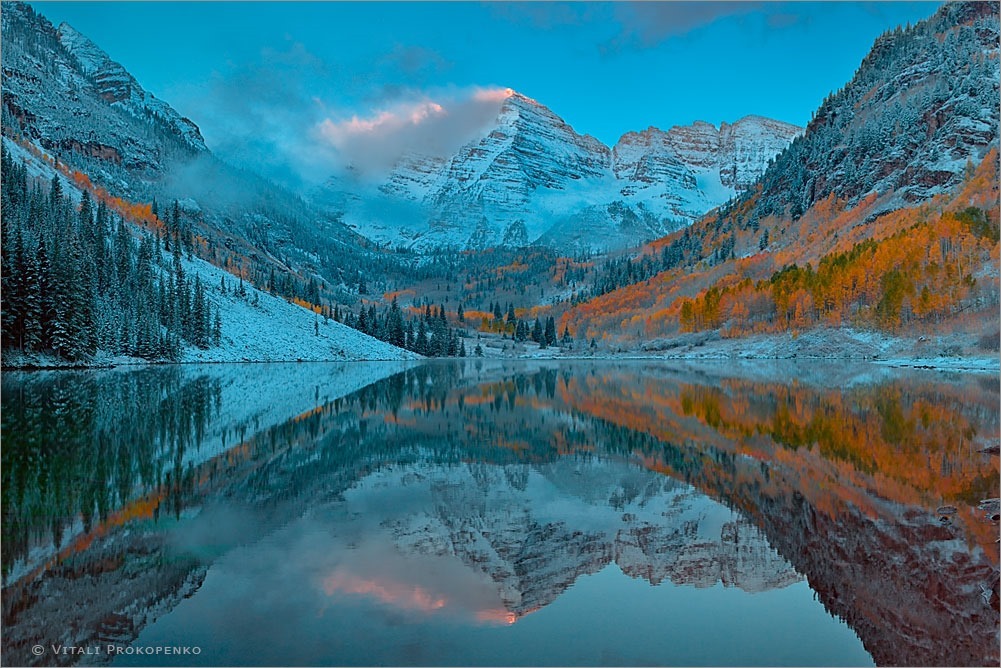
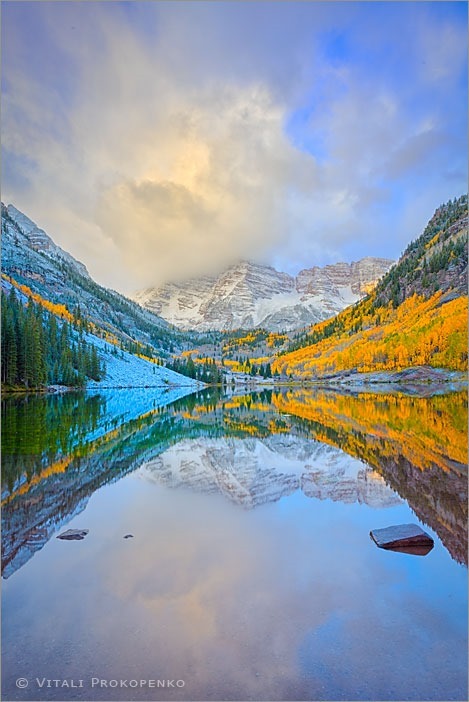
Reflections of Colorado Autumn

I’ve finally completed editing photos from my trip to Colorado. Despite my misadventures that I’ve already described I’ve brought quite a few photos of intimate places I really liked. There are a few themes I can see thru the photos. One of the themes are reflections. Here a few photos with reflections. Enjoy!

Overskinned. Story 1

Sunrise at Maroon Bells Lake

(A series of three stories – frustrating, scary and happy – with a common thread.)

At the dawn of photography back in 19th century there was this guy by the name Oliver Wendell Holmes, Sr who was a big advocate for photography in general and travel photography in particular. He talked about taking a photograph as taking a “skin” of reality that was based on his interpretation of an old Greek myth. I don’t want to go too far into that direction as it is not the point of my blog post. The interesting part is that he also warned of possibility of overskinning some scenes. He was concerned that some scenes might be photographed to the point when the scenes themselves will be not interesting. I came face to face with that on my trip to Colorado this fall.

***

Pacific Northwest has very limited opportunities for fall colors. You’d need to scramble for interesting fall color compositions outside cities in evergreen forests. Going to Colorado and diving into fall colors was a long waiting dream of mine. This year I finally went there. It turned to be a lot of what I expected, a lot more than I expected and some that I’d rather not have. This three stories with a common theme of what photography is for me and what it is not.

Since it was my first time in Colorado I did not have any places of my own in mind; I mostly traveled to well-known places. One of such places is Maroon Bells Lake. It is considered an iconic place of Colorado. Another photographer who went there last year warned me to come an hour before sunrise as there are quite a few photographers coming there to photograph sunrise there.

I scouted the place I want to photograph a day before and showed up there about an hour before sunrise. There were about 20 more photographers along the lake. The place I had scouted the day before was not occupied. I set up my camera on tripod and started waiting. It was freezing cold but everyone was jolly with anticipation. Over the hour that followed number of photographers slowly grew to 70 but everyone was polite and asked if they’re in the way when they setup camera.

Everything was well right up to sunrise, crowded but well. Right before sunrise a guy showed up and put his tripod right in front of my camera. When I politely noted that I was photographing there and he was blocking part of my frame, he said that everyone else was photographing too and would not move. I was pissed but not sure what to do about it except to frame a different image. There was still no way to completely avoid him, so I removed him from a corner of my image in Photoshop.

Next morning I went there without much enthusiasm but with a hope to still take the image I wanted. When I arrived there were already about 50 photographers. The spot where I wanted to make a photo was taken. I got what I got. By the sunrise there were more than a hundred photographers. It was crowded and did not feel very friendly. A guy on the right was frustrated with his gear which he had too much of; switching it constantly in indecision what to use; getting tangled up in it. I was locked into taking one and only one composition. Anything else would mean getting a bunch of tripods in my frame or getting myself into someone else’s frame. Can I be creative in such environment? No.

Last Ray

I had quite an interesting dialog with my seven year old son about this photo.

Adrian: Dad how did you get to capture the last ray of the Sun on the flowers.

Me: It is not a sun ray. I used flashlight to highlight the flowers as if the Sun was lighting them up.

Adrian: Cheater. It is not a real landscape. Nobody is going to buy it. People like real landscapes.

Beauty is in Details

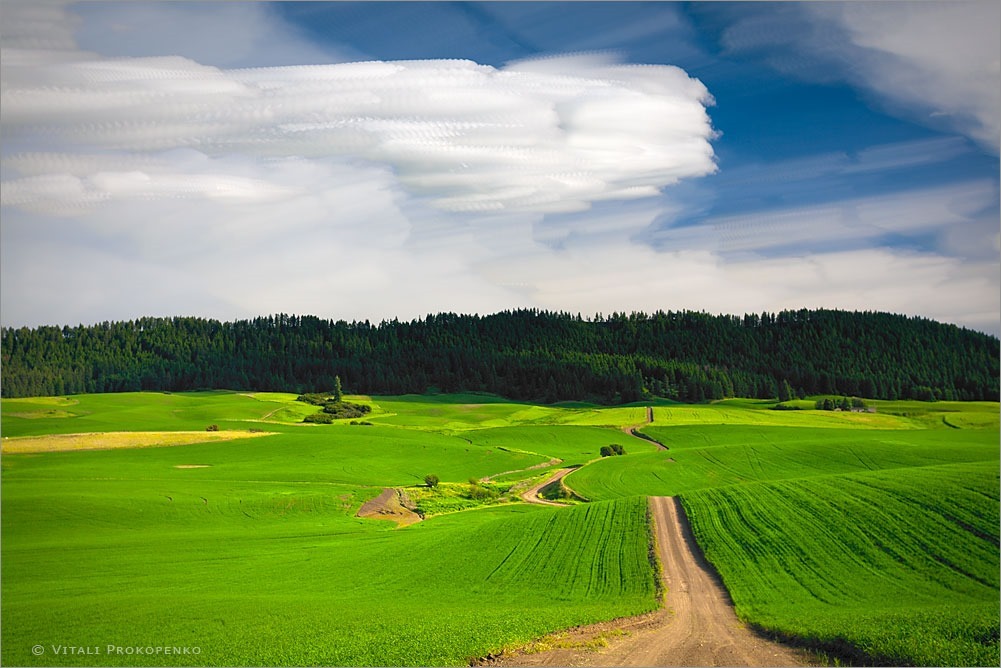
I’m still experimenting with this technique of multiple exposures over long period of time combined in one image and I like  results better and better. I think I’m onto something. Look at this image. Pretty trivial and  obvious composition. The first thing to note is that clouds look like they are painted.

Then I looked closely at different elements in the image and liked this technique even more. Here is a fragment of a field on the right:

And here is the tree enlarged:

Both elements look like painted. The road is the only element that remains looking as a photograph. This combination of photographic look and painting look creates quite an interesting effect. I’m eager to start printing this to see how it looks in full detail print.

Studying Time

I’ve been studying time in photography, experimenting with different things for over a year. How to capture time in one image? What if images from multiple times are combined into one? What’s behavior of different moving subjects over time? This requires a lot of patience (which to be honest I’m lacking) keeping camera in exactly one position recording world around it at it changes.

The best part of it is a suspense waiting for images to be processed and see the end result. The worst part is not knowing if any of it will be any good.

So far I have had lots of ideas with little success. Finally, it starts yielding some interesting results. Look at those clouds: don’t you like the painting like look of them? That’s no painting though. It is a lot of images taken over time with camera stationary in the same place on a tripod. Good thing there were no cars on this rural road that gave me enough time to make it.

Power of B&W

I cannot believe I have not published a post to my blog in so long. It is enough to slip one week without posting and then another week and then not writing becomes a norm rather than exception. Time to break out of that habit. Expect lots of image in rather random chronological order over the next couple months.

***

It is one of a rare hot summer weeks in Seattle. The temperature is constantly over 30 during day and nights are warm and humid. On the days like today I want to throw all food out of the fridge and close myself in it. It is a nice thought that I doubt I’ll ever make come true. I’m not that desperate. But that certainly makes a memory of the last winter refreshing. And that’s the memory I want to share with you today.

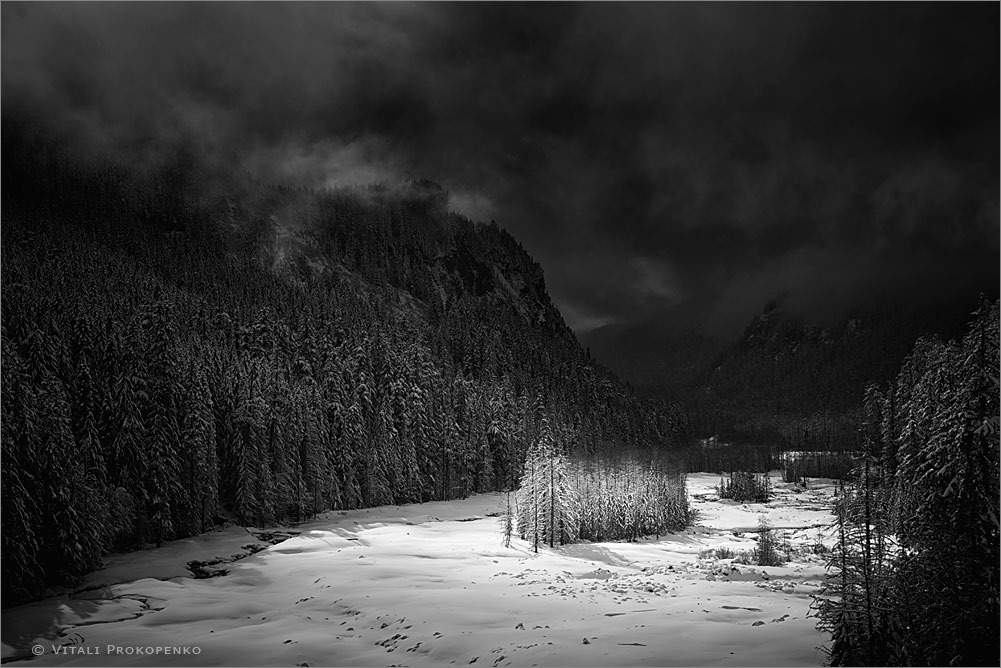
I love color to the point when I just photograph some color without even any subject. But sometimes the color is a distraction, a nuance that does not add anything or maybe even takes away something. In those case black-and-white image might still be more powerful. I find black-and-white especially working well in winter. One of the main reason is likely that there is not much color in winter in the pacific northwest mountains. The only color is the tone of the sun light breaking thru the clouds and that one is typically weird.

Like in this case the Sun broke thru the clouds just for a moment putting a spotlight on a bunch of trees in a valley. The color was strange but black-and-white tonality of the scene was beautiful.

On the Other Side

I went to Olympic National Park again, just 3 weeks after last time. The last time it was all about visiting old friends. This time it was about making new.

I like the saying “The real voyage of discovery consists not in seeking new landscapes but in having new eyes.” by Marcel Proust. It has been my guide in photography for long time. But… sometimes we can let our mind rest and let legs do the work.

I did visit a place I had been to many times – Rialto Beach – but this time I walk past Hole in the Wall, further than I’ve ever been before. I was enjoying excitement of exploration, walking the ground I’ve never been to before, soaking in new landscapes.

That’s where I made this photo at twilight. It has some mysterious feel too it, strangely attracting the eye. I’m wondering if its mystery has anything to do with a you-know-which movie.

_MG_9190