Point of View

There are many infinite number of ways to see the same thing. There are many infinite number of angles to look at the same things.

One of the popular photographic spots to visit in the Palouse is a fence completely made out of rusty remains of wheels. There are all kind of wheels in it dating to who knows how old.

A few years ago I went to photograph the fence too. (Hey, after a few years I’ve finally got around to write about it). I’ve started with the classic shot of fence going into the distance.

Then I’ve started looking at all kind of shapes in the fence. It was fascinating. Hay here are only spikes left from the wheel. It looks like the Sun to me. So, I’ve looked at it from very low angle, because the Sun should be in the sky.

The I’ve started looking at what can be seen thru the fence. Here is only rim left from the wheel (it might even matched the spikes above). It frames very nicely the nice white building behind the fence.

The point is: look at any scene and find as many images as possible in it.

Addiction to contradiction

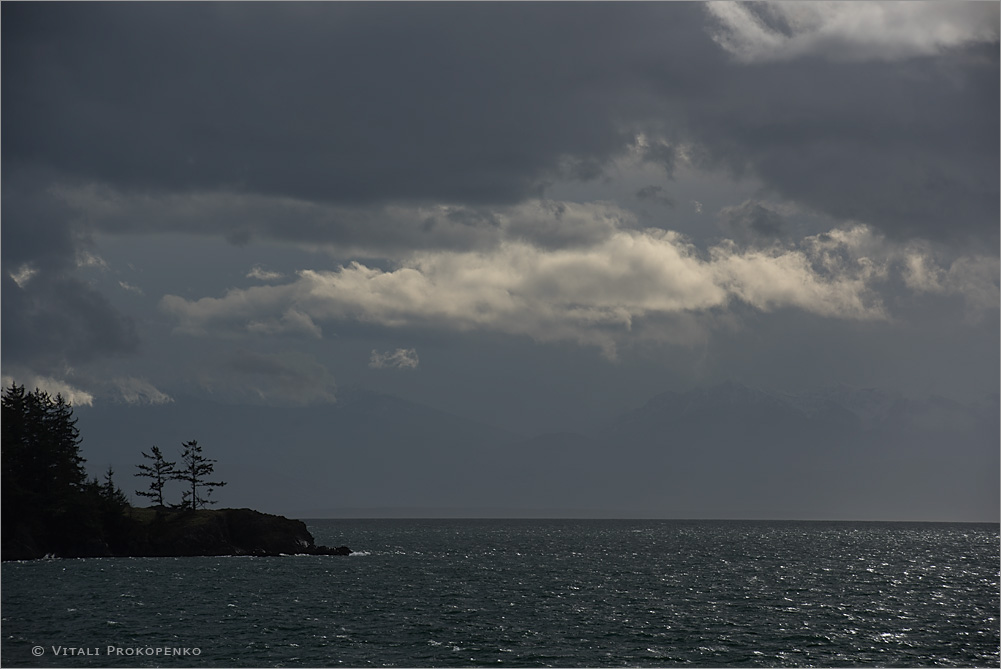
Is it me only or is everyone of us have addiction to contradiction? Snow in summer. Water in a desert. Line tree on otherwise bare hills. Clearing in a forest. Yellow flower in a meadow of blue flowers. It is all so fascinating.

Interpretations

There is an infinite number of ways to interpret that same scene, the same photo, the same subject. The interpretation very much depends on my emotional state.

My photographs are more a reflection of me than a capture of reality. This sounds cliché but it is true. I’m very much surprised but this myself.

Naturally my emotional state changes over time and images that used to speak to me seem to be silent now. The opposite is true. Sometimes I find gems in images long forgotten.

The changes of my emotions even change the way I interpret images in post processing. Look at these two images. The exact same scene the almost exact same photo.

First one is the image I captured. It is dark and grey. It is an image of depression, being lost with no way out.</p

Then the image after processing. When I process images I rarely have a plan; I’m exploring letting it take me wherever it wants to take me, looking for something that resonate with me. In this case I ended up with an image of hope.

One Step Back

I’m back from Norway. Well, I’ve been back to Seattle for two months, enjoying my old friends: Olympic National Park, Rainier National Park, Enchantment Lakes and trails around Seattle.

***

One of the icon places in Rainier National Park is Reflection Lakes. In fact by far this is the place to photograph at sunrise. And pray the water is still as a mirror. I had not visited it for a while as it is over-photographed in my opinion. I had preferred exploring new places in this vast park.

On a whim of nostalgia since I have not been in the park for four months I went there to enjoy the classic view. It was the first  freezing night of the season. Frost was covering grass, logs, and few remaining leaves. Fog was rising over the lakes and slowly moving over the still water.

There were a few more photographers besides me there. All of them trying to get as close as possible to the water going for pure perfect reflection photograph. I on the other hand step back a bit and have edge of the lake nicely framing the mountain reflection. Here is my almost classic image of the mountain:

But then I thought that what was really interesting and unique about that morning was the first frost. So, I walked away from the lake to the point where I had seen two logs pointing in the direction of the mountain. To me these images are more interesting. The first one was taken before sunrise during twilight and the second one was taken right after sunrise.

Anticipation

I’m sitting in a hotel room in a hot hot Dubrovnik in Croatia but my thoughts are about cool Lofoten. Apparently heat and me don’t go together very well. My brain is boiling with a temperature close to 40C outside and I cannot put a single thought together. So, I spend middays in a hotel room with air conditioning and mornings and evenings in a pool or the sea.

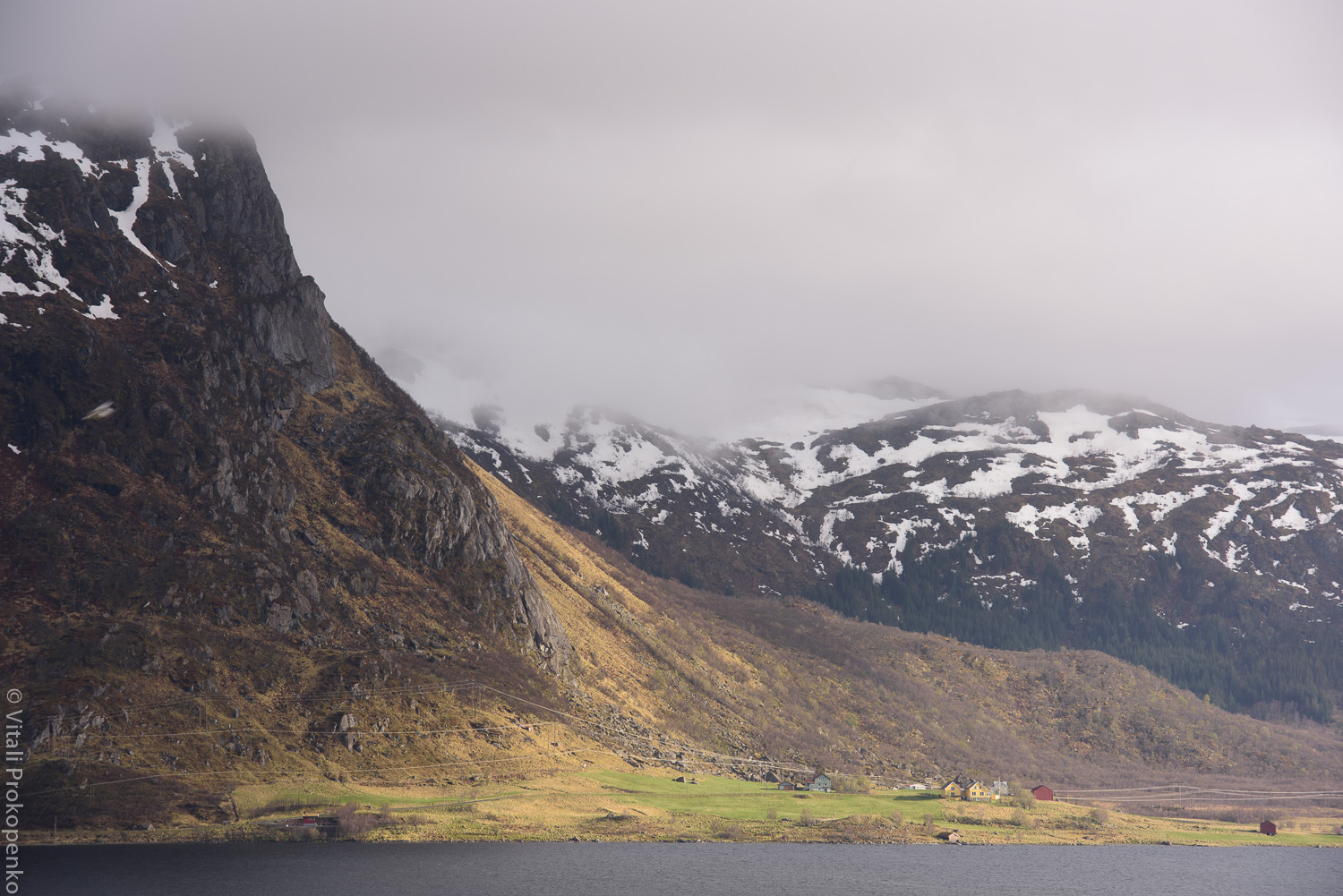
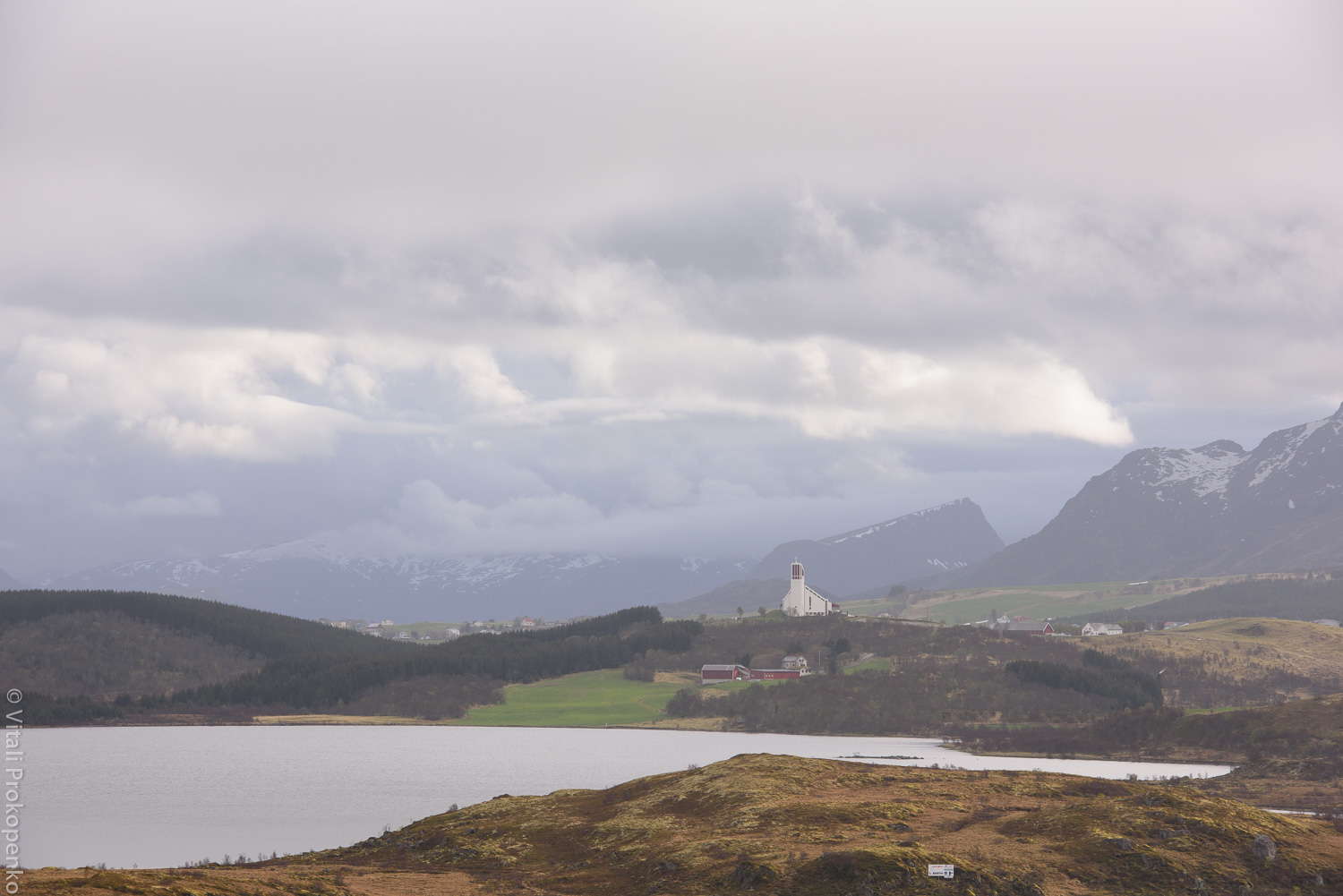
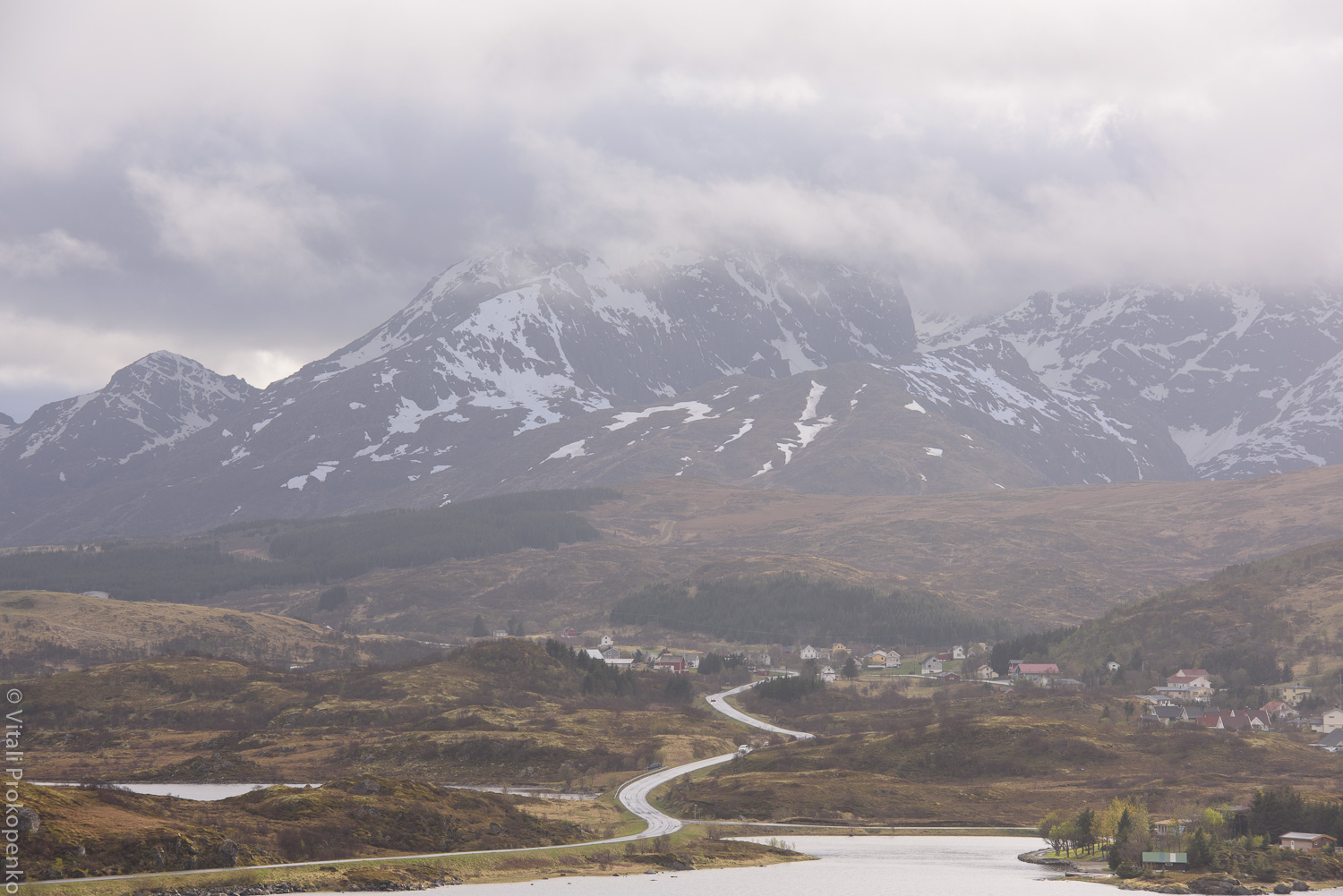
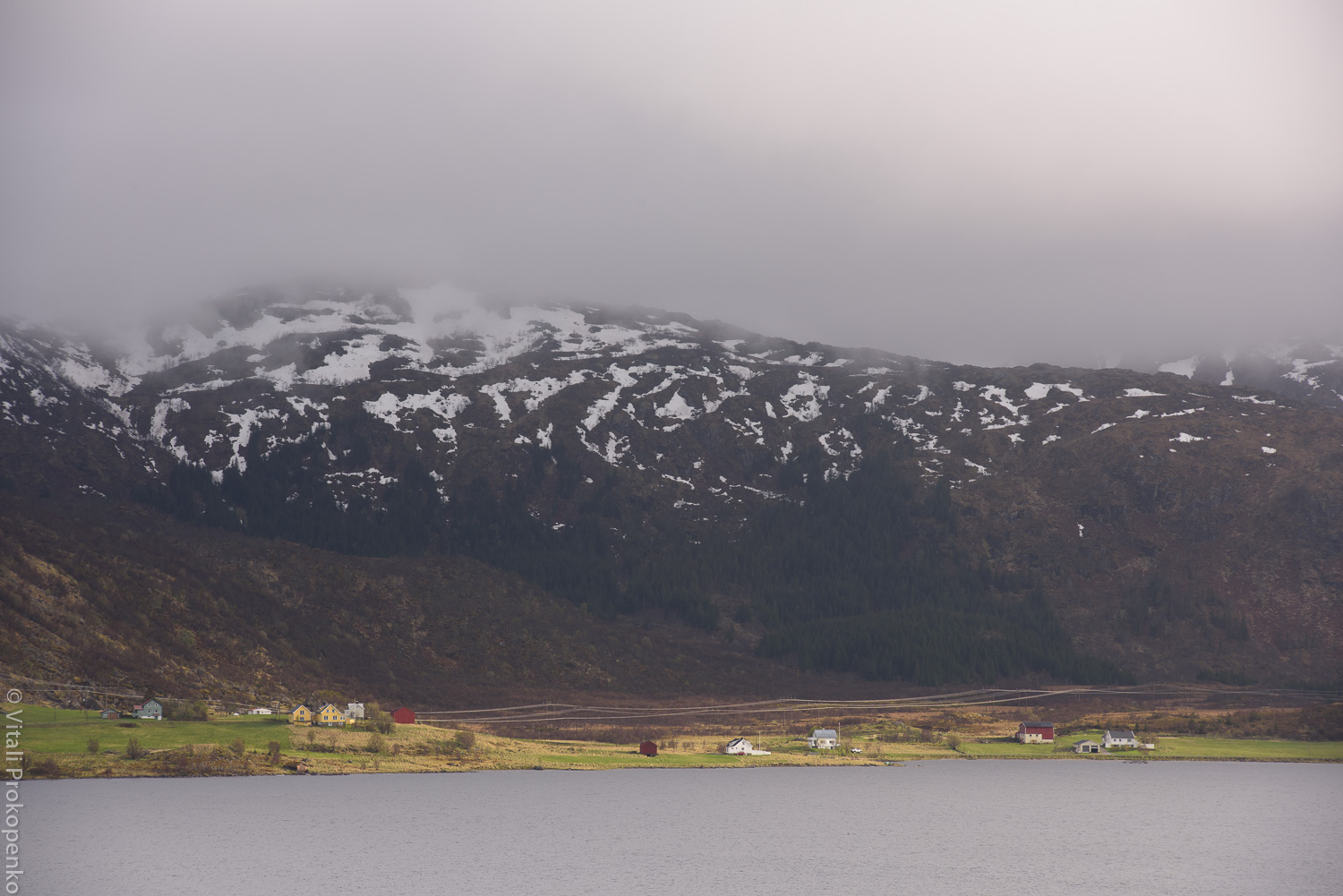
Cool weather is much easier for me. It helps me think and be more creative. Cool weather such as in Lofoten. I remember its very unstable nature. It could change from rainy to sunny and back to rainy within an hour. That kind of change creates great sky and great light. I just need to be patient and watch for an opportunity, hunting for a great light and composition. All the images below were taken from the same spot on the same day but how different they are!

I remember when I planned my first trip I was very concerned about rainy forecast. On being there I understood that “rainy” weather is exactly what I need as it created drama and emotion.

Why do I think about Lofoten now? Because in a week I’m going there again. This time for longer and with a knowledge of places that can give me the best experience.


Sensory memory

I have mentioned in one of my previous posts that I find my inspiration in paintings. One of the masters whose works inspire me is Shishkin. His landscapes have almost photographic accuracy. Interestingly enough many of his landscapes are depicting nature at noon – some of the hardest light for photography – and yet it looks so beautiful in his paintings. His paintings are utterly simple depicting seemingly mundane landscapes, but the way he does it make them look magical, filled with warmth, hard to take my eyes off, perfect in every respect.

***

I live in Oslo temporarily. I run regularly and use running as a way to discover Oslo for myself. I also have my smartphone with me and use it to capture things that catch my eye. The smartphone has become my sketching tool. That is how I discovered Bygdøy Peninsula. Oslofolks call it an island and I can see why. It is covered with forest, farms and countryside cottages. It is an oasis of nature in the middle of a city where anyone can escape from noise and rush of the city life.

When I saw the forest of on Bygdøy peninsular, it reminded me of Shishkin’s paintings. I made some sketches with the smartphone and then I came back at noon (just like Shishkin’s paintings) with a camera to spend more time working on images.

Walking thru this oasis of nature, making photos was very relaxing experience. The sun was shining, breeze was touching my skin, birds were singing, trees were whispering.

***

Later that day at night I was processing photos. I was eager to jump onto the task because I wanted to see what I had gotten and how much I can translate my experience into images. As I was working with the images I realized that I felt warmth of the sun and coolness of the breeze, heard birds singing and trees whispering. All my senses were tied to these images.


Fascination with Lofoten

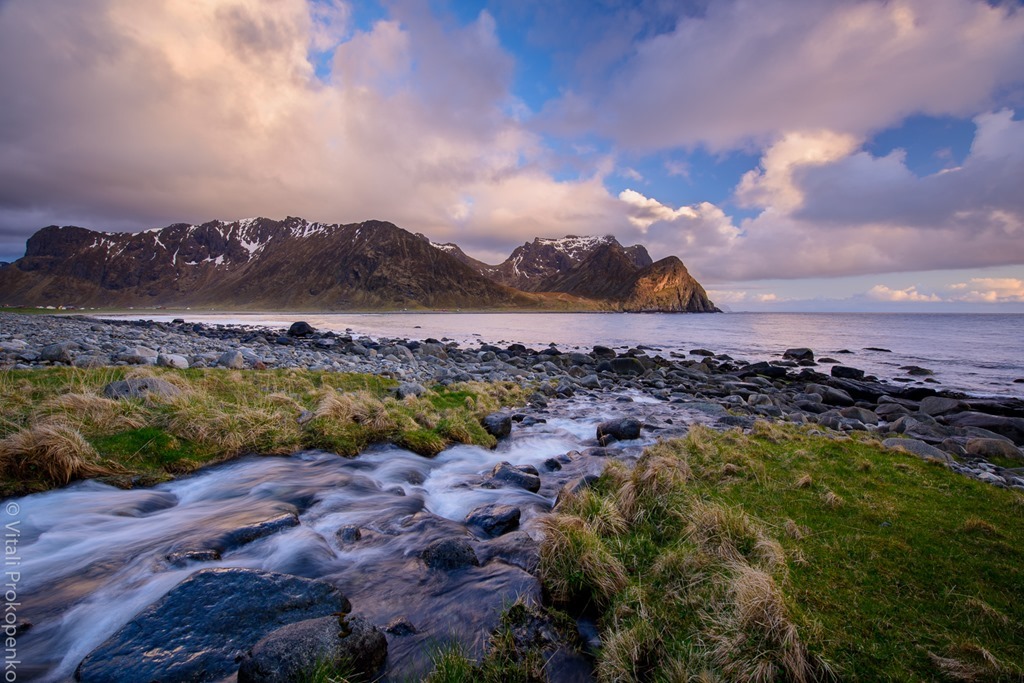
I’ve spent 3 amazing days in Lofoten and I fell in love with it. It is a chain of islands in Norway above arctic circle connected by bridges and tunnels.

I had such a misconception from my childhood about life above arctic circle. I imagined Lofoten to be ice and snow, and rock not covered by ice and snow, devoid of life.

It turned to be something completely different. Lofoten was vibrant and lively with green grass, blue sky, sunshine, white sand beaches, emerald ocean and mild temperatures. It was not even nearly as cold as I imagined it. I found it hard to believe I was above arctic circle.

I wanted to stop and touch every tree, touch the grass, the sand and water. It was so far from what I expected that it felt surreal, science fiction. I had to touch it all to check that it was real and not a figment of my imagination.

Sitting in the car watching ripples of water run up and down while sandy beach made me feel like I’m in Hawaii. It was a bit colder than Hawaii when I was getting out of the car. 🙂

You know what was even more surreal? Having no night. It was a beginning of arctic summer, when the sun shines round the clock. It was surreal to hike at midnight and have daylight.

Driving thru the small towns at “night” felt eerie. It was bright as day but there were no people, no movement. It was like in science fiction or horror movies when you wake up one day and all the humanity is gone.

There is so much to photograph there: snow capped mountains, waterfalls, ocean, sandy beaches, rocky beaches, mountain rivers, green meadow, lakes, tiny islands. And best of all I could hike pretty much everywhere. There is very little private land. I spotted a waterfall up the mountain while driving, I just stopped where I could and went up. This was such an enjoyment to roam the land, to wonder around.

There was a payback for all that “night” travel as I was red eyed from lack of sleep but it was totally worth it. If you’ve never been above arctic circle in summer, make sure it is on your “bucket list”.

Learning to Work on a Move

I’m in a long trip to Europe for three months. I’m making photos along the way. That means that I need to get to learn to work with limited resources namely laptop. Typically during a few days or a week photo trip I don’t do any post-processing; my focus is on collecting material.

Three month though is pretty long time to go without any sharing. so I’m getting used to post-processing on a laptop and getting used to long waits.

My first stop was Tuscany. Here is an image I took near Asciano.

Like a Pianist

Recently (four months ago) I bought myself a new camera. Just then I understood just how much my previous camera had become an extension of me. I did not even think about controls, I just thought about picture I want and fingers did all the work.

There was a lot to learn with the new camera. I’ve read thru the manual repeating all the steps that I thought were important to me. I started making photos. I stumbled over and over, had to think about what buttons to press, what dials to turn. Many pictures went straight to trash – they were technically very bad: out of focus, under-exposed, over-exposed.

I kept practicing. I had to re-read parts of the manual because I forgot how to make certain adjustments. At last during the trip to Alberta I noticed that my fingers do all the work automatically again. It was such a pleasant feeling to be in control of the camera again. I somehow think it is similar to how pianist is playing on a piano.

Here is the final set of images from the trip.

Ask Locals

To Dmitri and Marina: Thanks to you guys for pointing some beautiful places in Banff.

On my trip to Alberta I met my friends Dmitri and Marina who live in Calgary. First, we met in Banff where they were celebrating 25th Anniversary of their marriage. They suggested to me a few places to see in and around Banff.

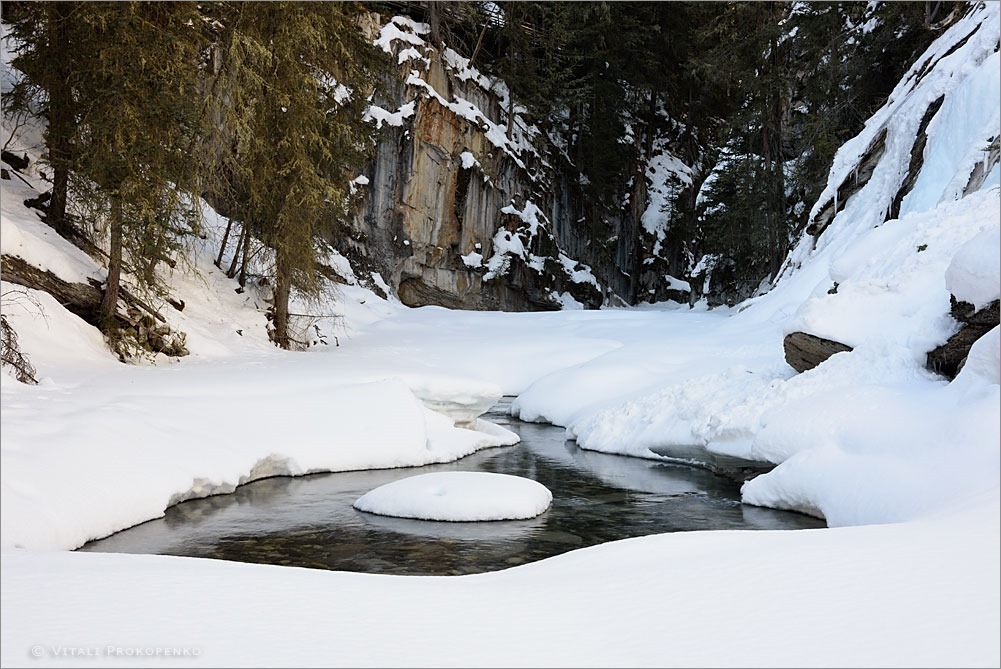
On of those places was Johnson Canyon. It sounded interesting and I went there. It is a small canyon with a stream running at the bottom. The trail is well-setup and quite active with hikers. There is a guard rail that keeps hikers of falling into canyon. For me it was an obstruction. I did not want to look at the bottom of the canyon from a distance. I’d rather be down in the canyon, close by water, to be participant not observer, to be in the scene and be part of it.

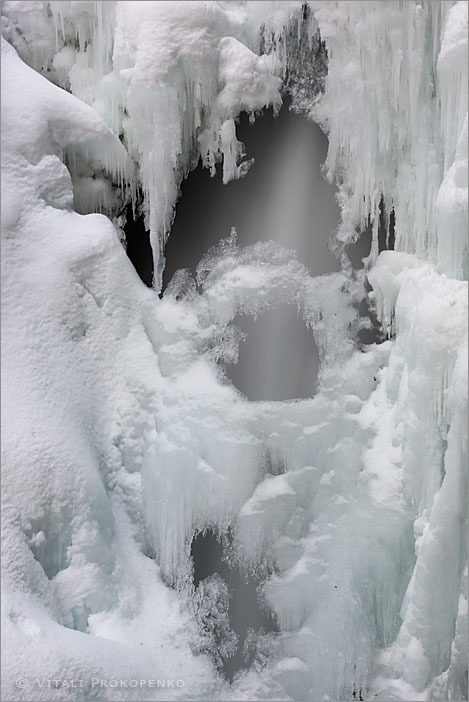
My only photo from the first trip was a photo of frozen lower waterfall:

A few days later I visited my friends at their lovely home. Sure enough we shared some photos. It turned out they went to Johnson Canyon too the next day after me. It looked to me like they were photographing close to water, just like I wanted too. I asked how they got their and they told me that there was one spot where one could climb over guard rail and get down to the bottom of the canyon.

The next day I went to Johnson Canyon again. That time I was closely watching over the guard rail for footprints in the snow and I found the spot my friends had talked about. The walk down was very steep but manageable. At the bottom I found a throve of photo opportunities. There was a small cave covered with icicles, there was clear snow not covered in footprints, , there was a stream in the snow.