How long have I been photographing? How did I start?

This is a series of posts with translation of my interview published in Russian at http://landscapists.info/vitaly-prokopenko.

It depends on what point to start count from. I was fascinated with photography on some subconscious level. Back in school I had an old rangefinder camera. Completely mechanical with manual exposure – no electronics at all. I developed film by myself, I made prints by myself. I still remember the scent of chemicals.

I remember my experiment with enlarging a photograph to a really big size. I put my enlarge on a side and projected the image from one end of 7 meter hall to the wall on the other end. On the wall I put letter size sheets of photo paper. The hardest thing was to develop those sheets exactly the same time to keep the same tonality. And I did not succeed on that. Different sheets ended up being darker or lighter. Despite that I enjoyed experimenting.

Later, in high school, my parents bought me more advanced camera – film SLR. It had electronic exposure metering! That was when I learnt my first lesson: not to trust tools. Since I started relying on exposure metering I did not get a single shot with a good exposure.

Still I would not say I did fine art photography in the school. After I entered a university I abandoned photography completely. There was no way I could setup a dark room in a dorm.

After post-graduation school I moved across an ocean to the US. I did not immediately started doing photography again. I traveled a lot, bought a simple digital camera and was taking some random snapshots which I have not even bothered to look at since then.

After a few years living in the US I noticed that I spent too much time working. I needed something that would take me away from work. I tried several hobbies and could not stop on anything.

At the same time my wife got into photography. She was the first we got a DSLR for. I thought about trying myself in landscape photography. I bought a tripod, started reading books and explore landscapes around. And I really like it. Photography has become part of my life that I cannot live without.

Long Trip for Dandelion

Dandelions are everywhere. I even have them in my backyard and yet I have not taken a single photo of them where I live. At the same time on my last photo trip to central Washington and Oregon thousands of kilometers from home I was stuck around a dandelion parachute ball for an hour taking photo after photo – searching for best angle and experimenting with different depth of field. I found it to be extremely interesting. Why is that?

I have two states of mind – daily routine and photographic creativity. While in the first state I’m completely consumed by the daily errands, not having time for anything beyond that. On a photo trip on the other hand I start seeing interesting photos in even simple and widespread things. Driving or flying away from home is my trigger that opens my vision to a different perception of the world around me. I need to put a significant time and distance between me and home to isolate myself from daily routine and start thinking photographically.

Being able to isolate and focus on photography is very important to me and I suggest you try to find your own trigger that will help you with that.

Dandelion

Getting Out There

The best thing you can do for your photography – get out there and start photographing. Don’t wait for the right weather, don’t wait for the right light, don’t wait for the right mood. Just pick up camera, drive or work or ride somewhere, and start shooting. Photographs will come only to those looking.

My son has grown up quite a bit and does not need as much continues care – he can play by himself and with other kids. Which means I can get out there and start photographing again. So I did last weekend with a fellow photographer. And what a joy was that!

We’ve planned for this trip for a week. Saturday morning though looked miserable. The weather forecast did not promise anything good – rain for weekend for central Washington and Oregon, where we planned to go. We were ready to call it off. Then my wife said that I must go, if I did not go, I would regret later. She was right – we went and it was great. The weather was nice and I brought back a lot of photographs to work with.

I think Jay Maisel put it best once when he said “Don’t be afraid to fail, be afraid to stop trying.”

Here is one of the first photos I’ve made on the trip:

The Importance of a Routine

It is important to work out a routine of taking camera out of a backpack and putting it back. Routine will turn into habit that will ensure that nothing gets broken or lost over time.

I realized this after one incident while photographing in Yellow Stone National Park. One time I though I would leave my camera backpack open in the trunk of my car. I thought why bother opening it and closing every time I need to reach for a camera.

Then I was in hurry to catch a sunset and I completely forgot that I left my backpack opened. I needed to run to get a better angle for a shot. I quickly pulled the backpack out of the truck and threw it at my back.  That sent my DSLR and filters flying out of the backpack.

I was very lucky that time – my camera landed onto a level inserted into the camera hotshoe. The level was crushed but it saved the camera – it did not have any damage. Needless to say that I did not get any sunset shots that time.

That taught me an important lesson not to skip on important routine of packing camera after doing photography. The lesson cost was $25 – the cost of a new level.

I have similar routines for extending/collapsing tripod legs, placing camera on tripod, for placing and removing a filter, changing lenses. These routines are very important. Eventually they turn into habits that you do very mechanically, so you can focus more on photography instead of these small things.

Subject, Texture and Color

When I go to botanical garden with a camera I feel like an explorer looking for specimens. I don’t take picture of flowers and leaves – there are enough of those already. I’m collecting subjects, textures and colors to work with later at home.

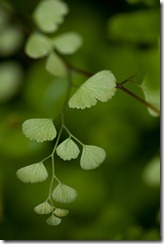
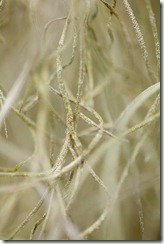
Here are three photos (subject, texture and color):

subject texture color

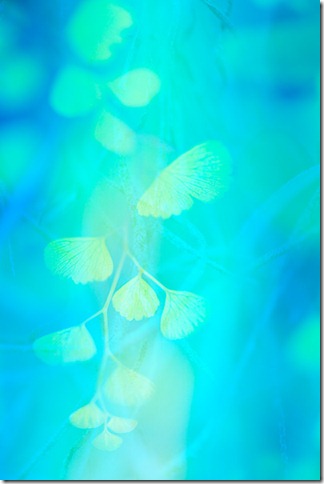
I turned those into this image:

This image might be a beginning of a new project. I even have a name for it: “Primary Colors”.

How much my prints worth?

A few days back I wrote a post about pricing of fine art prints. After thinking a bit I decided to do an experiment with upcoming exhibition to find out how much people are willing to pay for my prints. I’m going to do a silent auction with no reserve, no starting price for the prints that are going to be exhibited. I’ll find out just how much people are willing to pay for them (if they are willing to pay for them at all, of cause).

Here are the images that are going to be exhibited:

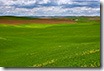
Palouse at Sunset  
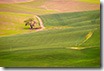
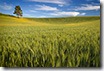
Sketch with a tree and road Three trees by the road Tree

All the prints are on a canvas stretched with gallery wrap 27”x18”.

I’ll let you know results.

Point-and-shoot

Every tool has its reason and its purpose. While I enjoy DSLR for my fine art photography, a point-and-shoot camera is essential for a family vacation. For quite some time I’ve been using DSLR for both. Recently I’ve bought a point-and-shoot camera in addition to DSLR and I can say that I enjoy family vacation more now. First, I have to carry my son’s stuff and sometimes my son himself, additional weight and size of DSLR with lenses does not make it more enjoyable. Second, with point-and-shoot I can take pictures with one hand while holding my son’s ice cream in the other – can you do that with DSLR? Third, it fits into a pocket.

There are lots of other reasons why point-and-shoot is more appropriate for certain cases. I’m wondering why I did not buy such a great tool earlier.

Too bad we just lost it today in Disneyland. I don’t care as much for the camera as for the day worth of photographs of my family. If you happened to find a camera with someone looking like me in photos or know someone who did, could you send photos my way, please?

How much does a print worth?

As the time of my new show is getting closer the same question of pricing comes up again. What’s the price tag to put on prints?

The discussion about pricing of prints is probably as long as photography itself. Some take approach of costing materials, their time put into producing and framing the print, all other expenses and then adding some mark up. But why the person who looks at prints in a gallery and may buy them would care about how much money and effort photographer put into the print? Wouldn’t the amount potential buyer may spent on a print actually depend on the image itself, on how much it connects with a viewer on a deep emotional level?

Other approach is to pull some high price out of thin air – this is art and thus should cost a lot. It seems to me that it would just alienate viewer. People think that we artists are crazy thinking that someone would pay that price. There is an opinion that value creates a perception of value – the higher you price the print the more likely to sell for high price. That might be true for some limited group of people. I don’t think most of us would fall into that.

What does the history teaches us? If we look back at history how many of famous artists of the past become rich by painting their paintings we all enjoy today and which are considered priceless. If they could not selling their paintings for crazy high prices why would someone pay crazy high prices for a print? Let get real. The print cannot be worth the price tag unless it can be sold for that price.

Fascination with Paper

I don’t know what is that between me and paper. I just like looking at paper, its smooth or rugged surface, feel it in my hands, think of photograph that look good on that paper, print it and look at it. Every time I go to a photo store I end up buying a sampler pack of some paper. Today I went to a photo store to buy lenses cleaning solution and end up with another sampler pack.

With inkjet printers we have a huge selection of all kinds of papers and surfaces to print our photos on. I have whole bunch of various inkjet paper at home. Some of it never even makes to printer – after studying it I realize that I don’t have the kind of photos that would look great on it. Sometimes I print on it just to realize that it does not work the way I expected. And other times I’m just wowed with the way the print looks.

My main medium is canvas. That’s what I use for most of the prints nowadays. Photo impressionism looks especially great on canvas. The rest of paper is just for fun – just because I’m fascinated with paper.

What is Reality?

The cornerstone question of modern photography: Is it ok to use Photoshop for photography or just how much is it ok to use? The actual question though is whether photography supposed to document reality or it is an art and just any art it is free to express whatever artist wants to express?

That is quite broad question. If we accept that photography is documenting reality then we need to define what reality is.

From my childhood I remember a popular science program with one of episodes fully dedicated to human vision. One of the interesting aspects of human vision is chromatic adaptation, where human brain tries to “color balance” what it sees. Except it does not color balance based on average color, it color balances based on familiar objects. If it sees an object of the known color it will “color balance” scene to show that color correctly. If there is no familiar objects, all bets are off. In a room lit with red, a human can say that an object of white color (under sunlight) is red or white depending on whether there are familiar objects in the room or not. Now if two people visit such room and one sees the object as white and the other sees it as red, who is right? What is reality?

Human vision consists of many layers of processing. There are many illusions to trick various layers. (You can read about it here for example: http://en.wikipedia.org/wiki/Color_vision.) My point though is that different people see differently and not necessarily the same way the camera does. When we get into memory of something, things get even trickier. Our memory tends to keep images scenes, events, people differently from the way we see it first time. Which brings us back to the question: What is real?

Let’s try to approach this differently. Let’s say that camera is an ultimate tool to capture reality. Let me ask what camera settings the reality is at? Should saturation be at +2, 0 or –2? Which value the contrast should be at? How come one camera at saturation level –2 produces more saturated images than another camera at +2? Does that mean that camera manufacture have an opportunity to decide what reality is? Or do they just pick the closest image to people’s perception within a given market segment? I recently learnt that modern cameras have a database of scenes and they adjust settings based on whether scene looks like sunset or a portrait, with backlight or front line, full body shot or a face only. In some sense cameras try to get closer to human perception.

Let’s not fool ourselves thinking that the problem is introduced with digital photography. I still cannot get with digital such deeply saturated blue and green as Velvia film was producing. And what about black and white photography? For most people black and white is not the way we see the world around us. The amount of post-processing that film photographers do, can easily rival that with digital photography.

There is one question that keeps bugging me as I think about this. With all the sophisticated tools we have why are we so desperate to capture the world around us the way those tools see rather than the way we see it? I don’t what camera to decide for me how I see the world around. For me camera is a tool which can create a basis – all settings on neutral. Later during post-processing I try to make a photograph look the way I saw it. Cameras are not just that smart to replace a human yet.