Waiting for the Light

Sometimes you chase the light and sometimes you need to wait for it.

By the afternoon of the second day the sky started to clear and I started heading back home. I still wanted to stop by a few places on my way home. One of those places was a large canola field that I saw on my way to Colfax.

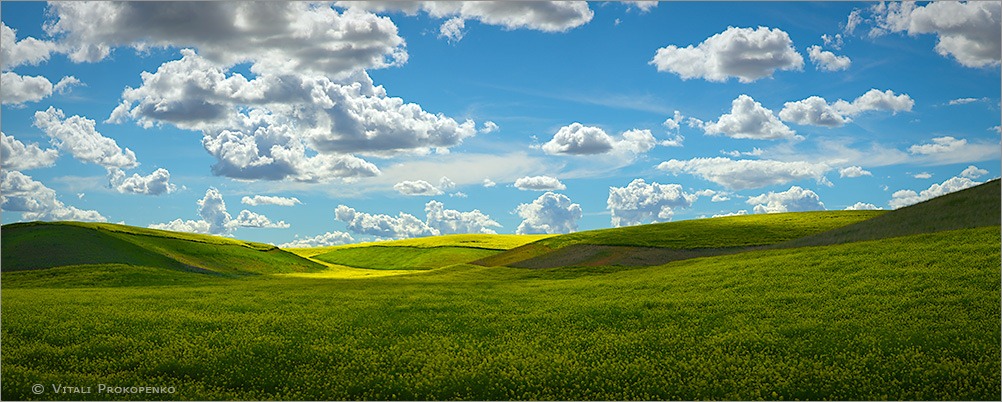
In the first day with no sunlight in the first day the canola field looked dull and uninspiring. But with the light and shadow spots moving across it I thought it could be interesting. With a sunlight on it the canola field was bright yellow. The kind of color my son loves because it is warm and happy.

I drove around the field looking for a composition. I could not quite anchor the composition around anything, because there was not anything in the field. And just as I almost gave up I saw and intricate play between light and shadow which shaped up the field into something that was interesting to photograph by itself.

Clouds were moving very fast. By the time I stopped the car, got out of the car, setup tripod, put a camera on tripod the cloud moved on and shadow that was shaping the field was gone.

Sometimes you chase the light and sometimes you need to wait for it (or, to be more accurate, in this case wait for a shadow). The next two hours I’ve spend waiting for another cloud to come in… and here is the photo I was waiting for:
_MG_4437

Keep on Moving

Last weekend I made a short two day trip to the Palouse – an area in Eastern Washington famous for its rolling hills covered with patches of fields. It is very beautiful and photogenic place. Some call it American Toscana.

My first day of the trip in the Palouse was dreadful. Grey solid sky, no light, little color. Just as if it could not get any more discouraging, suddenly the rain started. It was pouring down heavily. Most people would stay home in that weather. Not me. I went on scouting around.

The rain stopped just as suddenly as it started. Heavy clouds and soft light were majestic.

I even caught a glimpse of warm pink glow in the sky from a light of the Sun settling for the night.

Just one small piece of advice: don’t drive dirt roads there when it is wet. The dirt is a fine grain clay that becomes extremely slippery when wet. You’ll lose any control over your car. I am talking about it from experience.

Don’t Be Stupid

Day 4, Noon

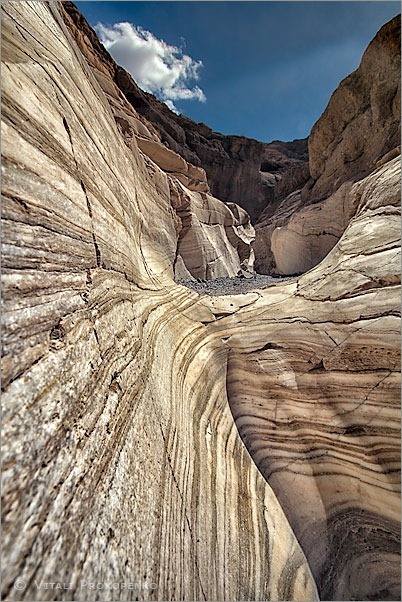
Mosaic Canyon

Today at noon I hiked up Mosaic Canyon. It turned to be more interesting from geological and mineralogical point of view rather than from photographical. The variety of color and texture of rocks was captivating.

On the way back I saw what looked like a steep trail up to a ridge that could open up to a view of Death Valley and Mesquite Dunes. I started climbing up.

The trail was getting steeper and steeper. At some point I had to climb up a two meter drop. I had to stop to think about how to climb it and realized that I could climb up but I would unlikely be able to climb down. There is a reason why climbers slide down on ropes. Climbing down is much harder than climbing up.

I recalled what John Shaw said when was asked if he had one advice to photographers what it would be. His answer was "Don’t be stupid". Being already 15 meters up on a very steep trail with sharp rocks and nobody else making this far into the canyon, there would be no help if I make wrong move.

I carefully retraced back my steps backward (there was no room to turn around). It took longer to get back down than to walk up. Once I had ground under my foot again, I was happy that common sense won over curiosity this time.

Big Pine

Day 3, Noon

With a spare tire that I put the day before I could not get far, since it was not regular size. I needed to fix that problem first. The closest town – Big Pine – was over an hour away, especially with spare tire with a limit of 50 mph.

The drive to Big Pine turned out pretty interesting and picturesque. From there I decided to drive along Sierra Nevada mountain range south and re-enter Death Valley from west. That way I would have entered the valley from every road available.

The road was very nice. If I were to go to Eureka Dunes again that’s probably the way I would approach it. And for convenience I could even stay in Big Pine for a night.

The drive to Big Pine and then driving west of Death Valley turned out very picturesque. Here is a road from Eureka Dunes with snowy Sierra Nevada in the distance:

Road from Eureka Dunes

Here is a nice roller-coaster ride to the west entrance to Death Valley with mountains in the distance hidden behind dust storm:

Roller Coaster

And here are the curves of road descending into Death Valley with its colorful mountains (click on the image to see it larger):

IMG_2095

Texture

Day 3, Morning

The most interesting thing for me in dunes is their texture. I just walk the dunes and collect different textures like a biologist collecting specimens. And sometimes texture leads somewhere like in this case lines of the texture lead into valley. White peaks of Sierra Nevada range are visible in the distance (barely visible on a small picture). It is amazing how such extremely hot and cold places are located so close to each other.

Texture

Big Pine Road

Day 2, Afternoon

My next destination in Death Valley was Eureka Dunes. Eureka Dunes are remote but are worth the drive. Their size is magnificent and awe inspiring.

The way I got there was by Big Pine Road coming from Scottys Castle. It was about 2 hour drive on a rough unpaved road. The views were great and I stopped several times to take photos. The very first post of the series about this trip (Death Valley) has one of the views opening up for traveller.

There are a couple of interesting sites a long the way. First one is Crankshaft Crossing that actually have a few crankshafts lying around:

Crankshaft Crossing

And the other one is remains of a sulfur mine that was abandoned long time ago. With much of equipment abandoned to rust it looks like a scar on a landscape. One sheet of metal was loose and flapping in the wind making a squeaky sound. This made the place feel ghostly and spooky.

Mine 1

Mine 2

Mine 3

Death Valley

Day 1, Afternoon

This is a beginning of a story about my photographic trip to Death Valley. One of the things that I did differently this time around was writing a journal of some thoughts about scenes I saw and events that happened.

Death Valley is an unique place. It is a place of extreme heat, lack of water and Nature’s way to show adaptation and survival of life. It is a place of extreme contrasts – from heat of the bottom of the valley to cold mountain tops, from dunes at the bottom to forests at the tops.

Every time I go to Death Valley I spent most time in dunes. I’m captivated by their perfect geometry of line, shape and texture. That’s where I stent most of my time on this trip too. But let’s not skip too far ahead and start at the beginning.

Upon arrival to Las Vegas airport I rented a car – a large SUV with foldable second row of seats, so there is a large enough flat area in the back. The reason was that the way I travelled was very minimalistic: I slept in the car. Before going to Death Valley I stopped at the closest grocery store and loaded up the car with water and food for the whole trip.

Once all preparation was done without much delay I took off to Death Valley. After about 3 hour drive I arrived there. The weather was great. The sky was filled with clouds. It was not typical for Death Valley but great for landscape photography.

Road in Death Valley
Road to Eureka Dunes

Walk into Fall

This post was supposed to be about fall and beautiful foliage colors I captured last fall during my visit to my home town in Ukraine. But as I was preparing an image to include in this post the topic of the post changed because of my struggle to fit large image with lots of details in a small viewing area of a screen and make it as enjoyable as original.

Here is the image I’m talking about (you can click on the image to see it in a bigger size):

Walk into Fall
Walk into Fall

In full size it has every leaf with its unique color and details. The whole image is vibrant and lively. You practically want to follow the dirty trail covered with foliage and walk into fall. After reducing it to such small size all the colors blended together into something more or less average.

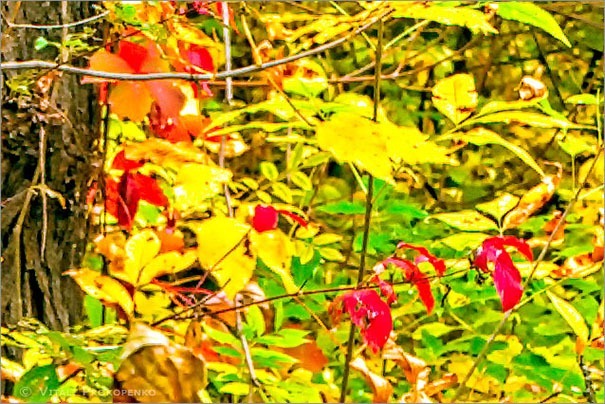
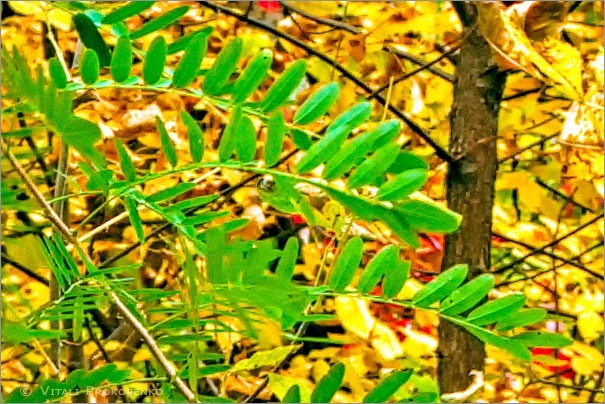
That’s just another reason I still enjoy more prints over images on a screen. Just to show what I’m talking about here are a couple of snippets at full resolution.

Foliage

Foliage

Change

"When you’re finished changing, you’re finished." – Ben Franklin

I’ve sent a photo that I posted in my previous post Stormy Sky to one photo community up for discussion. I’ve got a few interesting points that I need to think about. There was one common thread though all the feedback that it was not my style, that my style was more artsy images.

It was flattering that people saw style in my images. At the same time it showed that having style may box you in because people expect certain style of the images.

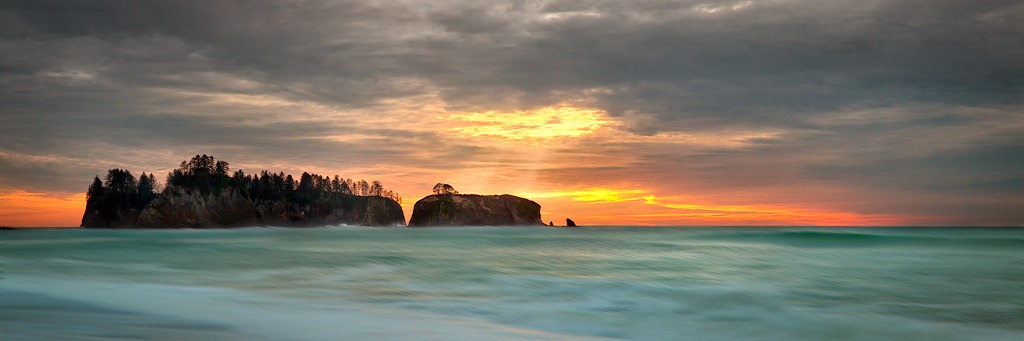
For me trying something new is what keeps me moving. And for those who like my artsy style here is a panorama that I made recently at Rialto beach in Olympic National Park:

Rialto. After Storm
Rialto. After Storm

Getting off a Beaten Path

How much time changes landscape. Last time I visited Zion 7 years ago. Two friends-photographers and me were the only ones photographing at sunrise behind old visitor center. Here is the photo I took that morning: Zion in the Morning.

Just a couple of weeks ago I visited Zion again. This time there were 40 photographers there waiting for sunrise. It looked like a line of people attacking the landscape. I’m glad the popularity of landscape photography grew so much over the years. At the same time I start missing serenity and serendipity of some landscapes.

Nevertheless it was a good thing for me because it forced me to leave that place and go on the search for new places. And I’m glad I did. I found what I think is much stronger composition:

IMG_6062-copy