Enchantment Lakes

On this Monday I’m off to adventure of my lifetime. With 3 other people I’m going on a 5 day backpacking trip to Enchantment Lakes. 18 miles, 6000 ft. elevation gain, 7800 ft. above sea level at the highest point with a large backpack on my back will put to test my body and mind.

I’ve been preparing to it for the last month with hiking longish hikes and running every day but still the longest I went was 9 miles with less of elevation gain and lighter backpack. I’m very curious what 18 miles and 6000 ft. elevation gain feels like. And I’ve never been backpacking before. But the place have been intriguing me for a long time. I’ve heard it is magical. And finally I have a good company to go there.

It is going to be peak of larches golden fall foliage that Enchantment Lakes are famous for. So, I hope to come back with great photos. Ok. Maybe it should have been two sentences. I hope to come back. And with great photos. 🙂

Art Fairs

Three weekends art fair marathon is over. It has been exhausting. Monday thru Thursday I was printing, varnishing, stretching my work. Friday thru Sunday I was displaying it at art fairs – it was 10-hour workdays for me. Here are some stories from my experience.

Don’t give up

My first art fair was in Kirkland. I had prepared ahead of time. The only thing that I kept my fingers crossed for was good weather. The forecast for weekend was favorable: nice warm weather, cloudy but with some sunshine. It sounded like a great weekend for an art fair.

As it is most of the time in Seattle weather forecast was a wishful thinking. On Friday I woke up to a thunderstorm. The rain was pouring. Wind gusts were blowing water into an open window. It was depressing. I had to force myself to get up.

By the time I got to Kirkland Marina Park, where the art fair would take place, the rain only got worse…

My memories of the last year were still too vivid. Two and a half out of three days it was raining. There were no people at the art fair. I was standing in my booth and looking out at an empty street. It was very depressing.

I was sitting in the car, being afraid that the same would happen this year. I was about to give up. I thought I don’t care about booth fee that I would lose. I just wanted to drive out of there, away from my memories.

Apparently I still had some will power left in me because after sitting the car for an hour I decided to get out and setup my booth despite the rain. By the time I got canopy up with a roof I was completely wet.

Later that day the rain ended. And on Saturday and Sunday the weather was great. There were lots of people at the art fair. I sold almost half of the work that I brought. Art fair in Kirkland ended up being my best art fair to date.

Lesson learnt: don’t give up. Prior failure (just like prior success) does not mean the same will happen again.

Be ready for success

Kirkland art fair success far exceeded my expectations. I was very happy about it. At the same time I was not prepared for it at all. After it I did not have enough to show on the next art fair in Bellevue. I did not have enough materials either. I was out of canvas and had very few stretching bars left.

I had to quickly place orders, pay extra for second day shipping just to get things going. Well, canvas manufacture had computer glitch and my orders were not shipped on time. And they were out of stretching bars I needed.

I got the order in on the day before art fair and then the second part on the first day of the art fair. Rather than resting after whole day 10 hour straight work at art fair I was coming back home to do printing, varnishing and stretching till 3 in the morning. I had only 4 hours left for sleep before I had to get up, dress up, load up work I’ve completed the night before and go to the art fair again.

Lesson: be ready for success. It is better to be overstocked than miss out on an opportunity.

Not everything that shines is gold

I wanted to get in Bellevue Festival of the Arts. It was one of more prestigious art fair. It had higher average price and very high attendance.

This year I was accepted into it and after Kirkland’s success I put very high, too high, expectations on it.

I did not meet my expectations. It did ok. I just did not sell as much as in Kirkland and certainly not as much as I expected. Great attendance did not translate in great sales. And it was not like my prices were too high, in fact the were the lowest at that art fair. And my work was great. I had people visiting me multiple times, bringing their friends and relatives to show. Yet very few were buying.

The art fair just appeared to be very expensive with few sales. Kind of fishing for a rich buyer. I on the other hand want to make my work affordable and want to sell a lot, so I can start working on a new project.

Lesson: not everything that shines is gold. Great attendance and high prices don’t necessarily translate into large sales. The outside look does not always match inside.

Have fun

With so much focus on business side of selling art work at art fairs it is easy to loose track of what it is about. For me it is not about money, it is about being able to show my work, being able to print it, sell it and move on to new adventures.

It is about having fun. And while I have not sold anything at Anacortes Art Festival I’ve met other photographers, met a lot of people and had some memorable moments. Like when a group of high school kids were captivated by my work, having lively discussion about it, then just sitting on a pavement and staring at it.

Now onto new adventures. See you at Best of Northwest festival in Seattle on November 16 thru 18.

Photographic Style

There is certain set of topics that popular on photographic blogs. Style is one of them: what it is, how to get your own style, etc.

I typically stay away from repeating what has been said already but I have something to add to a conversation about photographic style. I’ve seen a style is often being confused with consistent look, subject or concept.

I can make my images look certain way and say that is my style. Think of Instagram and applying the same filter or set of filters to all your images, or making only HDR, tin type, etc. Can it be my style style? What make it mine?

Once, I remember, I asked a fellow photographer what kind of photography he does and his response was "I do HDR photography". I thought it was an odd way to define your own photography. HDR is just a tool, a software. Defining yourself as HDR photographer is like saying I’m feeding images into this tool and like all that comes out on the other end.

Let’s say I found my own secret recipe to make my photos look unique. Well, it will be unique just for a short while before someone figures out how to reproduce it. Second, I refuse to believe that the sole purpose of a photographer is to feed images into a tool that produces consistent look and the same look can look good on all photos.

Next thing that is often misinterpreted as style is concept, an idea that is implemented in all photos, a subject or set of subjects photographed in a certain way. For example, photos of Lego figurines repeating compositions of famous photos. Or photographing monkeys with interpreted-by-people-as-smile expressions on their faces. Or light painting.

Can the concept be your style? I feel it is much closer to style than image look itself. I’ve seen some amazing photos of water drops with interesting lighting that produced surrealistic images. Concept can be certainly more unique and harder to reproduce than look alone.

The danger though is in getting stuck with one concept and becoming repetitive. There is also a risk of focusing too much on concept and forgetting about other aspects of photography. For example, you’ve come up with a concept of photographing certain subject in a landscape. Make sure that it is a decent landscape, horizon is leveled and light is good.

Somewhat close to concept consistent subject is sometimes referred to as style. Let’s say I photograph only flowers, or waterfalls, or sunsets and call it my style. Same question comes to mind – how this can be my style, what makes it mine? Many other photographers might be photographing exactly the same subject.

So if we put consistent look, subject or concept aside what is left to define style? Style is my unique perception of the world I photograph. There is something ephemeral about images that is common thru all the photos and reveal photographer’s soul. It exposes my personality. It is self expression.

I struggled for a long time to have a style, just like many other photographers did, until someone else defined it for me. After looking at my images that person said that they all look “dreamy like fairy-tale”. That’s exactly how I feel when photographing and it comes thru in my photos.

Now a few years later I realized that the reason I’ve struggled to find my style was that I was looking for the wrong things. I don’t have consistent look, subject or concept. I like to experiment, try something new. Photographing the same makes me bored. It puts my mind in an artificial box and my mind starts a rebellion.

If you struggle to find your style, feel unhappy about what you photograph, may be you should try something new. Maybe you’ve put yourself in an artificial box while your style is outside of that box?

Death Valley Trip Wrap-up

Finally, I’ve published all my notes from Death Valley trip. I’m glad I’m done. Now I can move on to all the images that I’ve already captured after the trip to Death Valley.

Here are some final thoughts on things I’d do different on a trip to Death Valley.

I’d go to Death Valley in November-February. The sun stays lower thru the day, sunsets and sunrises are longer, and there is more time for night photography and sleep. The reason I went this end of March was because a few years back there were a lot of wild flowers blooming at about the same time. But it was an unusual year with more rains than normal. That happens only once in lifetime.

I’d take at least one tilt-shift lens to get sharpness through the scene while photographing dunes and canyons without locking aperture all the way down.

I’d drive to Eureka Dunes from Big Pine, it is much easier and safer road (could be faster too).

I’d rent a smaller car to travel to Death Valley and to get around and I’d rent a car with heavy duty tires in Death Valley to go to Race Track. Having big car is not helpful. Heaving heavy duty tires or couple full size spares is what is really needed.

Walk into Fall

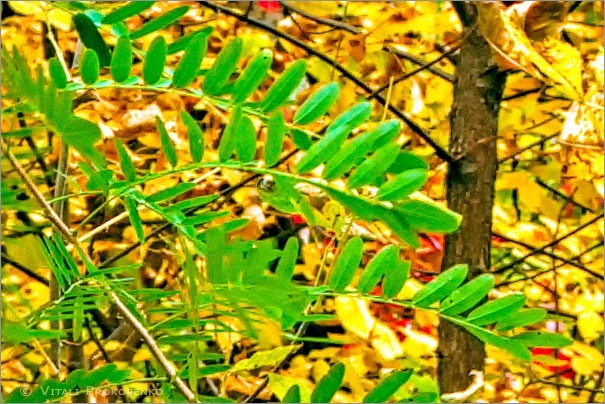
This post was supposed to be about fall and beautiful foliage colors I captured last fall during my visit to my home town in Ukraine. But as I was preparing an image to include in this post the topic of the post changed because of my struggle to fit large image with lots of details in a small viewing area of a screen and make it as enjoyable as original.

Here is the image I’m talking about (you can click on the image to see it in a bigger size):

Walk into Fall
Walk into Fall

In full size it has every leaf with its unique color and details. The whole image is vibrant and lively. You practically want to follow the dirty trail covered with foliage and walk into fall. After reducing it to such small size all the colors blended together into something more or less average.

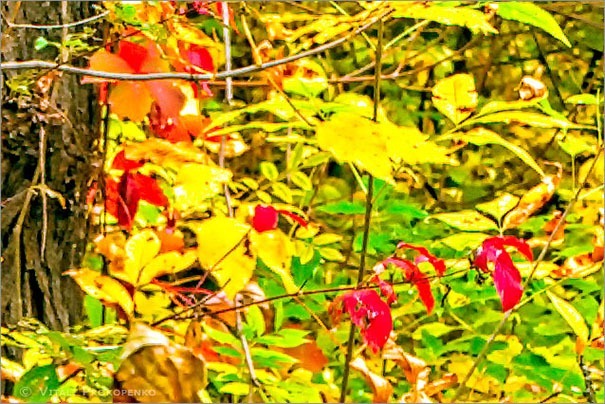
That’s just another reason I still enjoy more prints over images on a screen. Just to show what I’m talking about here are a couple of snippets at full resolution.

Foliage

Foliage

Do What You Like

Rialto

On one of my trips to the ocean shores of Olympic peninsula at Ruby beach I met an old man who was photographing too. He was very energetic and open. We started talking.

It turned out that he was a professional photographer for many year. His story was both bitter and inspiring. As a professional photographer he spent most of the time photographing things he was not interested in. He did not even mention over our whole conversation what it was.

It was a year since he retired and he finally could start photographing for himself, the things he loved the most – landscapes. He was already on a year long journey, traveling from place to place, capturing the beauty of the Nature. He was finally happy. He drew his energy from the times he was young amateur photographer, open to what the world presented to him.

While I have never been a professional photographer I think I understand him. Just probably as with any other profession once money gets into a picture we start making compromises, that may lead us to completely forgetting why we started doing what we liked in the first place. With my photography I’d prefer photographing what I like and be happy in the process. That’s the place I want to be true to myself.

The Art of… Clean up

Art is not about creativity only. Sometimes you need to do a lot of routine work just because it needs to be done. Such as doing a clean up. My photo archive grew to unmanageable proportions. And for the last two months I’ve been doing clean up: removing technically bad photos, photos about nothing, photos I will never care to do anything about. I’m close to be done, almost 30% of photos deleted in the process.

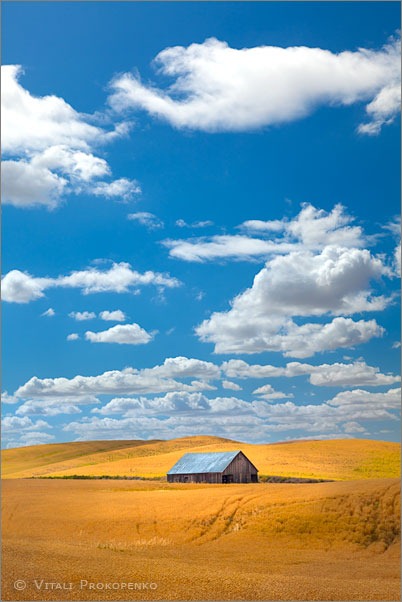
The positive side of this exercise is that I found some interesting photos that I have not processed before. Here is one of them which I thought is pretty good:

Barn in a Rye Field
Barn in a Rye Field

Inspiration Help

A while ago an interesting discussion happened in one of photographic online communities which I’m a part of. One of the members asked what helped other photographers to find inspiration. I’ve written quite detailed response which I include with some edits and additions below.

Here are some ideas I have come up with (I’ve done some of it, it does not mean it will work for you):

  1. Shift thinking from gear to thinking about idea/message.
    • Limit yourself to a single camera, single lens, polarizer and ND, and natural light for a while.
    • Shift from reading gearful info sources to gearless. For example, instead of reading about latest cameras, lenses, etc, read about history of photography. Delete all mails that mention gear without reading.
    • Read photo books by film photographers. Unfortunately, most digital photographer books I’ve seen fall into technology trap. Somehow film photographers were not writing books on Velvia or best processing of the first 1 inch of a film but on what they felt in the field, how they tried to capture that feeling and how to transfer it during processing.
    • Don’t do whatever is the latest wave in photography: HDR, astro-photography, etc. Just because it can be done does not mean each of us should do it. Try to do what photographers did 20 years ago. They were still doing great photography without latest and greatest we have.
  2. Think about the moment.
    • What’s so special about a moment that you’re photographing? Is it in any way different than an hour ago, a day ago? How to express what’s special in the best way?
    • Who is it special for? For example, I have a lot of photos of my son, but I have not published them or shown to anyone except my family and close friends, because they capture moments special for very narrow group of people (really only me and my wife).
  3. Be very critical in selection process.
    • Set a limit on number of photos to publish after weekend long trip to 2, after week long trip to 10. Make an effort to select those best and not more than that.
    • Jay Maisel once said something like “[Good] photographer is the one that does not show bad photos.” I love this saying.
    • Set some quality gates on photograph that you show. I value color, texture and subject in photograph. If something is missing, sorry it does not pass my quality gates and I’m not going to show it. For example, I have photographed a great texture of clouds, rocks, frost but they were just that – great textures. They did not have any subject – thus I don’t show them. But they come useful in my exploration of impressionism in photography.
  4. Study something related to art but not photography, like painting.
    • No need to learn how to paint, but read about artists, see documentary, look at paintings, read about paintings.
    • What is helps it to think about idea (back to my first point). When I look at paintings I think about color, light, composition, look at brush strokes and try to move my hand like that, imagine what was artists emotional state (I don’t think about brand of paint or brush they used, since I’m not interested in that).
  5. Block yourself from social photography.
    • Don’t look at Flickr, Facebook, etc. Look at photo books, magazines (that don’t mention gear).
    • It is easy to get overwhelmed by all the images we look at on websites (especially if not everyone in your social circle is critical in selection process). In some sense I feel like a composer trying to write a new tune after listening to a cacophony of an orchestra where each musician played a different tune.
  6. Analyze photographs.
    • Analyze your own photographs. What can be done better? After first time I photograph new subject or place I bring a bunch of photos none of which I show to anyone. I use them to learn what kind of photos I’d like to make. For example, I was very disappointed with photos I took on my first visit to the Palouse. Then after a while I started seeing in those photos the photos I’d really like to take.
    • Decompose someone else’s photos that you love. Why you love them? What makes them work?
    • Try to repeat someone else’s photos you love. Compare. Is it as good? If not, why? Repeat. That’s what I largely did during my first couple years of photography beyond snapshot. This made me learn a lot about interplay of objects, textures, light, color, etc.
  7. Find a local group of photographers like yourself.
    • Meet regularly in a small group to discuss each others photographs. Give a little walk out with a lot. You may contribute a little but once each member contributes a little you walk out with a lot of ideas to think about. You’ll grow together as a group.
    • Have prints that can be written on. What you might come out with from such meetings is a plan of how to improve a photograph written right on the print.
    • I was lucky enough to find such group of photographers early in my photographic journey: http://www.groupf56.com/. Thank you, everyone in Group f/5.6.

One idea that might help you but did not help me:

  • Work in projects. Put a goal to create a series of photos about something: particular kind of events, particular light, subject, time of day, etc. And produce 10-20 good photographs, each showing it in unique way. It cannot be something short lived, like a single wedding, but it can be single element of a wedding shown thru multiple weddings.

The reason it did not work for me is because I’m not systematic in my photography. I go to photograph something for a project and end up seeing something else that I’d rather photograph in that particular moment. Or my mood changed and I’m not interested in photographing in the same style or mood.

Hopefully, some of you might find this helpful. Happy photographing!

Getting off a Beaten Path

How much time changes landscape. Last time I visited Zion 7 years ago. Two friends-photographers and me were the only ones photographing at sunrise behind old visitor center. Here is the photo I took that morning: Zion in the Morning.

Just a couple of weeks ago I visited Zion again. This time there were 40 photographers there waiting for sunrise. It looked like a line of people attacking the landscape. I’m glad the popularity of landscape photography grew so much over the years. At the same time I start missing serenity and serendipity of some landscapes.

Nevertheless it was a good thing for me because it forced me to leave that place and go on the search for new places. And I’m glad I did. I found what I think is much stronger composition:

IMG_6062-copy

To My Wife on 11/11/11

Today is a special day. Not only because today is 11/11/11 but also because today is 11th anniversary of Elia’s and my marriage.

That 11 years of joyful moments. Thanks, Elia, for being by my side all this time. Thanks for supporting me in my photographic endeavors. Thanks for being the best and most honest critic. And most of all thanks for our son.