Enchantment Lakes [19]

Day 5. Descent

Our 5 day trip to Enchantment Lakes was over. It was time to go back home. After photographing sunrise we packed up and started our descent.

What a difference the 5 days spent in Enchantment Lakes made to the outside world! When we were hiking up the trees and shrubbery around us were green. When we were hiking down we discovered that they turned all kind of bright colors: yellow, orange, red. it was a feast for our eyes.
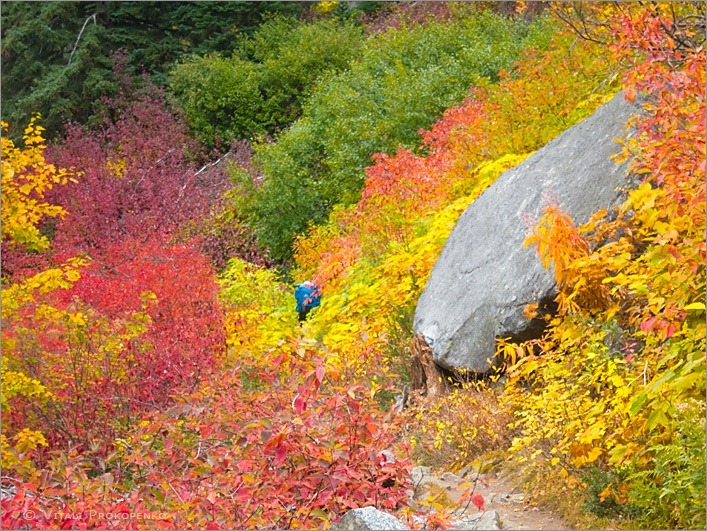
We had a goal in site: home. So, we’ve made almost no stops on the way down. It took us more than a day to get all the way to Lake Viviane. It took us only 5 hours to come down from there.

When we got down to the parking lot I was overjoyed that I lived thru such an experience. I was screaming out of the top of my lungs with joy and happiness. What an amazing trip!

Depth of Field Matters

One of the things photographer needs to think about is a depth of field. When photographing grand landscape, I typically set aperture to middle point between widest and most closed to get most sharpness in the image. For a landscape overall sharpness of an image is typically more important than depth of field.

The story is completely different when photographing close-ups. Depth of field becomes extremely important. It can make or break the image. And getting everything sharp is not necessarily a good thing. And I just happened to have two images to demonstrate the difference.

First, an “everything sharp” image. The aperture was closed to the sharpest setting for the lens that I used (f/8). To me the image ended up too flat. There is no separation between the lupine and shed boards, the lupine seems to be carved in the wall.

Lupine by a Shed

The second image, which I like, is with the lens wide opened (f/2.8). The lens is well focused on the lupine. It is tack sharp. The wall is slightly out of focus. This creates a three dimensional feel in the photograph, there is a space between the flower and the wall.

Lupine by a Shed
Lupine by a Shed

Another interesting thing to note is that I experiment with different depth of field, light, composition while photographing. I took 38 photos of this lupine over two days. Later I reviewed and pick just one of them that I felt worked the best.

On an Edge of Rain

We all have some small thing in our lives that we enjoy a lot. One of my things is to be under cover while it is raining. Not inside a house within four walls but almost outside, where I can smell the rain, feel a fresh breeze it is bringing, stretch my arm and feel wetness of rain drops. And yet at the same time feel protected from being completely wet. Like being in an open shed in a forest. Or just being in my garage with garage door opened, standing on an edge of the rain. Moments like that make me feel warm and cozy.

In one of those moments I photographed this iris growing next to my house:

Iris in Rain
Iris in Rain

Freeway Poppies

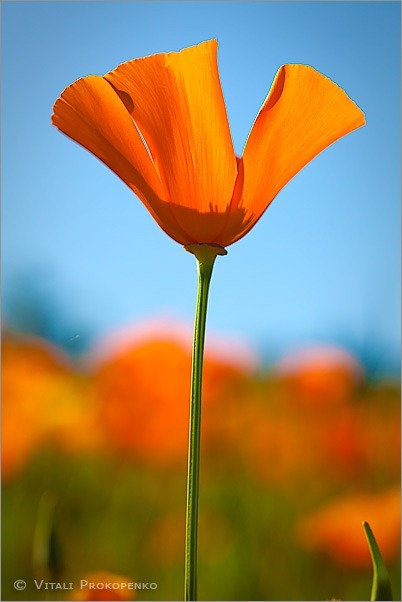
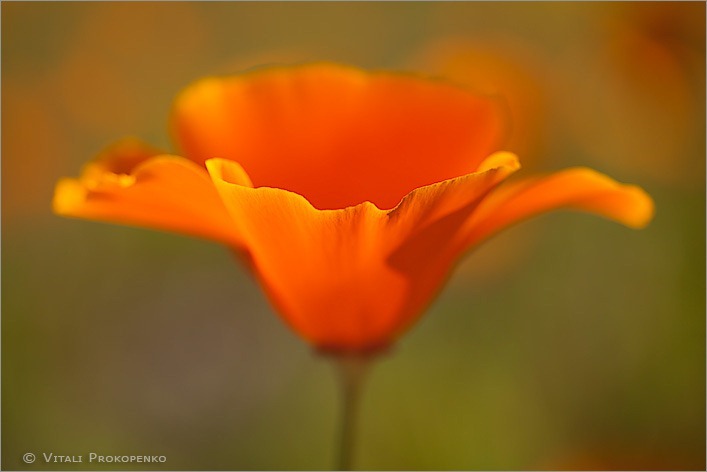
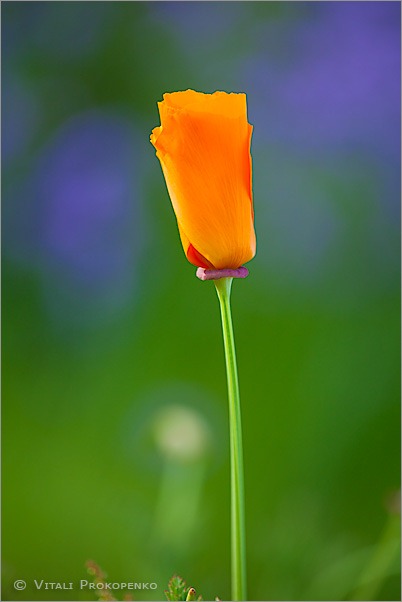
California poppies can be found in Western Washington only along roads. I’ve spotted one of such places along one of freeways while driving my son to gymnastics. The hills was burning orange covered with poppies.

The next morning I woke up a little bit earlier to get to that hill and photograph poppies before work. I parked the car at the nearest parking lot next to a store and walked to that hill. The poppies were as good as the day before – an island of the Nature beauty in the middle of a city.

So, there I was, lying on a ground photographing poppies with cars passing by at a high speed. Here are a few photos I took:

Flower Hill

As I wrote in my previous post (Good Night, Ladybug) there is a hill close to my house that has various wild flowers blooming every year. Here are a couple more photos that I took at that hill recently.

Good Night, Ladybug

I love the place where I live. There is a hillside not far from my house that surprises every year with a grand display of various wild flowers.

It changes every year. The first year I moved here it was covered with California poppies (well, I’m not in California, I’m in Washington, nevertheless we have occasional California poppies here). The next year it was covered with lupines. The year after that it was red poppies. Then chamomiles. This year it is a mix of various flowers.

I don’t know what’s the secret of this hill but I certainly appreciate the opportunity for close up and macro photography that the nature gives me.

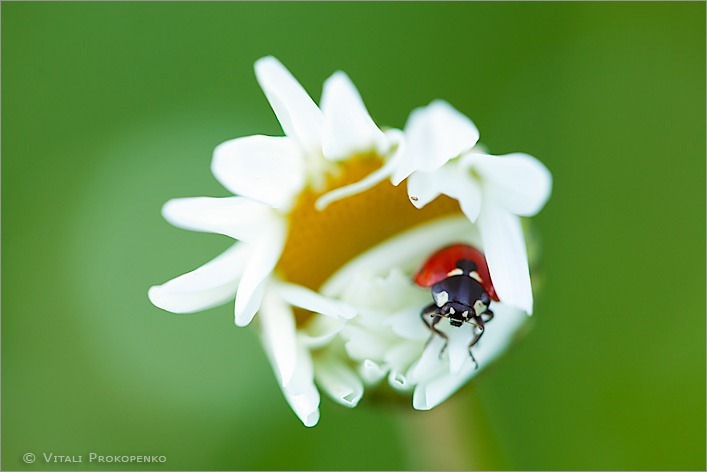
Here is a photo I took at that hill recently just after dusk at twilight. The ladybug settled in chamomile flower for the night and the flower was slowly closing up.

Good Night, Ladybug

Soft Light

There is no such thing as bad light.

When I just started photographing the only good light I knew was a sunset or sunrise. Then I added daylight with sunlight breaking thru the clouds which was creating an interplay of shadow and light on the ground. But for longest time I thought grey overcast day is bad light that is not suitable for photographing anything.

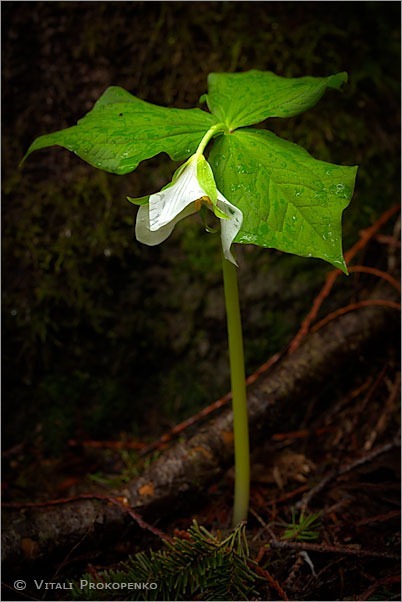
Well, I was wrong. I just did not develop my eye enough to see what a beautiful soft light an overcast day can give. That’s the best light for photographing deep in the forest where direct sunlight falling down thru a thick canopy of leaves and branches create extreme contrast.

Overcast day on the other hand creates nice soft light that is smoothly descending thru every opening and canvasing the ground with soft highlights.

What a perfect opportunity to photograph this flower that is blooming deep in Pacific Northwest forests whole spring and summer. I love its perfect triangle of three petals and three leaves.

Look Up, Look Down

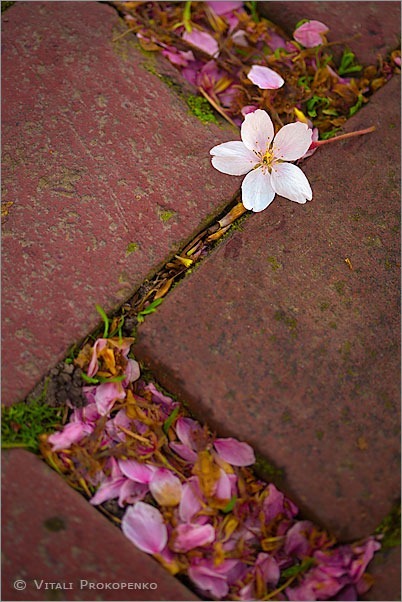
After taking panorama of cherry trees in blossom at University of Washington campus I started photographing individual trees. Always my favorite shorts of trees looking up into the sky with a wide angle lens. I love the mesh of branches:

And then I focused on individual flowers and brick pattern with a macro lens:

Magnolia

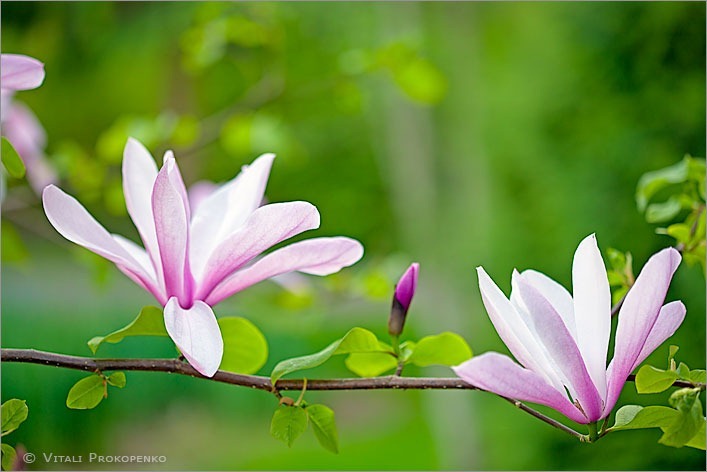
Spring time in Seattle is a time of blossom. Lots of trees in parks, in back yards and along the roads are in blossom. As I drive I note places with a nice display of flowers and then return back with a camera.

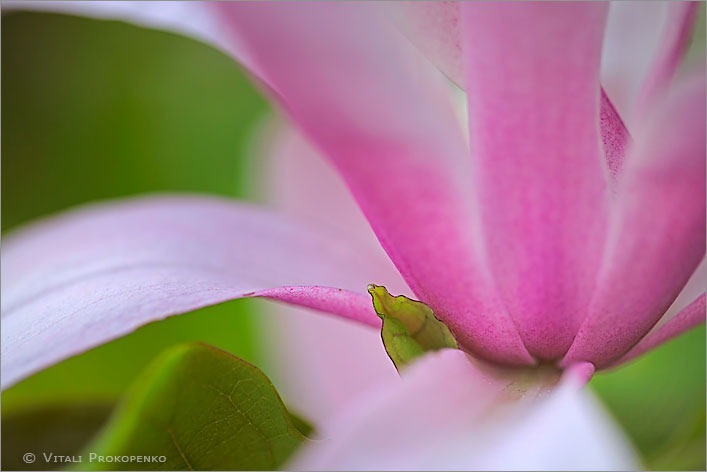
One of the local favorites is magnolia with its big flowers. One of the challenges photographing magnolia is its really bright petals. This particular tree was in deep shade while background was in an open space with more light. This allowed for some well-balanced photographs.

Tracks

Day 5, Dawn

At night dunes are filled with animal sounds. By the morning there are lots of signs of creatures’ night life – all kind of tracks in the dunes.

Tracks